
Vandaag of morgen in huis

Kwaliteit gegarandeerd

Welkomstaanbiedingen ontgrendelen: GRATIS bezorging | Tot 80% korting | Gratis 30 dagen JoyPlus-proefperiode
Download de app
A cordless water flosser seems like a simple solution for better oral hygiene, especially for those with braces, implants, or a dislike for traditional flossing. Yet, the market is flooded with models that overpromise and underdeliver. Many devices end up unused in a cabinet due to impractical designs or exaggerated marketing claims. Before you purchase a water flosser, it's crucial to know what to look for to avoid a bad buy.
These are the three most common pitfalls:
To ensure you choose a model you'll actually use every day, there are a few specifications that make all the difference. Focus on these instead of marketing buzzwords.
A good cordless water flosser doesn't necessarily have the highest water pressure, but it must have multiple adjustable settings. This is crucial. You need a gentle mode for sensitive gums or cleaning around braces, and a more powerful setting for removing stubborn food particles. A range between 40 and 110 PSI is typically sufficient for most users. Look for a model with at least 3 to 5 different settings to tailor the intensity to your needs. This makes a device a suitable Waterpik alternative for the whole family.
The battery is the core of a battery-powered water flosser. Don't just look at the claimed battery life; also consider the capacity (expressed in mAh) and the charging method. A battery of 2000 mAh or more is a good indicator of decent runtime. Even more important is the charging port. A model with a USB-C port is ideal. You can use the same cable as your phone or laptop, making it a perfect travel water flosser.
For a complete cleaning of your teeth, you typically need 45 to 60 seconds. A water reservoir of at least 300 ml ensures you don't have to refill halfway through. Also, make sure the reservoir is easy to remove and clean to prevent limescale and bacteria buildup. Additionally, check the included nozzles. A standard set often includes:
Based on these practical criteria, we have selected several models that suit different user profiles.
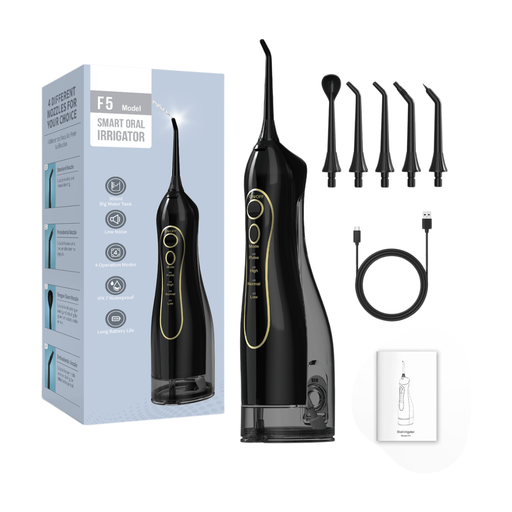
Why This Fits Their Persona: This model offers an excellent balance between functionality and portability. Ideal for those new to water flossing or seeking a reliable device for travel.
With a 300 ml water reservoir, you won't need to refill. The 2000 mAh battery provides a realistic, long runtime, and the 5 settings prevent gum irritation.
The combination of a long battery life (up to 40 days, according to the manufacturer), USB charging, and 5 included nozzles (including orthodontic) makes this a very complete choice.
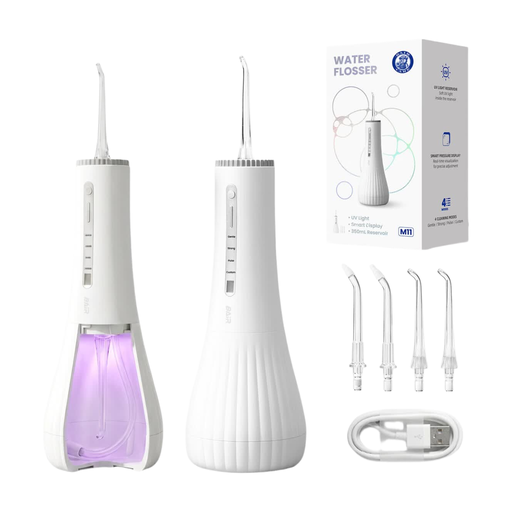
Why This Fits Their Persona: For those who prioritize hygiene. This model focuses on keeping the device itself clean, an aspect that is often overlooked.
This model doesn't focus on empty marketing but on a tangible feature: hygiene. The extra-large 360 ml reservoir is more than sufficient, and the 4 settings provide necessary control.
The built-in UV sanitizer for the nozzles is a unique advantage. According to the manufacturer, it kills 99.9% of bacteria, ensuring a cleaner use. The IPX8 waterproof rating is also higher than many competitors.

Why This Fits Their Persona: Perfect for those who use their water flosser intensively every day or share it with a partner. Here, the convenience of a large tank outweighs a compact size.
This model tackles the small reservoir pitfall head-on. With 570 ml, you have more than enough water for the most thorough cleaning without interruptions.
The enormous 570 ml water reservoir is the absolute key benefit. Additionally, the model offers 6 settings and a powerful 2500 mAh battery, making it a workhorse among water flossers.
We have compiled a complete, up-to-date list of products that meet these strict selection criteria and safety standards.
Can a cordless water flosser completely replace dental floss? For most people, a water flosser can be a highly effective alternative to dental floss, especially for those with braces, bridges, or implants where flossing is difficult. A water flosser excels at removing food debris and massaging the gums. However, some dentists recommend using it in combination with traditional flossing to remove the most stubborn plaque.
How long does the battery of a battery-powered water flosser really last? This depends heavily on your usage. If you use the device twice a day on a medium setting, a model with a 2000-2500 mAh battery typically lasts 2 to 3 weeks. Claims of "30-40 days" are often based on very minimal use. A model with USB-C charging makes frequent recharging less of a hassle.
Is higher water pressure always better, especially with braces? No, definitely not. For cleaning braces, control is more important than raw power. Pressure that is too high can damage brackets or wires and irritate the gums. Use a special orthodontic tip and start on a low to medium setting. The pulsating water jet is more effective at dislodging debris than a constant, harsh stream.
