
Vandaag of morgen in huis

Kwaliteit gegarandeerd

Welkomstaanbiedingen ontgrendelen: GRATIS bezorging | Tot 80% korting | Gratis 30 dagen JoyPlus-proefperiode
Download de app
A cordless vacuum cleaner makes everyday cleaning easier: no need to unplug and change sockets between rooms, and you can quickly clear up crumbs after a meal. But the wrong choice can be disappointing. A high suction figure on the packaging, for example, tells you little about battery life, noise levels or performance on your type of flooring.
As a Joybuy Product Recommendation Officer, I sort through the most important product specifications for different households. This helps you compare a stick vacuum, cordless vacuum cleaner or wet and dry vacuum cleaner based on practical features rather than marketing claims.
Manufacturers often quote a high suction figure in Pa or kPa. This is a technical value from the product description, but it doesn’t guarantee that every type of dirt will be picked up equally well on every floor. Also consider:
A powerful vacuum cleaner will usually use up its battery more quickly on the maximum setting. For everyday dust on a hard floor, a lower setting is often more practical.
A claim such as “50 minutes” usually refers to a lower suction setting. Always check whether the manufacturer gives separate figures for eco, standard and turbo modes. A stick vacuum with long battery life is most useful when the run time is clearly stated for each setting.
Also check the charging time, whether the battery is removable and whether a spare battery is available. Some models can take several hours to recharge from completely flat.
Filters become clogged more quickly in homes with pets, carpets or lots of fine dust. An anti-tangle brush reduces hair wrapping around the roller, but it doesn’t mean you can skip maintenance. Check whether the filters are washable, how long they take to dry and whether replacement parts are available.
Also check the usage restrictions: a dry vacuum cleaner must not be used to pick up liquids. A wet and dry vacuum cleaner is designed for this, but is often intended for hard floors only.
Don’t compare maximum power alone. A model with two or three settings gives you more control over battery use and the type of surface you’re cleaning. For a vacuum cleaner for carpets and hard floors, a motorised floor head and a suitable brush roller matter more than the Pa figure alone.
A V-shaped or anti-tangle brush can be useful for dog and cat hair. However, check that the brush is suitable for the pile height of your carpet. A smooth hard floor will often need a softer roller than a deep-pile carpet.
A HEPA vacuum cleaner may be worth considering for households looking to reduce fine dust. Check the stated filter type, the number of filter layers and whether the product information says the system is sealed. Claims such as “99.99% filtration” come from the brand’s product information; the precise testing method and conditions may vary.
Washable filters reduce the need for disposable parts, but must be completely dry before you put them back. A damp filter can damage the motor. A larger dust container means less frequent emptying, but can also make the appliance heavier.
A lightweight stick vacuum is handy for stairs, the car and quick clean-ups. For a large home, a flexible tube, LED lights and an adjustable handle are practical extras. Check the dust container capacity too: around 0.6 litres is compact, while models with a capacity of 1.5 litres or more need emptying less often.
If you want to clean under low sofas or beds, look for a floor cleaner with a lay-flat design. With wet models, you’ll also need to consider the clean and dirty water tanks.
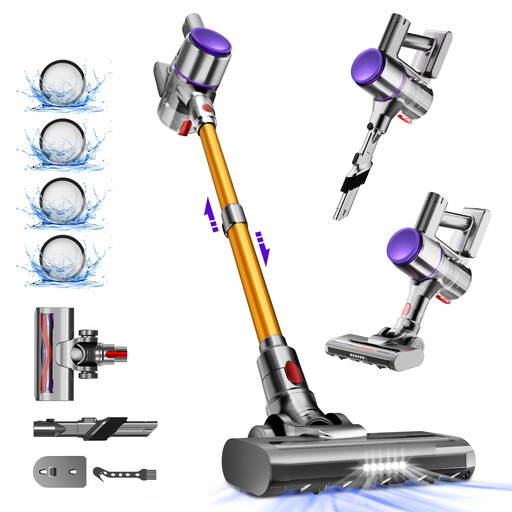
Why it suits this type of user: This stick vacuum has two suction settings, a 1.6-litre dust container and a removable battery. It’s suitable for everyday cleaning on hard floors and carpets.
The product information gives separate run times for each setting: around 20–30 minutes on the highest setting and up to 30–50 minutes on the lower setting. It also lists four washable HEPA filters.
1.6-litre dust container, V-shaped anti-tangle brush, LED lights and telescopic tube.
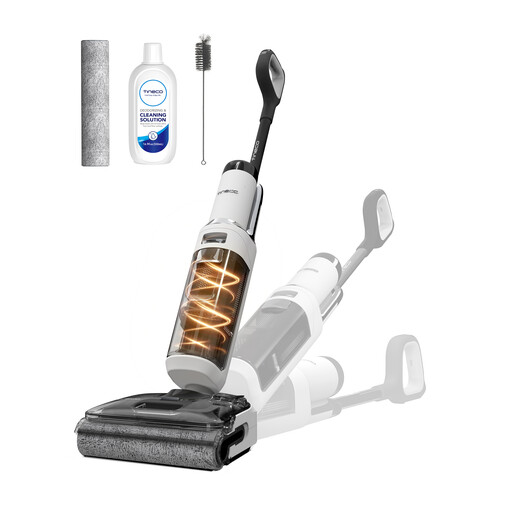
Why it suits this type of user: This model vacuums and mops hard indoor floors at the same time. Its lay-flat design is intended to help you clean under low furniture.
The product description clearly states that the appliance is intended for hard floors such as vinyl, tiles and sealed wood. It’s not a universal carpet cleaner.
180° lay-flat design, cleaning under furniture and, according to the product information, a FlashDry self-cleaning cycle.
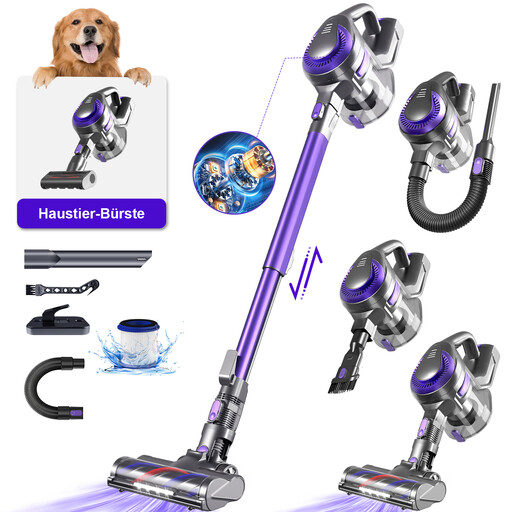
Why it suits this type of user: The included pet brush, hose and range of attachments are designed for homes with dogs, cats, carpets and upholstered furniture.
As well as listing the suction settings, the product page specifies a five-stage filtration system, a removable battery and HEPA filter maintenance requirements. This makes the upkeep clearer.
Pet brush, 1.6-litre dust container, LED floor head and telescopic tube.
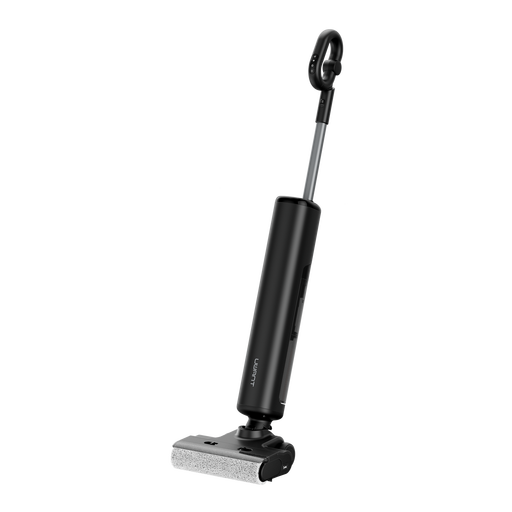
Why it suits this type of user: This model vacuums and mops at the same time and is designed for hard floors. Its 180° lay-flat position helps you clean under sofas and beds.
The product information specifically mentions self-cleaning, warm-air drying and a dirty water tank. This makes it clear that the appliance needs extra care after wet cleaning.
23,000 Pa according to the product description, 180° lay-flat design and automatic hot-air cleaning.
We’ve put together a complete, up-to-date list of products that meet these strict selection criteria and current European safety regulations.
Battery life depends on charging cycles, temperature, the setting you use and maintenance. Use turbo mode only when needed and charge the battery according to the instructions. If the battery is removable, replacing it may be easier. Also check whether the manufacturer sells a spare battery.
That depends on the floor head and suction setting. Choose a model whose product information specifically mentions carpets, and check that the brush doesn’t quickly become clogged with hair. A model designed for hard floors only, such as some floor washers, isn’t automatically suitable for carpets.
As well as the purchase price, consider electricity, filters, brushes and any replacement batteries. Washable filters can reduce the need for disposable filters, but require regular maintenance. With a wet and dry model, detergent and replacement rollers or filters may also add to the running costs.
