
Vandaag of morgen in huis

Kwaliteit gegarandeerd

Welkomstaanbiedingen ontgrendelen: GRATIS bezorging | Tot 80% korting | Gratis 30 dagen JoyPlus-proefperiode
Download de app
A cordless vacuum cleaner makes everyday cleaning quicker: no swapping cables, searching for a socket or fussing when you just want to pick up a few crumbs. But the wrong choice can be disappointing. A model with plenty of advertised suction power might run out of charge quickly, for example, while a compact handheld vacuum may not be suitable for cleaning an entire home.
So don’t focus solely on marketing claims such as “powerful” or “long battery life”. Consider the combination of suction settings, runtime, floor brush, filters and maintenance.
Specifications such as Pa, kPa, watts and Air Watts aren’t directly comparable. What’s more, a high Pa rating doesn’t automatically mean a stick vacuum will clean every type of floor better. The brush, airflow and seal also play a part.
So check:
For example, a model might run for 50 to 65 minutes on eco mode, but considerably less on turbo.
If you have a larger home, realistic runtime matters more than a single high maximum figure. Check the charging time too, and ask yourself whether the battery is removable. A removable battery can make the appliance easier to store or replace later, depending on the availability of spare parts.
A cordless stick vacuum cleaner with a HEPA filter needs maintenance. A clogged filter can restrict airflow and affect performance. Washable filters must be completely dry before you put them back. Never vacuum up water, hot ash or burning materials unless the instructions explicitly say that it’s safe to do so.
Please note: filter percentages and claims about trapping fine particles come from product information supplied by brands or sellers. Treat them as product specifications, not as a guarantee of a particular air quality or health benefit.
A standard setting is often enough for everyday dust, crumbs and hair. A higher setting is useful for rugs, carpets or stubborn dirt, but uses more power and is usually noisier.
A vacuum cleaner with long battery life is particularly useful when you’re cleaning several rooms in one go. Check the stated runtime for each mode, not just the highest number of minutes.
If you have pets, look for an anti-tangle brush or V-shaped roller brush. According to the product description, this reduces the chance of hair getting wrapped around the roller. Still, check it regularly for threads, long hairs and built-up dust.
If your home has both carpets and hard floors, a motorised floor brush and several suction settings are useful. A small vacuum cleaner for pet hair or an upholstery brush can help with sofas, beds and car seats.
A larger dust container means you won’t have to empty it as often, but it can also make the appliance heavier. Capacities vary from around 0.5 to 1.6 litres, depending on the model and how you use it.
A quiet vacuum cleaner is a relative term: check the stated decibel level and which setting it applies to. A vacuum cleaner with LED lights can also come in handy. The light on the floor brush makes dust under furniture and in dark corners easier to see, but it’s no substitute for a good brush or regular cleaning.
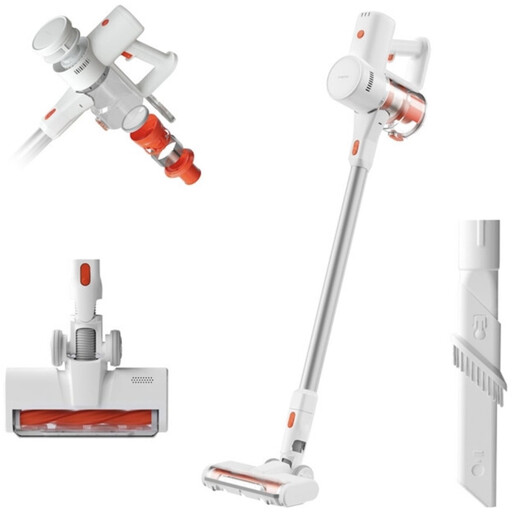
Why it suits this type of user: Its compact design, 45-minute runtime on the standard setting and handy 2-in-1 brush make it a good fit for smaller homes and everyday cleaning.
The product information lists separate runtimes for standard and turbo modes: up to 45 minutes on standard and 15 minutes on turbo. This makes it easier to set realistic expectations.
18,000 Pa according to the product page, HEPA filtration, LED lights and one-touch emptying.
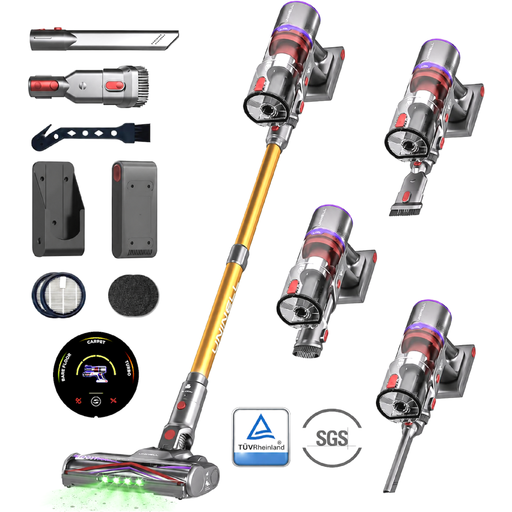
Why it suits this type of user: This model is designed for households with a mix of floor types, pet hair and longer cleaning sessions.
The stated 65-minute runtime applies to a specific mode. The removable battery and multiple settings make it easier to understand the difference between everyday and intensive cleaning.
Up to 60 kPa according to the product description, an anti-tangle brush, 7-stage filtration and four green LED lights.
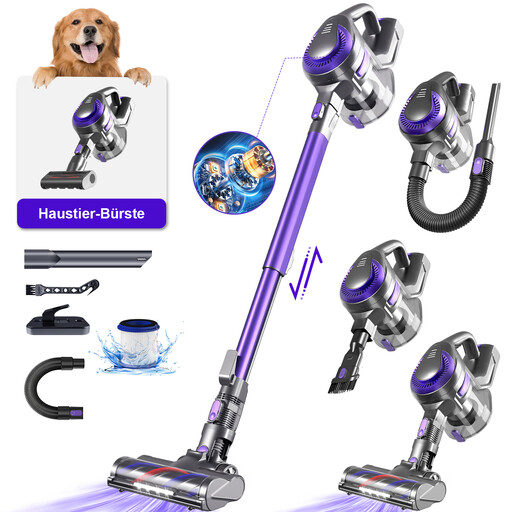
Why it suits this type of user: With a pet brush, hose and accessories, this model is geared towards households with pets, carpets, hard floors and awkward-to-reach areas.
The specifications list several settings with their corresponding runtimes. The removable battery also means the appliance doesn’t have to stay on the wall charger all the time.
Up to 55 kPa according to the product information, a 5-stage filter, pet brush, LED floor brush and a 1.6-litre dust container.
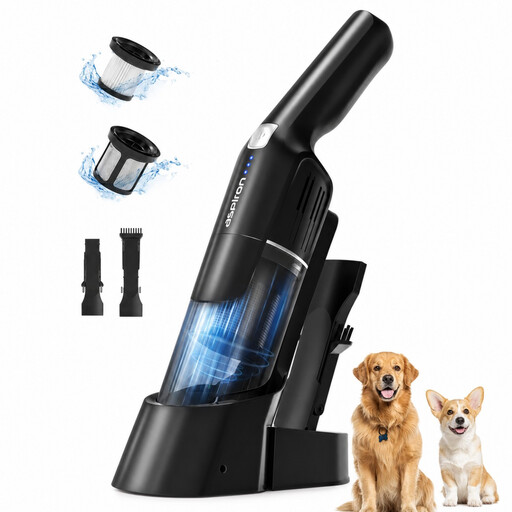
Why it suits this type of user: This compact handheld vacuum is designed for crumbs, dust and hair on sofas, desks, car seats and other smaller surfaces.
Its intended use is clear: this is a handheld model for quick clean-ups, not for vacuuming an entire home every day.
15 and 24 kPa according to the product page, a 500 ml dust container, two accessories and a washable filter.
We’ve put together a complete, up-to-date list of products that meet these strict selection criteria and comply with current European safety regulations.
A cordless vacuum cleaner stays useful for longer if you follow a few simple routines:
When buying, also check the warranty terms, service information and availability of filters, batteries and brushes. These practical details can make all the difference to how well a powerful vacuum cleaner serves you in the long run.
Yes, as long as the model has a motorised brush and a suitable suction setting. A high-power setting is useful for deep-pile carpets, but bear in mind that the battery will run down sooner. Also check whether the manufacturer specifically lists carpets as a suitable surface.
It depends on the setting, floor type and age of the battery. The stated runtime often applies to eco or standard mode. Runtime can be much shorter on turbo. A removable battery offers more flexibility, but check in advance whether a replacement battery is available.
The electricity cost per charge is usually low, but the overall cost depends on how often you charge it and how long you use it for. Filters, brushes and a replacement battery, if needed, may matter more in the long run than electricity use. So check the maintenance costs before choosing a model.
