
Vandaag of morgen in huis

Kwaliteit gegarandeerd

Welkomstaanbiedingen ontgrendelen: GRATIS bezorging | Tot 80% korting | Gratis 30 dagen JoyPlus-proefperiode
Download de app
A cordless vacuum cleaner makes everyday cleaning easier: there’s no cord to catch on furniture and no need for a plug socket on every floor. However, not every model is right for every home. For example, a high suction power figure on the box tells you little about actual run time, maintenance or performance on carpets.
For households, three pitfalls are particularly important: marketing claims without context, a battery that lasts a long time only on the lowest setting, and a brush that quickly clogs with hair. Read on to find out what to look for in a stick vacuum, robot vacuum or handheld vacuum cleaner.
Manufacturers often quote a high figure in Pa or kPa. This indicates the maximum suction pressure, but it doesn’t automatically tell you how well the vacuum will clean your floors. The brush, airflow, seals and filter all play a part too.
A powerful vacuum for carpets also needs a motorised brush that lifts dirt from the fibres. On hard floors, soft rollers and effective dust detection are often more useful than simply having a higher maximum suction setting.
“Up to 50 or 60 minutes” usually applies to the most energy-efficient setting and without heavy use of the motorised brush. On the maximum setting, run time can be considerably shorter. So check:
A vacuum cleaner with long battery life is particularly useful if you want to clean several rooms, stairs and floors in one go.
A standard floor brush can become tangled with hair around the roller. This reduces performance and means more maintenance. If you’re looking for a vacuum cleaner for pets or a pet hair vacuum cleaner, it’s worth choosing one with an anti-tangle brush, a comb design or a V-shaped roller.
No brush is completely maintenance-free. Even with an anti-tangle design, you should check the roller regularly.
Compare models within the same product category. A robot vacuum with 4,000 Pa is not directly comparable with a cordless stick vacuum rated at 25 kPa. As well as the quoted figure, look for:
For a vacuum cleaner for hard floors and carpets, an adjustable or suitable brush matters more than a single marketing figure.
A vacuum cleaner with a HEPA filter can trap fine particles in its filtration system, as stated in the product specifications. Check whether the filter is washable, how often it needs cleaning and whether it needs to dry completely before you put it back.
A clogged filter reduces airflow. Empty the dust container in good time and follow the instructions. Also, don’t use a cordless vacuum cleaner to pick up liquids, hot ash or flammable materials unless the manufacturer explicitly says it’s safe to do so.
A lightweight model is easier to use on stairs and high shelves, while a larger dust container means less frequent emptying. Also look for:
A handheld vacuum cleaner is handy for crumbs, the sofa and the car, but it won’t always replace a full-size stick vacuum.
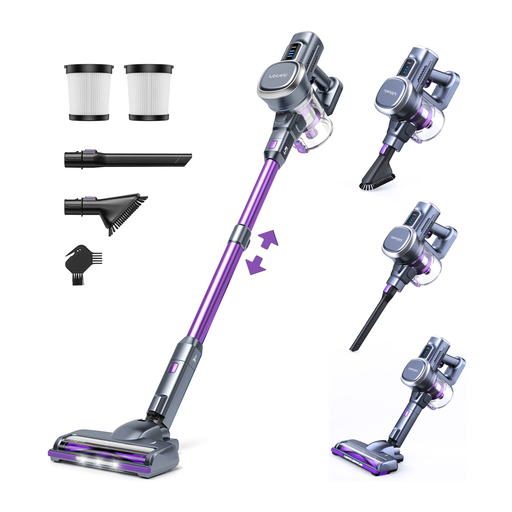
Why it suits this type of user: This model is designed for everyday use in homes with hard floors and carpets. Its stated run time is up to 50 minutes, and the battery is removable.
The product information lists three settings, so you don’t have to use the maximum setting all the time. The V-shaped brush is designed to help prevent hair tangling.
25 kPa according to the product information, weighs 2.2 kg, stands upright on its own and comes with a HEPA filter.
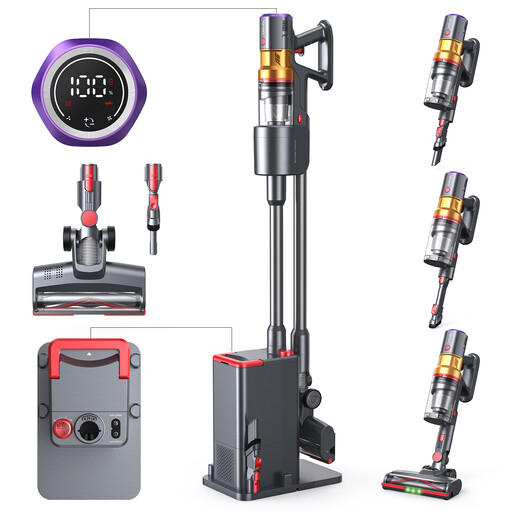
Why it suits this type of user: This model combines a cordless stick vacuum with a self-emptying charging base. It’s a good fit for households that want to empty the dust container less often.
According to the product description, the base empties the dust container automatically. The anti-tangle brush is designed to help prevent hair from wrapping around it while you vacuum.
27 kPa, green lights on the floor brush, multi-stage HEPA filtration and three power settings, according to the product specifications.
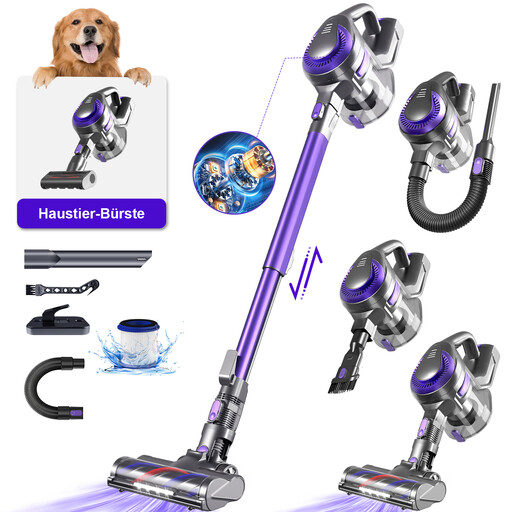
Why it suits this type of user: The combination of a pet hair brush, flexible hose and several accessories is practical for households with pets, carpets, furniture and a car.
The accessories go beyond a single floor brush. The product information lists a pet brush, anti-tangle brush and five-stage filtration.
Removable battery, stated run time of up to 55 minutes on the standard setting, 1.6-litre dust container and LED lights.
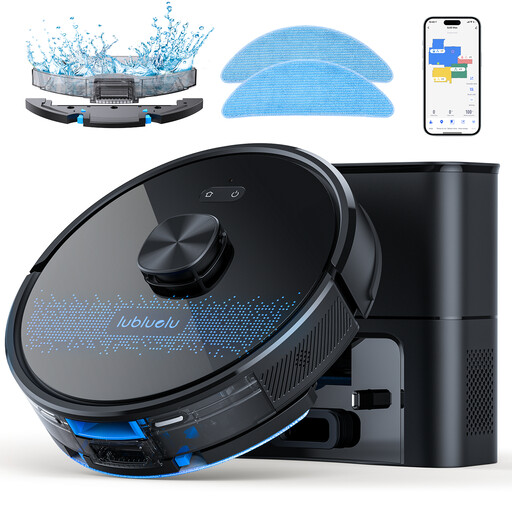
Why it suits this type of user: According to the product information, this robot vacuum with a self-emptying base can vacuum, mop and empty its dust container automatically. It’s handy for keeping on top of cleaning between bigger cleans.
LiDAR navigation, room mapping and no-go zones help make cleaning more predictable. You’ll still need to remove the mop after use and let it dry.
3-in-1 cleaning, app control, automatic suction boost on carpets and a dust bag capacity of 3 to 4 litres, according to the product specifications.
We’ve put together a complete, up-to-date list of products that meet these strict selection criteria and the applicable European safety regulations.
Battery life depends on charging cycles, temperature, storage and the setting you use. For everyday vacuuming, use eco or standard mode and store the battery according to the instructions. A removable battery can be more convenient if you want to use a replacement later.
Yes, as long as the model has a motorised brush and a carpet setting. Use the maximum setting mainly for stubborn dirt, as it uses more power. Also check whether the brush is suitable for deep-pile carpets and whether hair can be removed easily.
The electricity used for charging is usually minimal. The ongoing costs are more likely to come from filters, brushes, batteries and, for some robot models, dust bags for the charging station. So check the availability and price of replacement parts before buying.
