
Vandaag of morgen in huis

Kwaliteit gegarandeerd

Welkomstaanbiedingen ontgrendelen: GRATIS bezorging | Tot 80% korting | Gratis 30 dagen JoyPlus-proefperiode
Download de app
The freedom of cordless tools is tempting. No more fussing with extension cords; just pop in the battery and get to work. Whether you're assembling a cabinet, hanging a painting, or tackling the garden, the right cordless tool makes the job significantly easier.
But the market is full of pitfalls. Many DIYers invest in a system that ultimately falls short or proves to be unexpectedly expensive. As a Joybuy Product Recommendation Officer, I'm here to help you cut through the marketing jargon. Let's look at the most common mistakes so you can make an informed decision.
Before you pull out your wallet, it's crucial to recognise three common pitfalls that often lead to disappointment and unnecessary costs.
Brands often promote a battery platform where one battery fits all their tools. This sounds ideal, but the reality can be different. The product range might be limited, forcing you to switch to another brand for a specific job (like a powerful cordless leaf blower). It can also happen that new generations of batteries no longer fit your older tools. You're then locked into an ecosystem that doesn't support your growth as a DIYer.
Manufacturers love to boast about high torque ratings (expressed in Newton-metres, Nm). High torque is useful for heavy-duty jobs, but for most tasks in and around the house—like assembling furniture or driving screws into drywall—extremely high torque is unnecessary. In fact, too much power can damage screw heads or the material itself. Control and adjustability are often more important than brute force.
A competitively priced cordless drill might seem like a great deal, until you discover it's sold "body only": without a battery and charger. The cost of purchasing these essential components separately can significantly drive up the total price. A complete tool set is often a better value and ensures you can get started right away.
To make the right choice, it helps to understand a few technical specifications. Don't worry, we'll keep it practical.
The voltage, expressed in Volts (V), indicates the tool's power.
The capacity, expressed in Ampere-hours (Ah), is the "fuel tank" of your battery. The higher the Ah number, the longer you can work on a single charge. A 2.0Ah battery is a great starting point for most jobs. If you work for extended periods, a 4.0Ah battery or higher offers more runtime. Keep in mind that a higher capacity often means a heavier and more expensive battery.
Modern power tools are increasingly equipped with a brushless motor. In practice, this means:
For tools you use regularly and intensively, a brushless motor is worth the investment.
To help you get started, we've selected a few products that suit different types of DIYers.
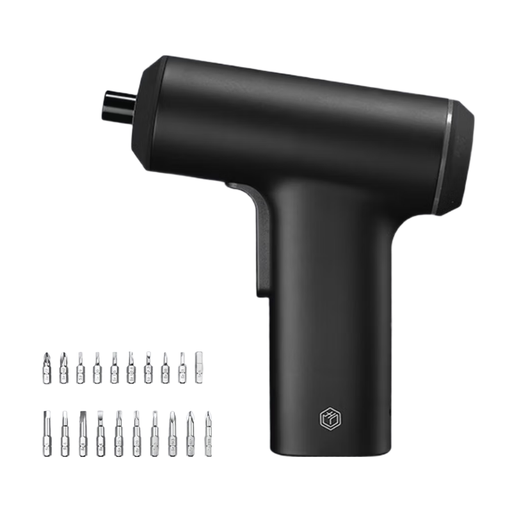
Why This Fits Their Persona: Perfect for those seeking a lightweight, convenient, and complete electric screwdriver. Ideal for assembling flat-pack furniture, tightening loose screws, and other small repairs around the house.
This is a complete tool set with 20 bits, a charger, and a storage bag. You're not buying a "bare" tool, and its 5N·m torque is just right for furniture, without the risk of damage.
The built-in LED ring light ensures shadow-free work, even in dark cabinets. The 2000mAh battery is rechargeable via USB-C and, according to the manufacturer, can handle over 180 screws per charge.
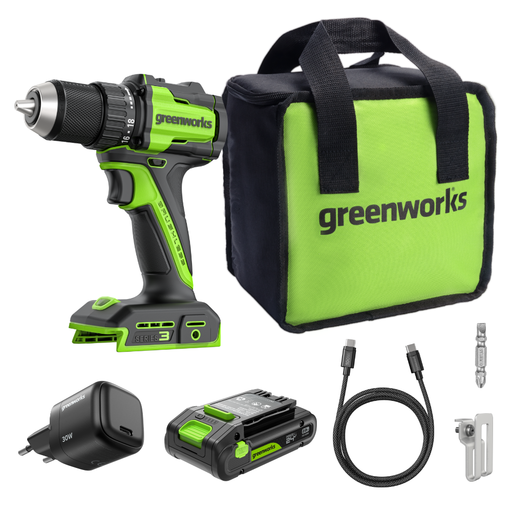
Why This Fits Their Persona: For the homeowner who needs a reliable and powerful all-rounder for various jobs, from drilling in wood and metal to driving screws.
This set comes complete with a 2.0Ah battery and charger. The 18+1 torque settings offer precise control, helping you avoid the pitfall of too much power. Furthermore, the Greenworks 24V platform is extensive, with over 200 tools.
The brushless motor ensures a longer lifespan and greater efficiency. The 24V battery can also function as a 12,000 mAh power bank via its USB-C port, which is an extra practical feature.
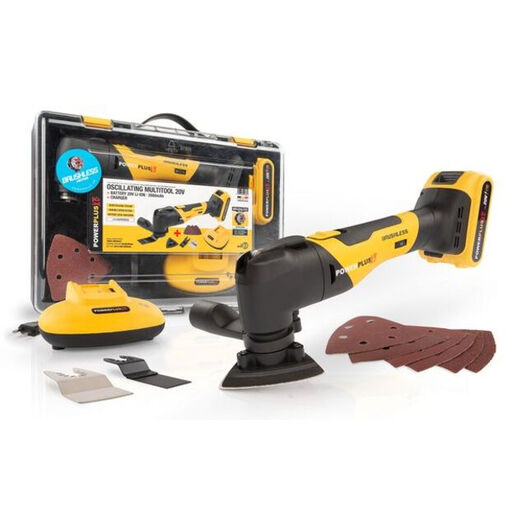
Why This Fits Their Persona: For the DIYer who wants to do more than just drill and drive. A cordless multi-tool is ideal for renovation jobs like cutting pipes, sanding in awkward corners, or removing old sealant.
This is a complete set including a battery, charger, various accessories, and a storage case. You can get started immediately with no hidden costs. Its power lies in oscillation speed, not pure torque, making it a controlled and precise tool.
The powerful brushless motor and quick-change system for accessories make this an efficient and user-friendly tool. The 6 speed settings give you complete control over the job.
We've compiled a complete, up-to-date list of products that meet these selection criteria and current safety standards.
The lifespan of a lithium-ion battery is typically expressed in charge cycles. Most batteries for consumer-grade tools last between 300 and 500 full charge and discharge cycles. With normal use, this translates to several years. You can extend the lifespan by storing the battery in a cool, dry place and avoiding long-term storage when it's either completely empty or fully charged.
Generally, this is not recommended. Manufacturers use different connectors, voltages, and electronic safety features. Using a battery from another brand (even with an adapter) can damage your tool, void the warranty, and pose safety risks. It's wisest to stay within a single brand's battery ecosystem.
A standard cordless drill is designed for drilling in materials like wood, metal, and plastic, and for driving screws. A hammer drill has an additional function: besides rotating, the chuck also makes a rapid, hammering motion. This feature is intended for drilling into harder, masonry materials like brick and concrete. So, to hang a light on a concrete ceiling, you'll need a hammer drill function.
