
Vandaag of morgen in huis

Kwaliteit gegarandeerd

Welkomstaanbiedingen ontgrendelen: GRATIS bezorging | Tot 80% korting | Gratis 30 dagen JoyPlus-proefperiode
Download de app
A cordless stick vacuum is handy for picking up everyday crumbs, removing pet hair and quickly cleaning the stairs or car. But a high number on the packaging doesn’t tell you everything. A model with powerful suction may be heavy, run out of battery quickly or prove difficult to maintain.
So look at the whole system: the motor, brush, battery, dust container and filters all work together. Below are the main pitfalls and specifications to compare.
Brands often list figures in Pa, kPa or Air Watts. These units of measurement aren’t directly comparable. The results also depend on the floor brush, air channels and condition of the filter.
A stick vacuum with powerful suction may look impressive on paper, but a blocked brush or dirty filter can quickly reduce its performance. So also look for:
A stick vacuum with long battery life will generally achieve its maximum running time in eco or low-power mode. In turbo or carpet mode, the battery won’t last as long. So check whether the specifications list the running time for each setting.
For a flat, 30 to 40 minutes may be enough. In a larger home, across several floors or with multiple pets, a removable battery is more practical. You can charge or replace it separately, depending on the accessories and spare parts available.
A bagless stick vacuum saves you from buying dust bags, but the dust container, cyclone chamber and brush still need regular cleaning. Hair can wrap around the roller, while fine dust can put a strain on the filter.
An anti-tangle brush vacuum can reduce hair wrapping around the brush, but it won’t eliminate the need for maintenance. After use, pay particular attention to the edges of the brush and the air channel.
For a stick vacuum for carpets and hard floors, having several settings is more useful than simply looking at the maximum kPa figure. A low setting is suitable for everyday dust on hard floors, while a higher setting can help with carpets, cat litter and embedded hair.
A motorised brush actively moves dirt towards the suction inlet. A V-shaped or anti-tangle brush can be useful in homes with long hair or pets. Also check how easily the floor head swivels, especially if you want to clean under sofas and beds.
Longer running time is useful, but weight affects how comfortable the vacuum is to use above shoulder height, on stairs or around furniture. A lightweight model is handy for quick cleans, while a larger battery and dust container may be better suited to a bigger household.
Compare these points:
If you’re looking for a stick vacuum with a HEPA filter, check exactly which filter type is listed and whether it’s washable or replaceable. A filter rating doesn’t guarantee medical-grade performance. Some brands say in their product descriptions that multi-layer systems can capture fine particles; treat any stated percentages as manufacturer claims and follow the maintenance instructions.
Let washed filters dry completely before putting them back. Don’t use a vacuum to pick up liquids unless the manufacturer expressly allows it. For people with allergies, a well-sealed filtration system can be useful, but it’s still important to replace and clean the filters.
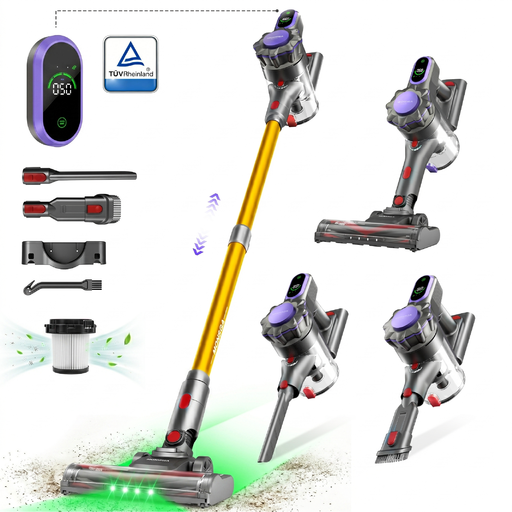
Why it suits this type of user: This model combines a stated suction power of up to 55 kPa with a running time of up to 55 minutes in floor mode. According to the specifications, the handheld unit weighs around 1.2 kg, making it suitable for everyday use in a flat or smaller household.
The product description lists separate floor and carpet modes, an anti-tangle brush and a removable battery. This makes it easier to see how running time relates to the setting you choose.
Up to 55 minutes in floor mode, a 0.7-litre dust container, five-stage filtration and an LED display, according to the product specifications.
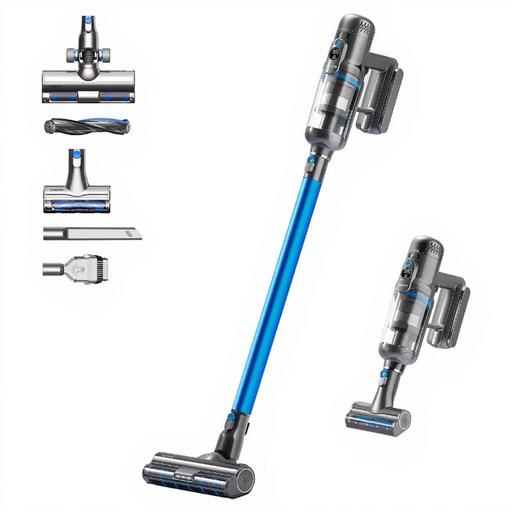
Why it suits this type of user: With a 535 W motor, a stated suction power of 170 AW, three modes and accessories for furniture, mattresses and cars, this is a versatile choice for a household with a variety of cleaning needs.
Running times are listed by mode: up to 60 minutes in eco, 30 minutes in automatic and 11 minutes in turbo. This gives you a more realistic picture than a single general battery-life claim.
HEPA 12 filter, six cyclones, LED lighting and a stated dust capacity of 0.42 litres.
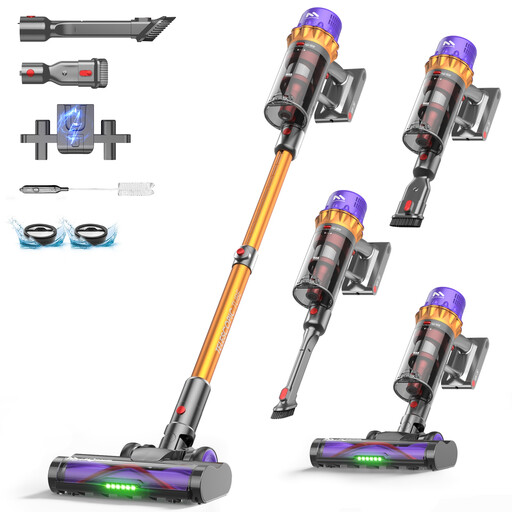
Why it suits this type of user: For larger homes, pets and longer cleaning sessions, the product description states a running time of up to 80 minutes in eco mode. The wide motorised brush and multiple settings are designed for hard floors and carpets.
According to the product information, the battery is removable and the stated battery life applies to eco mode. This makes it clear that turbo or carpet use is likely to consume more power.
Stated suction power of up to 65 kPa, a 25 cm-wide anti-tangle brush, LED lighting and sealed HEPA filtration.
For consistent performance:
A handheld vacuum for cars and furniture is especially useful if the stick, tube and floor brush are easy to detach. Check in advance which small nozzles are included.
We’ve put together a complete, up-to-date list of products that meet these strict selection criteria and the applicable European safety regulations.
Its lifespan depends on the battery, motor, filters and maintenance. Regularly removing hair and cleaning the filters helps prevent blockages. Before you buy, also check whether replacement batteries, brushes and filters are available.
The electricity used for charging is usually minimal. The main recurring costs may be replacement filters, batteries and brushes. A model with washable filters can help keep maintenance costs down, but always check which parts are actually replaceable.
According to the product specifications, a HEPA filter can help capture fine particles from the air being expelled, but it isn’t a medical solution. Check the exact filter type, how well sealed the system is and the maintenance instructions. For pet hair, the brush design and ease of cleaning are just as important.
