
Vandaag of morgen in huis

Kwaliteit gegarandeerd

Welkomstaanbiedingen ontgrendelen: GRATIS bezorging | Tot 80% korting | Gratis 30 dagen JoyPlus-proefperiode
Download de app
A cordless stick vacuum makes everyday cleaning easier: there’s no cable catching on furniture and no need for a plug socket in every room. However, the wrong choice can quickly disappoint. A high suction rating on the packaging, for example, doesn’t tell you everything about how well it performs on carpet, while a 60-minute battery life is usually only achieved under certain conditions.
For households, three things are particularly important: actual running time, suitability for different floor types, and maintenance of the filters and brush rolls. Here’s a clear overview of the key things to consider.
Brands often advertise a high figure in Pa or kPa. This indicates the maximum suction pressure, but it isn’t a complete measure of performance. The floor head, airflow, brush roll and seals also affect how much dirt the vacuum actually picks up.
A powerful stick vacuum with, for example, 45,000 Pa may be a good choice for carpets and pet hair. Also check whether it has multiple settings, a motorised brush and an anti-tangle design. Bear in mind that a higher setting will drain the battery more quickly.
The stated battery life often applies to the lowest setting and without intensive use of a motorised brush. On the highest setting, running time can be considerably shorter. So check the running time for each mode.
A stick vacuum with a long battery life is especially practical if the battery is removable. You can then use a spare battery or charge it outside the vacuum. Check the charging time too: waiting four to five hours can be inconvenient if you want to do a quick clean in the meantime.
A stick vacuum with a HEPA filter can filter fine dust according to the product information, but the filter must be fitted correctly, cleaned and left to dry completely. A blocked filter reduces airflow and can put strain on the motor.
Check the following:
None of these cordless models is designed for water, wet dirt, hot ash or flammable materials. Always follow the manual and use the supplied or specified charger.
For hard floors such as laminate, PVC and tiles, a soft or combination floor brush is often sufficient. For carpets, a motorised brush roll is better at loosening dirt from the fibres. If you have a dog or cat, look for a V-shaped or anti-tangle brush. According to the product description, this can help prevent hair from winding around the roll.
A stick vacuum for carpets and hard floors should ideally have several settings. Use a lower setting for crumbs on a smooth floor and a higher one for embedded dirt in carpets. This helps conserve battery power.
A lightweight cordless handheld vacuum or 2-in-1 model is handy for stairs, furniture and the car. For cleaning an entire home, a larger dust container and an adjustable wand are more practical.
Check:
LED lights on the floor head help you spot dust in dark corners. This is a handy feature, not a guarantee that all dirt will be picked up.
A multi-stage filtration system can be useful in homes with a lot of fine dust. Claims such as “99.99% filtration” come from the brand’s product information and may depend on the test conditions. So don’t treat them as a general guarantee of air quality in your home.
A one-touch emptying system helps minimise direct contact with dirt. A larger capacity is useful if you have lots of hair or cat litter to clean up. Clean the brush roll regularly and let washed filters air-dry completely before putting them back.
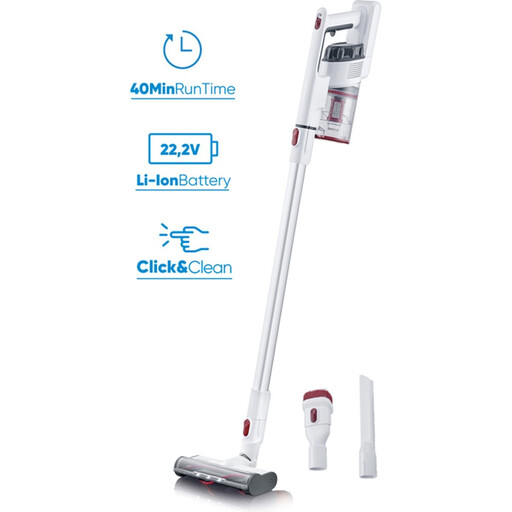
Why it suits this profile: This 2-in-1 model is suitable for everyday vacuuming and quick clean-ups on furniture, stairs and car seats.
The product information states a maximum running time of 40 minutes, a 0.5-litre dust container and an LED turbo brush. Check that the running time suits the setting you plan to use.
1.5 kg, 22.2 V lithium-ion battery, detachable handheld vacuum and a charging station with wall mount.
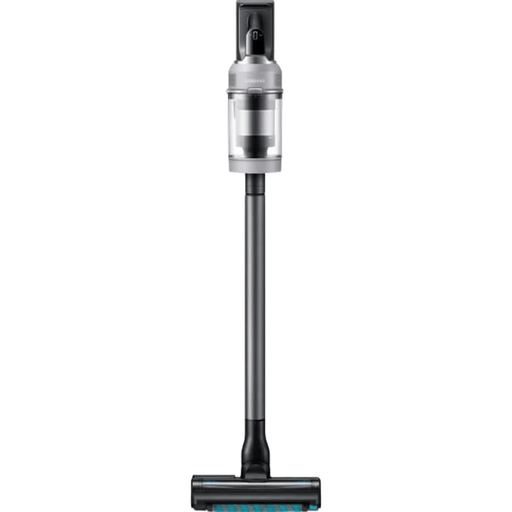
Why it suits this profile: This model is aimed at users who value a comprehensive set of accessories, long battery life and a station for charging and dust disposal.
The specifications state a maximum running time of 60 minutes and a HEPA 12 filter. Bear in mind the stated noise level of 86 dB and the 0.5-litre dust container.
Up to 280 W suction power according to the product details, a replaceable battery, PetTool+ and a Clean Station for charging and dust disposal.
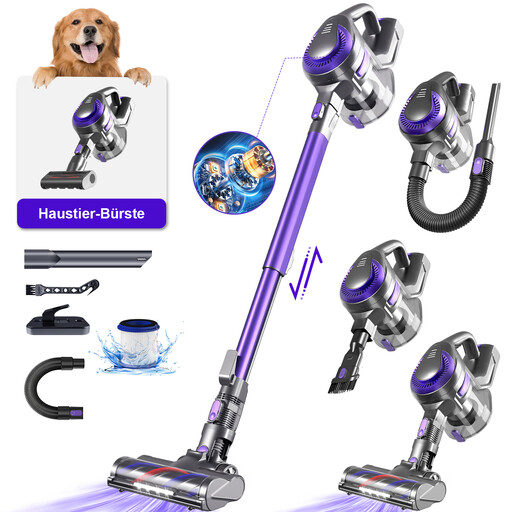
Why it suits this profile: The included pet hair brush, hose and large dust container make this a good fit for homes with dogs, cats, carpets and multiple rooms.
The product details specify the two settings and state that the battery is removable. This makes it easier to match the expected running time to the cleaning task.
1.6-litre dust container, four washable HEPA filters according to the product description, LED floor brush and a separate pet hair brush.
Empty the dust container before dirt builds up around the air inlet. Check the brush roll regularly for hair, especially if you have long-haired pets. Only wash filters if the manual says you can, and put them back only once they are completely dry.
Use only the original or specified charger. Don’t charge a lithium-ion battery in a damp room, and stop using it if you notice unusual heat, smoke or a burning smell. The statutory guarantee in the EU is separate from any additional brand warranties, so keep your proof of purchase and check the seller’s terms and conditions.
We’ve put together a complete, up-to-date list of products that meet these strict selection criteria and the applicable European safety regulations.
That depends on your home and how you plan to use it. A cordless vacuum may be enough for everyday crumbs, hard floors and smaller homes. If you have lots of carpet, large areas to clean or need to use it intensively, battery life, dust container capacity and a replaceable battery become even more important.
Running time varies depending on the setting, brush and floor type. Manufacturers often quote the maximum running time in the lowest mode. So before you buy, check the running time on the highest setting and whether replacement batteries are available.
The electricity cost of charging is usually low. The main ongoing costs are replacement filters and batteries, dust bags for any emptying station, and parts such as a brush roll. Check that these parts are available and how much they cost before you buy.
