
Vandaag of morgen in huis

Kwaliteit gegarandeerd

Welkomstaanbiedingen ontgrendelen: GRATIS bezorging | Tot 80% korting | Gratis 30 dagen JoyPlus-proefperiode
Download de app
A cordless stick vacuum cleaner is useful for crumbs, pet hair and everyday cleaning without a cable. However, the differences between models can be significant. For example, a long battery life tells you little if it only applies to the lowest power setting. Similarly, a high suction rating does not automatically guarantee good results on every floor type.
As a Joybuy Product Recommendation Officer, I filter the most important product information down to practical points. This helps you avoid paying for features that are not suited to your home, family or cleaning routine.
Manufacturers usually state the maximum operating time for the most energy-efficient setting. In practice, runtime is often shorter when using a motorised brush or turbo mode. A model offering up to 40 minutes of use may therefore run for considerably less time during intensive cleaning.
Always check:
For a flat, a short runtime may sometimes be sufficient. In a large house or busy family home, a model with longer operating time is more practical.
Power in watts, vacuum pressure in kPa and Airwatts describe different characteristics. You therefore cannot simply compare these figures directly. A powerful stick vacuum also needs a suitable brush, good airflow and an effective filter to perform well on carpets or hard floors.
Pay attention to the brush roll, too. An electric brush with lighting can make dust, hair and crumbs easier to see, but hair can still become wrapped around the roll. An anti-tangle function or an easy-to-remove brush reduces maintenance.
A stick vacuum cleaner with a HEPA filter may, according to the product description, filter fine particles. This does not automatically mean that the appliance prevents allergies or improves the air quality in your home. Results also depend on the seal, maintenance and timely replacement or washing of filters.
Check:
A figure such as 19 kPa, 25 kPa or a number of Airwatts is only meaningful in combination with the intended use. Soft bristles are useful on hard floors for picking up dust without causing unnecessary scratches. For carpets and a pet hair stick vacuum, a motorised brush or turbo brush is more important.
Use the stated figures as a point of comparison, not as an absolute promise of performance. According to its own product information, for example, BLAUPUNKT lists a 300-watt motor, 25.2 volts and more than 19 kPa of vacuum pressure for the VCH801. The VCH801 has three power settings and an electric brush.
A stick vacuum should remain comfortable to manoeuvre around furniture, stairs and skirting boards. Therefore, look at the weight of the complete appliance, not just the weight of the handheld unit. A lightweight 2-in-1 stick vacuum is often convenient for quick cleaning sessions, while a heavier appliance may offer additional functions.
Examples from the product specifications:
A bagless stick vacuum saves you the cost of dust bags, but the container still needs to be emptied regularly. A capacity of around 0.5 to 0.6 litres is common. Check whether the container can be opened with one hand and whether the filters can be cleaned without complicated disassembly.
Do not use a dry vacuum cleaner to pick up water, hot ash, sharp objects or flammable liquids. A model with wet cleaning is a different type of appliance and requires additional maintenance of the clean-water tank, dirty-water tank and roller brush.
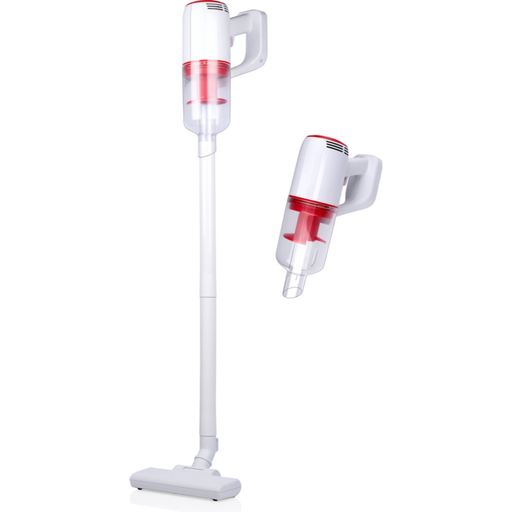
Why it suits this profile: This model is designed for everyday crumbs and dust in a flat or smaller home. The stick unit converts into a handheld vacuum for furniture, stairs and the car.
The runtime is clearly specified: up to 25 minutes on the lowest setting and 15 minutes on the highest setting. This gives you a realistic idea of what to expect during more intensive use.
1.3 kg, 0.5-litre dust container, two power settings and maximum suction power of 6000 Pa according to the product specifications.
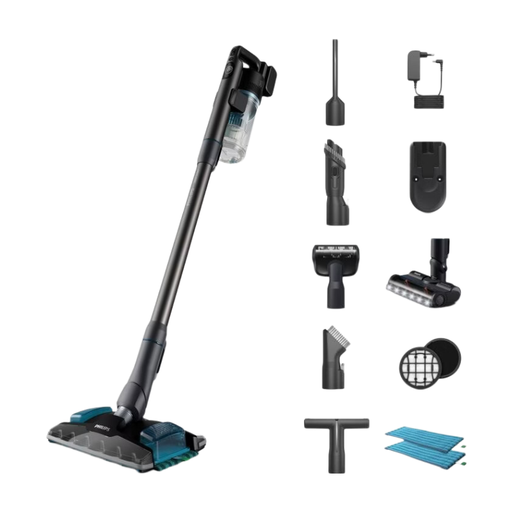
Why it suits this profile: Households looking for one appliance for dry vacuuming, manual cleaning and mopping hard floors get several functions in one system.
The specifications distinguish between the low setting and turbo mode. They also state that this model does not have a HEPA filter, but uses five-stage filtration.
Up to 80 minutes on the low setting, a 0.6-litre container, handheld unit, LED lighting and an integrated mopping function with water tank.
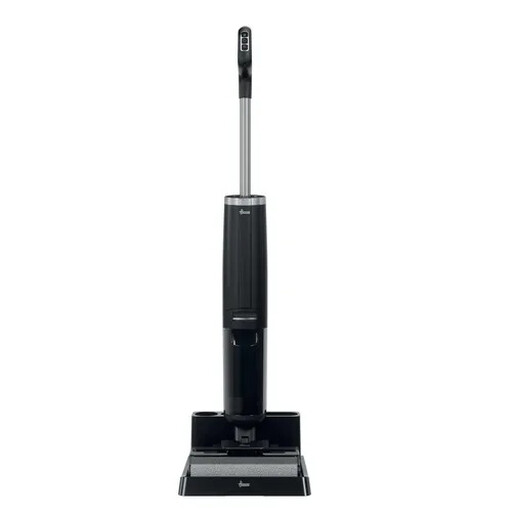
Why it suits this profile: Suitable for families with hard floors who regularly want to tackle crumbs, spilt liquids and ingrained dirt with one floor cleaner.
The cleaning modes are clearly defined: there are separate settings for vacuuming only and vacuuming with mopping. The stated runtime is up to 40 minutes.
Self-cleaning function, anti-hair-wrap function, dual-edge cleaning and tanks with a capacity of 0.55 litres each, according to the product information.
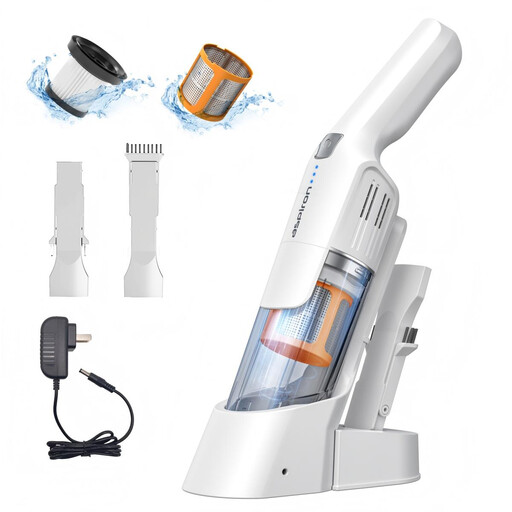
Why it suits this profile: This compact model is designed for crumbs, dust and hair on sofas, desks, stairs and car seats. It complements a standard vacuum cleaner rather than replacing it as a complete floor-cleaning solution.
The manufacturer positions this as a handheld model for targeted cleaning. This means you should not expect extended floor cleaning or a stick design that is not part of the product.
Two settings, up to 24 kPa according to the product information, a 500 ml dust container, HEPA filter and a noise level below 70 dB according to the stated specifications.
We have put together a complete, up-to-date list of products that fully meet these strict selection criteria and the applicable European safety regulations.
This depends on the power setting, brush and age of the battery. Manufacturers usually state a maximum operating time. Turbo mode, carpets and a motorised brush use more energy. Do not leave the battery completely flat for extended periods and use only the supplied or specified charger.
These models are generally designed for hard floors such as tiles, PVC, laminate or parquet. Check the manual before wet-cleaning a floor. Carpets and rugs are usually not suitable for mopping mode. Empty and dry the clean-water tank and roller brush after use, following the instructions.
In addition to the purchase price, your main costs are electricity, filter maintenance and, where necessary, replacement brushes or batteries. A bagless model does not use dust bags, but filters still need to be cleaned or replaced regularly. Check the availability and price of genuine replacement parts in advance.
