
Vandaag of morgen in huis

Kwaliteit gegarandeerd

Welkomstaanbiedingen ontgrendelen: GRATIS bezorging | Tot 80% korting | Gratis 30 dagen JoyPlus-proefperiode
Download de app
A cordless stick vacuum cleaner lets you clean quickly without having to move a cable around. That is useful for crumbs in the kitchen, pet hair on the sofa and dust under furniture. However, a high figure on the packaging does not tell you everything. If you only look at suction power or battery life, you could end up buying a machine that proves heavy, noisy or difficult to maintain in everyday use.
The main pitfalls are:
A powerful stick vacuum cleaner needs more than just a strong motor. The floor brush also affects how effectively dust, crumbs and hair are picked up. A motorised brush is useful for carpets, while a soft roller can help limit damage and scratches on hard floors.
Look out for:
For example, a Monsga product listing specifies a Carpet Mode and Bare Floor Mode for the ME03. This puts the stated 55 kPa into better perspective than a single maximum figure on its own. Use the maximum setting selectively, as it will generally consume more battery power.
A cordless vacuum cleaner gives you flexibility, but the battery determines how long you can work without interruption. Check whether the battery is removable and how long it takes to charge. A spare battery can be useful in a larger home.
Also consider the weight of the complete vacuum cleaner, rather than just the motor unit on its own. A model weighing around two kilograms may be more comfortable for stairs, furniture and high shelves than a heavier machine with a large battery.
A self-standing vacuum cleaner is useful if you are interrupted while cleaning. However, check whether the machine can only stand upright or can also be used flat underneath furniture.
According to the product description, a HEPA filter can trap fine particles in the airflow. Its precise performance depends on the complete filtration system, the seals and how well it is maintained. A claim such as “99.99%” should therefore be viewed as a test result stated by the brand, rather than a general guarantee for every use case.
Check before buying:
Only use a stick vacuum cleaner as instructed in the manual. Many models are designed for dry surfaces and must not be used to pick up liquids, hot ash or sharp objects.
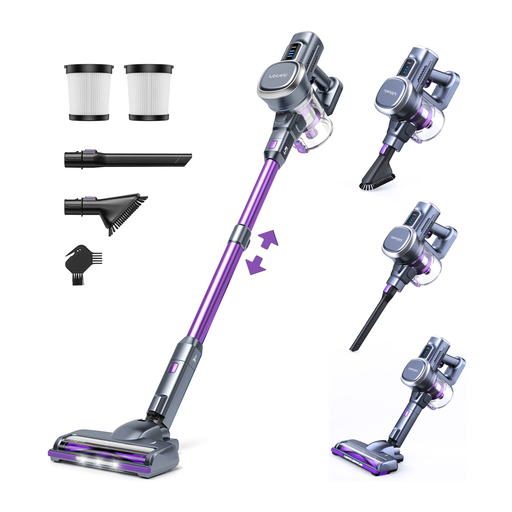
Why it suits this profile: This model combines three settings, a self-standing design and a removable battery for everyday cleaning on hard floors and carpets.
The product listing distinguishes between Max, Mid and Eco modes. This makes it clearer when maximum suction power may come at the expense of battery life.
25 kPa according to the product information, up to 50 minutes of use and a V-shaped brush designed to help reduce hair tangling.
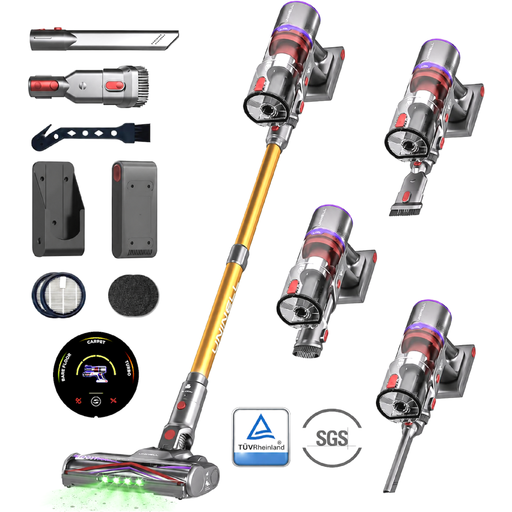
Why it suits this profile: Ideal for households looking to use one appliance for floors, furniture, stairs and hard-to-reach areas.
The stated runtime is linked to a removable battery and AI Battery Management. However, check the actual runtime for each setting in the product details.
Up to 60 kPa peak suction power according to the brand listing, a stated 65-minute runtime and seven filtration stages.
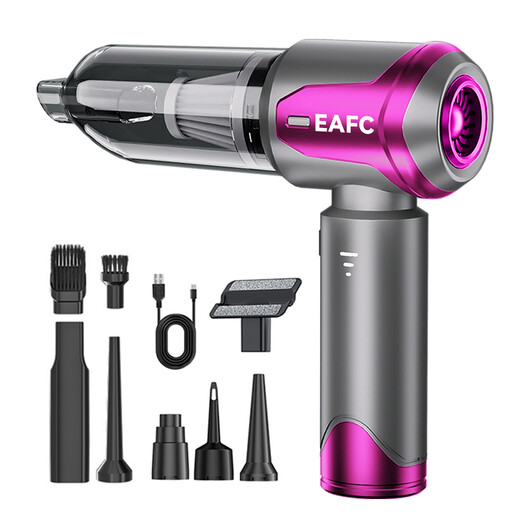
Why it suits this profile: This compact appliance is primarily designed for cars, desks, sofas, keyboards and small cleaning jobs around the home.
The product description presents this as a handheld vacuum cleaner, rather than a full-size floor cleaner. This helps prevent unrealistic expectations when cleaning large carpeted areas.
According to the product information, 16,000 Pa suction power, four functions and a USB-C connection with a 6,000 mAh battery.
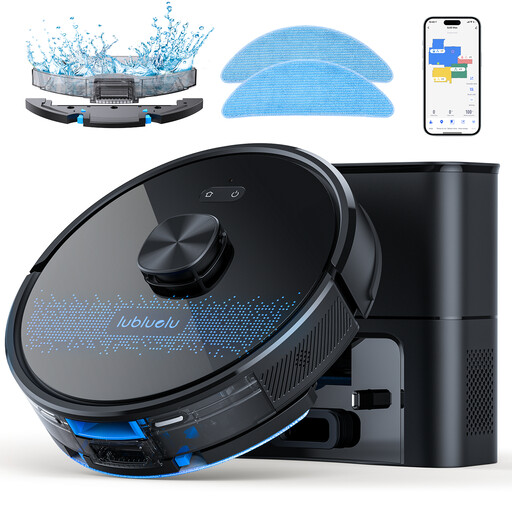
Why it suits this profile: A robot vacuum cleaner with mopping functionality suits anyone who wants to vacuum and mop hard floors automatically, without having to use a stick vacuum cleaner every day.
LiDAR navigation and adjustable zones help it clean systematically. However, cables and small objects must be removed from the floor beforehand.
The product information lists 4,000 Pa, vacuuming and mopping, automatic emptying, and control via an app and voice assistant.
We have compiled a complete, up-to-date list of products that fully meet these strict selection criteria and the applicable European safety regulations.
A stick vacuum cleaner gives you direct control. You decide which room, stairs, sofa or car to clean. A robot vacuum cleaner works particularly well on clear floors and can clean according to a schedule. Models with a mopping function are designed for light damp cleaning, not for sucking up puddles.
For many pet owners, a combination is practical: a robot for regular maintenance and a stick vacuum cleaner or handheld vacuum cleaner for the sofa, stairs, skirting boards and car. With a robot, check the height of thresholds, carpet pile height, space for the charging station, and the availability of filters, brushes and dust bags.
That depends on how it is used, the battery and maintenance. Cleaning the filters regularly, removing hair from the brush and charging the battery according to the instructions can help reduce wear. Check in advance whether a replacement battery and replacement filters are available.
A high stated figure can be useful, but also compare the brush, airflow, suction setting and battery life. For carpets and pet hair, a motorised floor brush and an anti-tangle brush are often at least as important as the Pa figure.
The electricity costs mainly come from charging the battery and generally depend on how often it is charged and the power used. A machine with a short maximum runtime may need charging more frequently. With a robot featuring a self-emptying station, you also need to account for consumables such as dust bags or mop cloths.
