
Vandaag of morgen in huis

Kwaliteit gegarandeerd

Welkomstaanbiedingen ontgrendelen: GRATIS bezorging | Tot 80% korting | Gratis 30 dagen JoyPlus-proefperiode
Download de app
A cordless stick vacuum cleaner is handy for everyday crumbs, pet hair and quick clean-ups. However, a high wattage or Pascal rating does not tell the whole story. Practical performance also depends on the brush, battery, airflow, filters and maintenance.
For UK households, three situations are particularly familiar: the battery runs out sooner than expected, hair gets tangled around the floor brush, or the appliance is less convenient to use on different types of flooring. By checking the right things in advance, you can avoid paying mainly for marketing claims.
Brands often state maximum suction power in Pa, kPa or Air Watt. This is usually measured under specific conditions, such as the highest power setting. The operating time in that setting may be considerably shorter than the advertised maximum battery life.
So do not compare only the highest figure. Also check:
A stick vacuum cleaner with a long battery life is most practical when it lasts long enough in normal or automatic mode to clean your home.
A stick vacuum cleaner for dog hair and cat hair needs a floor brush that picks up hair effectively. Anti-tangle or anti-twist technology can reduce tangling, but no brush eliminates the need for regular cleaning. Long hair can still collect around the ends, bearings or air inlet.
Check whether the brush can be removed easily and whether a hair-cleaning tool or spare part is included. Also look for a combination of soft rollers for hard floors and firm bristles for carpets.
A stick vacuum cleaner with a HEPA filter may appeal to users who want to keep fine dust particles contained within the filter system more effectively. However, pay close attention to the exact wording: “HEPA filter”, “multi-stage filtration” and “fine-particle filtration” are not always the same thing.
According to a brand’s product information, certain percentages may have been established under test conditions. Do not therefore regard these percentages as a guarantee for every home. More important for long-term use are:
For a stick vacuum cleaner for carpets and hard floors, adjustable suction power is more useful than simply having a high maximum figure. Hard floors often require a soft roller or brush that picks up dirt without putting unnecessary strain on the surface. Carpets need a motorised brush that reaches deeper between the fibres.
An LED light on the floor head can help make dust under cupboards and sofas visible. This is particularly useful in dark corners, but it says nothing about suction power in itself.
An advertised runtime of, for example, 60 or 80 minutes often applies to the lowest setting and does not include intensive use of all motorised accessories. For a realistic comparison, look at the turbo or automatic setting.
A removable battery makes storage and potential replacement easier. Also check the charging time: a long charging period can be inconvenient if you want to clean several rooms one after another.
A lightweight main unit is convenient for stairs, furniture and ceilings. However, the total weight with the tube and floor brush determines how heavy the appliance feels during vacuuming. A swivelling floor head and a tube that lies flat are useful for cleaning under low furniture.
For homes with pets or larger households, a dust container of around 0.5 litres or more is practical. A smaller container is more compact, but needs emptying more often.
A stick vacuum cleaner with a mopping function combines vacuuming and wet cleaning, usually with a water tank and microfibre pads. Always check which floors the function is designed for. Some models are suitable only for sealed hard floors and must not be used on carpets, untreated wood or surfaces with open joints.
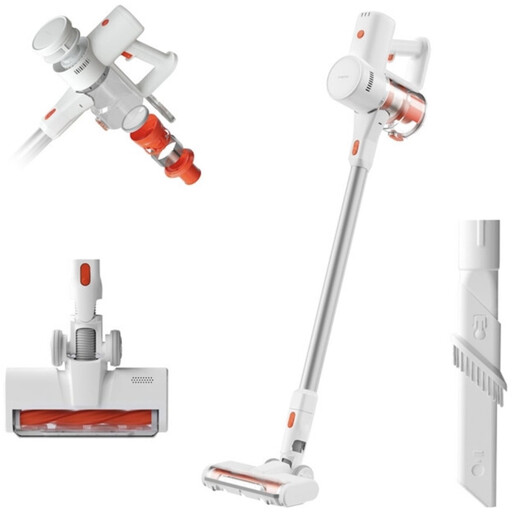
Why it suits this profile: This compact model has a 0.55-litre dust container, LED lighting and a 2-in-1 nozzle for everyday cleaning on different surfaces.
The product information states both a normal operating time of up to 45 minutes and a turbo runtime of 15 minutes. This makes the difference between the two settings clear.
HEPA filter according to the product information, LED lighting, one-button emptying and a weight of 2.4 kg.
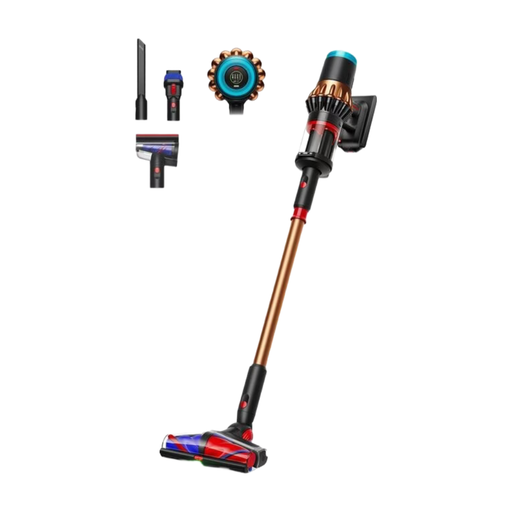
Why it suits this profile: The product description focuses on households with pets and long hair, with a floor head that Dyson says is designed to reduce hair tangling.
The technical information lists the maximum runtime of 70 minutes, the 1.35-litre dust container and the fully sealed HEPA filtration system separately. This makes it easier to assess capacity and operating time.
315 Air Watts maximum according to the product data, an LCD screen, 1.35-litre dust capacity and filtration according to the stated specification.
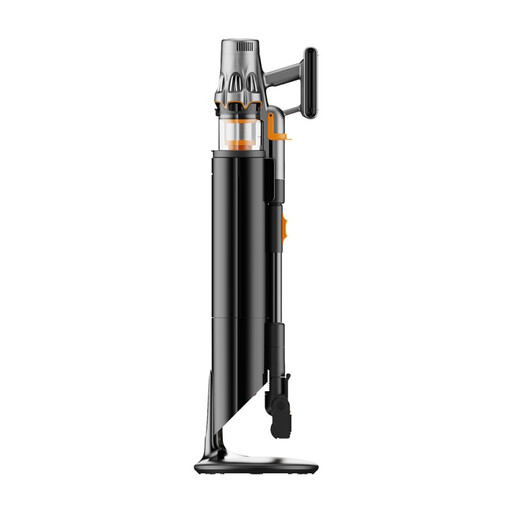
Why it suits this profile: The stated 100-minute battery life and self-emptying base station are aimed at larger homes and users who clean frequently.
The product data lists four settings, a 0.6-litre dust container and a base station in addition to the battery. This means operation does not depend on a single maximum setting.
220 Air Watts, stated battery life of 100 minutes, anti-tangle design and a station with automatic emptying according to the product information.
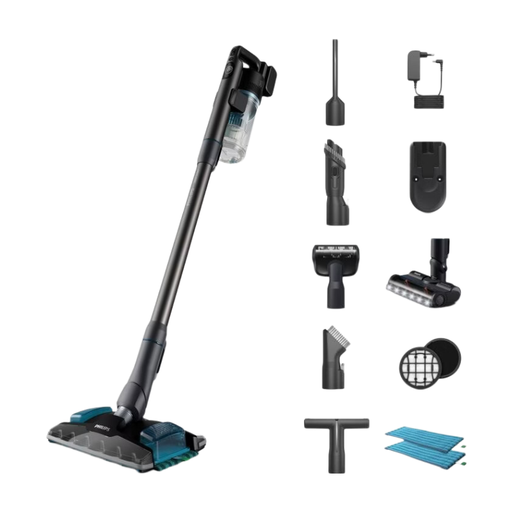
Why it suits this profile: This 2-in-1 model combines dry vacuuming with a removable water tank and microfibre pads for hard floors.
The product information distinguishes between up to 80 minutes on low power and 30 minutes in turbo mode. It also states a charging time of 6.5 hours.
Mopping function, 0.6-litre dust container, handheld vacuum mode and LED lighting. The manufacturer states that it has a 5-stage filtration system; the specification does not mention a HEPA filter.
We have put together a complete, up-to-date list of products that fully meet these strict selection criteria and the applicable European safety regulations.
The stated operating time varies by model and setting. The lowest setting may last for 40 to 80 minutes, for example, while turbo mode often lasts around 10 to 30 minutes. Battery lifespan depends on charging habits, heat, frequency of use and storage. Use the original charger and store the appliance indoors at room temperature.
Yes, provided the model has a motorised floor brush and a suitable carpet setting. Check the brush width, adjustable suction power and stated compatibility with hard floors and carpets. A high maximum suction power does not guarantee that every carpet will be cleaned effectively.
In addition to the purchase price, electricity, filters, brushes and a possible replacement battery are the main costs to consider. A removable battery can make maintenance easier. A mopping model may involve additional costs for microfibre pads. Cleaning the filters regularly and emptying the dust container helps limit unnecessary strain on the motor.
