
Vandaag of morgen in huis

Kwaliteit gegarandeerd

Welkomstaanbiedingen ontgrendelen: GRATIS bezorging | Tot 80% korting | Gratis 30 dagen JoyPlus-proefperiode
Download de app
A cordless stick vacuum cleaner is handy for everyday crumbs, dust and pet hair. You can quickly take it off its dock, there’s no cord to catch on furniture, and you can often switch between hard floors, carpets and upholstery. But a high number on the packaging doesn’t tell you everything. If you only look at suction power or battery life, you could end up buying a model that’s awkward to maintain in practice.
Figures such as 27,000 or 45,000 Pa sound impressive, but battery life can be noticeably shorter on the highest setting. The floor head, airways and seals also play a part. So always check:
A high-suction stick vacuum cleaner is particularly useful for deep-down dirt and pet hair on carpets. For everyday dust on laminate, a lower setting may be more practical.
A rechargeable vacuum cleaner might run for up to 50 or 65 minutes on an energy-saving setting, for example. The battery may run down faster when you’re cleaning intensively. Also check the charging time, whether the battery can be removed and the price of a replacement battery, if available.
An anti-tangle brush helps stop hair from winding around the roller as quickly. You’ll still need to check it when dealing with long dog hair, cat hair and threads. See whether the brush is easy to remove and whether a cleaning tool is included. Check the suction tube and filter regularly, too. A blockage can restrict airflow and put extra strain on the motor.
Don’t just look at Pa or kPa. A good combination includes a motorised floor brush, suitable suction settings and a design that moves smoothly across your floor. If you want a vacuum cleaner for carpets and hard floors, an adjustable mode is useful: more power for carpets and a gentler setting for smooth floors.
A V-shaped brush can guide hair towards the middle of the roller. LED lights on the floor head make dust and hair under furniture easier to see. This is particularly handy in dark corners, but it doesn’t automatically mean every visible speck will be picked up.
A stick vacuum cleaner with a HEPA filter may be worth considering if you want to capture more fine dust. Check exactly what’s included: a washable filter, multiple filter layers and replacement filters are more important than just seeing the word “HEPA” on the packaging.
According to Daynee’s product description, the N850 uses a five-stage filtration system with four washable HEPA filters. The stated filter efficiency is a claim from the brand’s product information and shouldn’t be mistaken for a general guarantee of air quality in your home.
Also check the capacity of the dust container. A larger container means less frequent emptying, but it can make the vacuum cleaner heavier. One-click emptying reduces direct contact with dust, while a self-emptying base may require extra space and dust bags.
A cordless vacuum cleaner is often used several times a week, so weight, handle design and manoeuvrability all matter. A self-standing vacuum cleaner is handy if you want to pause while cleaning without leaning it against a wall.
Also check the noise level in the product specifications. Any stated figure usually applies under specific conditions. The actual noise can vary depending on the setting and floor type.
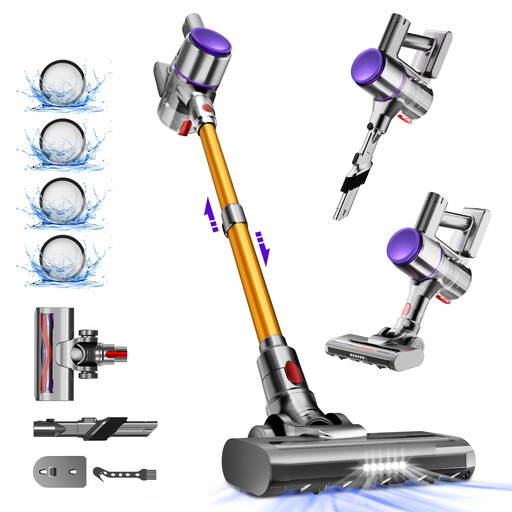
Why it suits this profile: This model combines two suction settings, a large dust container and a replaceable battery. It’s well suited to everyday cleaning without the need to invest in a more elaborate system.
The product information lists both a high and a lower setting, so maximum battery life isn’t the only way to use it. The V-shaped brush is designed to help prevent hair from winding around it.
According to the product specifications: up to 45,000 Pa, up to 50 minutes of use, a 1.6-litre dust container, four washable HEPA filters and LED lights.
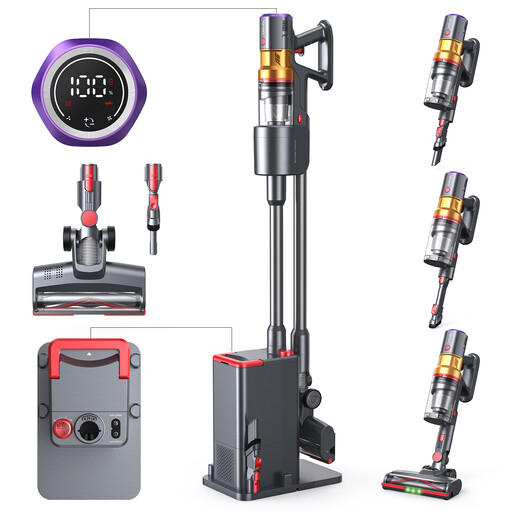
Why it suits this profile: The self-emptying charging base, self-standing design and range of functions make this a good fit for households that value convenience and tidy storage.
According to the product description, the base automatically empties the dust container into a sealed bag. This means you need to empty it manually less often, but you will need to replace the base’s dust bags.
According to the product information: 27,000 Pa, a multi-stage HEPA filtration system, an anti-tangle brush, green LED lights and a self-emptying charging stand.
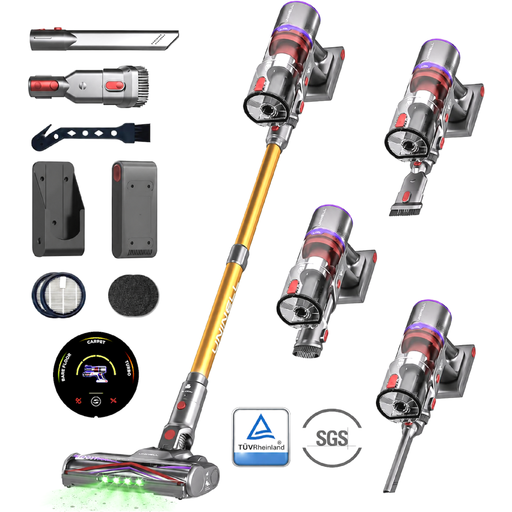
Why it suits this profile: This model is aimed at larger households and pet owners looking for generous battery life, powerful settings and a brush designed to prevent hair build-up.
The battery is removable and, according to the product description, the brush has an anti-tangle design. Still, check the roller regularly and charge the battery according to the instructions provided.
According to MONSGA’s own product information: up to 65 minutes of use, a seven-layer filtration system, the ability to lie flat at 180° and four green LED lights.
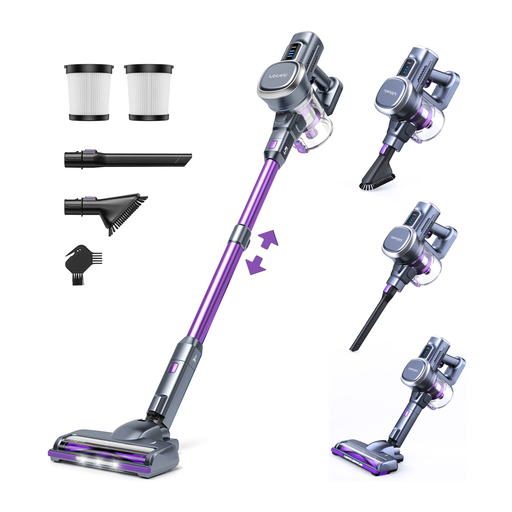
Why it suits this profile: Its light weight and self-standing design make it practical for flats, multi-storey homes and quick cleaning sessions.
With three settings, you can adjust the power to suit the floor. According to the product description, the V-shaped brush is designed to help prevent hair from winding around it.
According to the product specifications: 2.2 kg, up to 25 kPa, three suction settings, a removable battery and self-standing storage.
We’ve put together a complete, up-to-date list of products that meet these strict selection criteria and the applicable European safety regulations.
Your cordless stick vacuum cleaner will stay in good working order if you keep up with regular maintenance:
Wet floors call for a dedicated wet and dry model. A standard cordless vacuum cleaner is generally designed for dry use. For stains on carpets, sofas or car seats, you’ll usually need a separate carpet cleaner or spot cleaner.
Yes, if the model has a motorised brush and an anti-tangle design. Make sure you check the roller regularly, though, as no brush makes maintenance completely unnecessary. A higher setting is often useful for dog and cat hair on carpets, but it usually reduces battery life.
It depends on the setting you choose, the age of the battery and the floor type. Manufacturers often state the maximum running time on the lowest setting. So compare the running time at maximum suction power and check whether the battery can be replaced.
Charging costs usually depend on the battery capacity and how often you charge it. Also consider ongoing costs for filters, brushes, dust bags for self-emptying models and a replacement battery, if needed. These parts all contribute to the total cost of ownership.
