
Vandaag of morgen in huis

Kwaliteit gegarandeerd

Welkomstaanbiedingen ontgrendelen: GRATIS bezorging | Tot 80% korting | Gratis 30 dagen JoyPlus-proefperiode
Download de app
A cordless stick vacuum makes everyday cleaning easier: there’s no cord to get caught behind furniture, and most models can quickly be converted into a handheld vacuum. However, many buyers run into the same issues. A high suction-power figure on the box doesn’t tell you everything about how well a vacuum works on carpets, while a long battery life is often measured only on the lowest setting.
That’s why the Joybuy Product Recommendation Officer cuts through the key specifications and marketing claims. This guide shows you what to look for when choosing a cordless vacuum for your home, car or pets.
A figure such as 55 kPa or 65 kPa sounds impressive, but it doesn’t tell you on its own how well a vacuum cleans. The results also depend on the floor head, airflow, seals, filter and suction setting. According to product information provided by various brands, maximum figures are usually achieved on the most powerful setting. This uses more energy and can significantly reduce the running time.
So don’t compare maximum suction power alone. Also look at:
“Up to 60 or 70 minutes” usually means the vacuum was tested in eco or hard-floor mode. Cleaning carpets or pet hair often requires more power. Check whether the battery is removable, too. A removable battery can make it easier to replace it later or use a second battery, depending on the availability of spare parts.
A stick vacuum with a HEPA filter can filter fine dust particles, according to the brand’s specifications, but the filter needs to be clean and completely dry. A clogged or damp filter can reduce airflow. A filter is also no substitute for regular vacuuming, ventilation or other measures around the home.
Check whether:
For a stick vacuum for carpets and hard floors, a brush with an adjustable mode is useful. A soft roller is suitable for delicate hard floors, while a motorised brush can provide better grip on carpets. If you’re looking for a stick vacuum for pet owners, an anti-tangle brush can help, although hair may still wrap around the roller. Check whether you can access the brush without tools.
A stick vacuum with long battery life is particularly useful in a larger home or one with several floors. Look at the quoted running time for the setting you’re most likely to use. A removable battery is handy for storage and replacement. Check the charging time, too: a four- to five-hour charge could mean you can’t clean again in the meantime.
A lightweight stick vacuum isn’t automatically comfortable to use. The weight in handheld mode, the balance of the motor and how easily the floor head turns all matter. A telescopic wand, a floor head that lies flat through 180 degrees and LED lights can help you clean under beds and sofas. Check whether the display lets you change the setting or just shows the battery status.
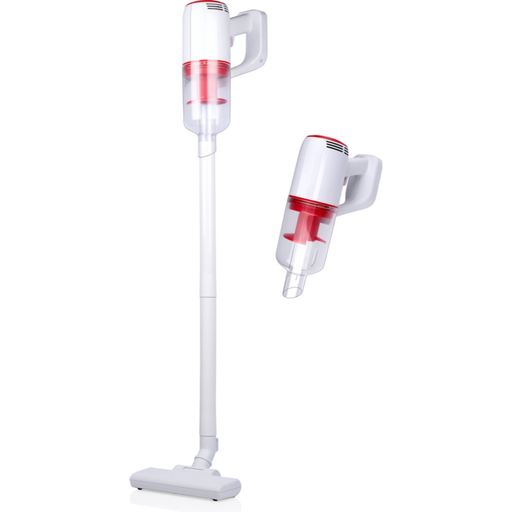
Why it suits this profile: A simple 2-in-1 option for smaller homes and light everyday cleaning. The stick converts into a handheld vacuum for furniture and crevices.
The quoted running time is clearly linked to the suction setting: up to 25 minutes on the lowest setting and 15 minutes on the highest. This makes it easier to match your expectations to how you use it.
1.3 kg, a 0.5-litre dust container, two suction settings and a quoted maximum suction power of 6,000 Pa.
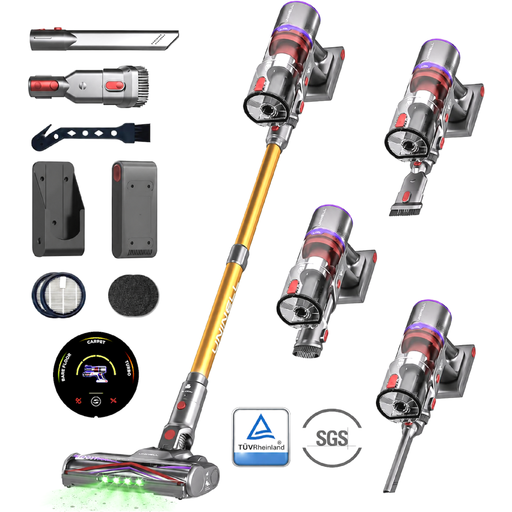
Why it suits this profile: For households that value features such as a touchscreen, long running time and advanced filtration for everyday cleaning.
The product description gives both the maximum suction power and a running time of up to 65 minutes. It also mentions an anti-tangle brush and maintenance alerts on the display.
According to the product information: up to 60 kPa peak suction power, 65 minutes of running time, seven stages of filtration and four green LED lights.
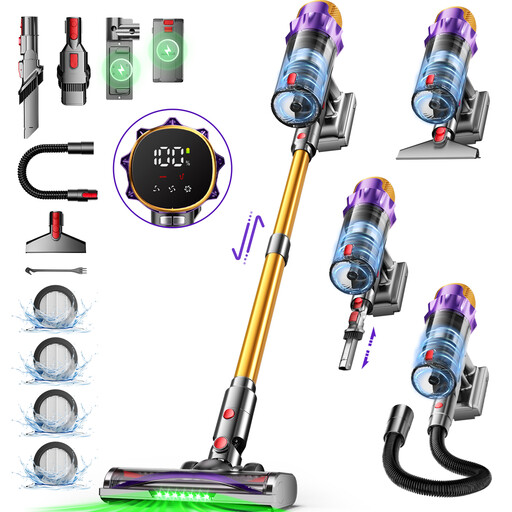
Why it suits this profile: Suitable for larger homes, carpets and households with pets, where a generous dust container and longer cleaning sessions are useful.
The quoted 70 minutes applies to eco mode; for more powerful cleaning, the product information gives a running time of 40 to 50 minutes. The removable battery and anti-tangle brush make it more practical to use and maintain.
According to the product information: a 1.8-litre dust container, four-stage HEPA filtration, LED lights, three suction settings and a removable battery.
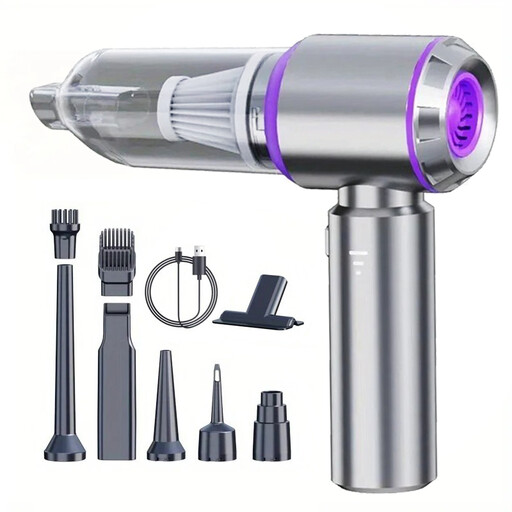
Why it suits this profile: A compact option for car interiors, workspaces, furniture and small cleaning jobs where a full-size stick vacuum isn’t needed.
The product information clearly describes it as a handheld device, with separate functions for vacuuming, blowing, inflating and deflating. This means it isn’t presented as an unrealistic replacement for a full-size floor cleaner.
Quoted suction power of 16,000 Pa, USB-C charging, a 6,000 mAh battery and several attachments for crevices, floors and inflatables.
We’ve put together a complete, up-to-date list of products that meet these strict selection criteria and comply with current European safety regulations.
Empty the dust container as soon as it reaches the marked fill line, and regularly remove hair from the floor brush. Clean washable filters according to the instructions and let them dry completely before putting them back. Only use a cordless stick vacuum on dry surfaces, unless the manufacturer specifically states that it has a wet-cleaning function.
Charge the battery using the supplied adapter and store the appliance indoors in a dry place. Don’t vacuum hot ash, liquids, sharp objects or flammable materials. If suction power drops, first check the brush, air inlet, filters and connections.
It can be, particularly if the vacuum has a motorised anti-tangle brush and a suitable carpet setting. Check the brush regularly, though. Hair can build up at the ends or in the floor head, even with a design that the manufacturer says helps reduce tangles.
Running time depends on the suction setting, floor surface, battery age and maintenance. The quoted maximum usually applies to eco mode or hard floors. A removable battery can be useful if a replacement or spare battery is available.
Electricity costs are usually modest, but remember to consider charging time, energy use on the highest setting and the cost of replacement filters. Washable filters can help keep ongoing costs down, provided you maintain them as instructed and replace them when they’re damaged.
