
Vandaag of morgen in huis

Kwaliteit gegarandeerd

Welkomstaanbiedingen ontgrendelen: GRATIS bezorging | Tot 80% korting | Gratis 30 dagen JoyPlus-proefperiode
Download de app
Tangled extension cords during demolition, or a hand saw that just won't cut through that thick branch. Sound familiar? A cordless reciprocating saw offers the freedom and power for these kinds of jobs, from the garden to the job site. But with so many options on the market, making the right choice can be difficult.
As a Joybuy Product Recommendation Officer, my job is to help you make the right choice, without the marketing hype. In this article, we'll look at objective specifications and practical features. This way, you can find the cordless reciprocating saw that truly fits your projects.
Before you make a decision, it's helpful to consider a few key points. These will determine how well the saw suits your specific tasks.
Do you already use cordless tools? If so, it's a smart move to choose a cordless reciprocating saw from the same brand and platform (like Einhell Power X-Change or Makita LXT). This saves you the cost of extra batteries and chargers. Most models run on 18V. An 18V reciprocating saw offers an excellent balance of power, weight, and runtime for the most common jobs.
Not every job requires the same saw. For installation work in tight spaces, a compact and lightweight model is ideal. For heavy-duty demolition or pruning thick branches, weight and a sturdy grip are more important. So, think carefully about what you'll be using the saw for most often. A lighter machine is more comfortable to work with when using it as a cordless pruning saw.
A good cordless reciprocating saw is versatile. With the right blade, you can effortlessly switch between different materials. A reciprocating saw for wood and metal is standard, but there are also blades for plastic, plaster, and pruning. A system that allows you to change the blade without tools is a major practical advantage.
Based on specifications and intended use, we've highlighted a few interesting models for you.
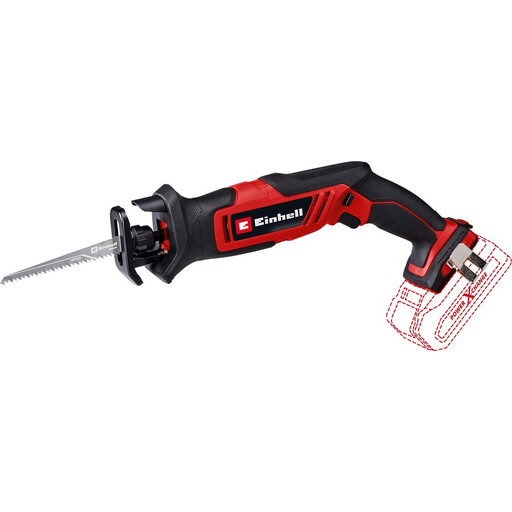
Why It Stands Out This saw from Einhell is remarkably light and manageable, which, according to the manufacturer, makes it suitable for one-handed operation. It's part of the extensive Power X-Change battery platform, allowing you to share batteries with many other Einhell tools.
Key Features
Who Is It For? Ideal for the DIY enthusiast and gardener who already owns tools from the Einhell Power X-Change platform or is looking for a light, manageable saw for jobs in and around the house.
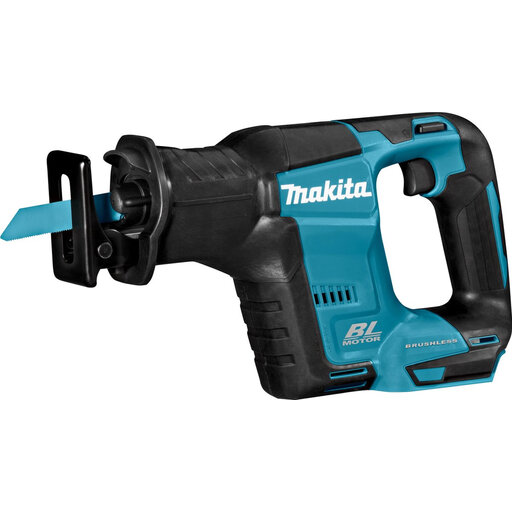
Why It Stands Out With this compact model, Makita targets professionals and serious DIYers. Its energy-efficient brushless motor and short design make it, according to the manufacturer, highly suitable for work in confined spaces.
Key Features
Who Is It For? Especially valued by installers, electricians, and DIYers who need a reliable and compact 18V reciprocating saw for precision work in tricky spots.
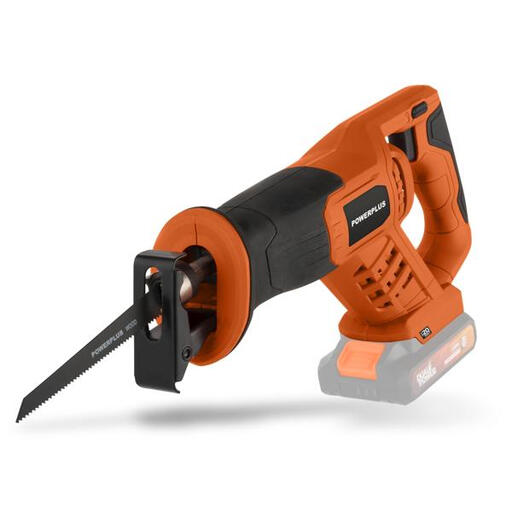
Why It Stands Out This 20V reciprocating saw from POWERPLUS is positioned as an accessible choice for the occasional DIYer. It offers the basic features you need for various cutting jobs at home, such as cutting through pipes or wooden slats.
Key Features
Who Is It For? The DIYer who occasionally needs a cordless reciprocating saw for home projects and is looking for a practical balance between price and functionality.
The right choice depends heavily on your specific jobs and any batteries you may already own. If the models above don't quite match your needs, more options are available.
Browse our full range and compare different models based on power, weight, and features.
None. The terms cordless reciprocating saw and cordless saber saw are used interchangeably for the same type of tool. The name 'saber saw' refers to the shape of the blade, which resembles a saber.
Absolutely. With a special pruning blade, a cordless reciprocating saw is a powerful alternative to a hand saw or loppers. It's an effective cordless pruning saw for removing thicker branches, saving a lot of time and effort.
For most jobs in and around the house, such as demolition, cutting pipes, and pruning, an 18V reciprocating saw is more than sufficient. This voltage provides a good balance of power, weight, and battery life. For very heavy, continuous demolition work, a model with a higher voltage or a corded version might be worth considering.
