
Vandaag of morgen in huis

Kwaliteit gegarandeerd

Welkomstaanbiedingen ontgrendelen: GRATIS bezorging | Tot 80% korting | Gratis 30 dagen JoyPlus-proefperiode
Download de app
A glossy car finish without swirls or light scratches is the dream of many car enthusiasts. Polishing by hand is a time-consuming chore, and a traditional corded polisher limits your freedom of movement. A cordless polisher offers the solution: power, flexibility, and ease of use in one package. But with the many options on the market, making a choice can be difficult.
As a Joybuy Product Recommendation Officer, I'm here to help you get started. In this article, I'll provide practical guidance to help you make an informed decision, without the marketing jargon. We'll look at the specifications that truly matter, so you can find the wireless polisher that suits your project.
Before you make a choice, it's good to understand a few key features. These specifications determine how the machine performs and which tasks it's suitable for.
Polishers have roughly two types of motion: rotary and dual-action (orbital).
dual-action polisher distributes heat more evenly and is much more forgiving. This makes an orbital polisher an excellent choice for car polishing for beginners and for general tasks like waxing and light paint polishing.With a cordless polisher, the battery is the heart of the tool. Pay attention to two values:
Not every job requires the same speed. A machine with an adjustable speed (RPM, Rotations Per Minute) is much more versatile.
A machine with multiple speed settings gives you the control to optimize your car polishing results and prevent damage.
Based on objective specifications and features, we've listed a few popular choices for you.
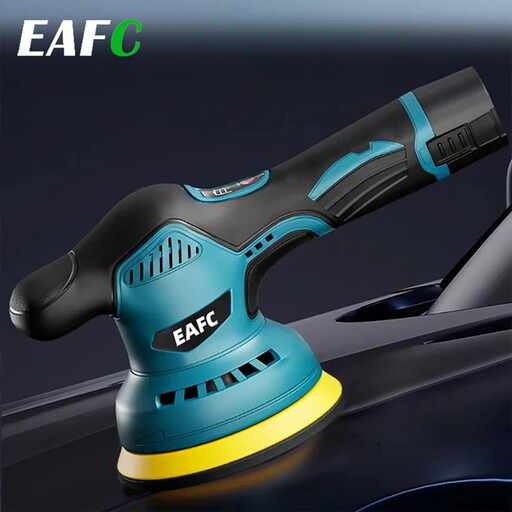
This model combines a powerful 12V motor with a wide, adjustable speed range of 2800 to 5500 RPM across eight settings. The dual-action motion with a 0.9 cm orbit ensures an even finish without damaging the paint. The inclusion of three batteries makes this a package that allows you to work for extended periods right away.
For the DIY enthusiast looking for a complete and versatile car polisher. The combination of adjustability, dual-action motion, and multiple batteries makes it suitable for both beginners and more experienced users who value long, uninterrupted work sessions.
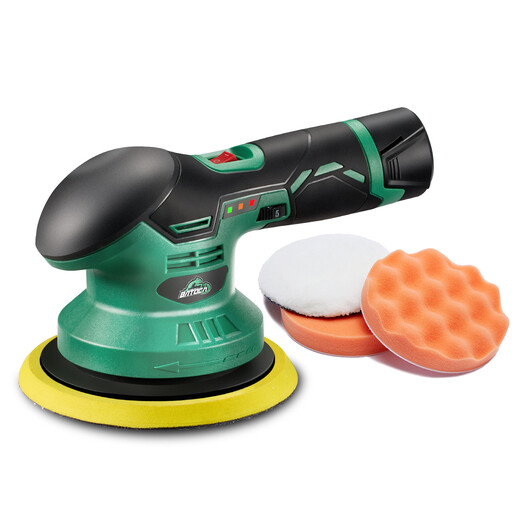
The BATOCA polisher stands out for its light weight (only 1.36 kg) and user-friendly design. According to the manufacturer BATOCA, the housing is made of impact-resistant ABS. A handy feature is the three-colour battery indicator (green, yellow, red), so you know exactly when it's time to recharge.
random orbit (dual-action) motion makes it safe for beginners.Ideal for beginners or for those looking for a light, handy machine for quick jobs like applying wax. Its compact size and simple operation make this an accessible cordless polisher.
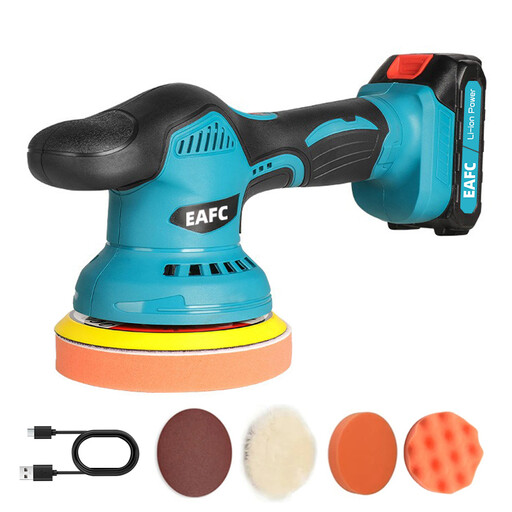
With a 21V motor, this EAFC model offers that extra bit of power for those who need it. The specifications mention a wide range of applications, from car polishing to sanding wood and polishing furniture. The speed, just like its 12V sibling, is adjustable from 2800 to 5500 RPM in eight settings.
For the hobbyist looking for a powerful all-rounder. If you want to tackle other polishing or light sanding jobs in addition to your car, the higher voltage of this machine offers extra power and versatility.
If the ideal machine for your project isn't listed here, or if you're curious about other accessories, no problem. We have a wider range of car care tools.
? See more rechargeable battery car accessories here
A rotary machine only spins on its axis, which generates a lot of heat and is ideal for deep scratch removal by professionals. A dual-action (or orbital) machine uses a dual motion: it spins and oscillates at the same time. This is safer for the paint, prevents holograms, and is therefore the recommended choice for most DIYers and beginners.
Absolutely. With a dual-action polisher, the right polishing pads, and compound, car polishing for beginners is very achievable. Always start at a low speed, work on a small section at a time, and don't apply too much pressure. Consider watching a few instructional videos before you start for extra confidence.
This depends on the task. For applying a wax or sealant, a low setting (around 2500-3500 RPM) is sufficient. For removing light scratches or oxidation (light paint polishing), you can use a higher setting (around 4000-5500 RPM). Always start low and only increase the speed if necessary.
