
当日/次日达

品质保障

开启新人专享福利: 全场免邮 | 低至 2 折 | 免费试用 30 天 JoyPlus 会员
下载 Joybuy
A cordless drill is handy for assembling furniture, putting up shelves and tackling small renovation jobs. However, models can vary significantly in power, battery life and features. A cheap kit might look appealing, but it becomes less attractive if the battery runs out quickly, the accessories don’t fit or the charger is missing.
So don’t just look at the voltage or the number of bits included. Focus on the combination of torque, drilling capacity, battery type, accessories and intended use.
An 18V cordless drill isn’t automatically more powerful in every situation than a 16V or 20V model. Voltage mainly indicates the battery’s nominal voltage. The maximum torque, gearing and motor design also determine how suitable the drill is for your job.
A compact 12V drill driver may be enough for assembly work and light drilling. For larger holes in wood, prolonged screwdriving or heavier tasks, an 18V or 20V model is a more suitable choice.
A high figure in Nm sounds appealing, but it’s important to check how it was measured and what type of machine it applies to. An impact drill driver or impact driver works differently from a standard drill driver. Maximum torque also isn’t the same as the torque you’ll use at every setting.
For controlled screwdriving, having several torque settings is more important than simply having the highest figure. This reduces the risk of damaging screws, bits or the material.
A cordless drill supplied with a battery and charger is ready to use, but some models are sold as “body only”. In that case, you’re buying the tool alone. Also check whether one or two batteries are included and what their capacity is.
Pay attention to the battery connection, too. Battery platforms from different brands are usually not interchangeable. A drill that’s compatible with a platform you already own may be more economical in the long run, as you’ll need fewer separate batteries and chargers.
Capacity is measured in Ah, or ampere-hours. A 2.0 Ah battery is lighter and suitable for many household jobs. A larger battery can run for longer, but it also makes the tool heavier.
Always check:
A cordless drill with two batteries is handy when you’re working for longer periods. You can use one battery while the other is charging.
Maximum torque is measured in Nm. For light assembly jobs, around 20 to 30 Nm is often suitable. For more intensive work, a rating of around 40 Nm or higher may be appropriate, depending on the material and the drill bit you’re using.
Two mechanical gears are useful:
At least 10 torque settings give you more control. Some models have 18, 20 or 26 settings. A separate drilling mode stops the clutch from engaging too early while drilling.
Check the maximum drilling diameter in wood, steel and, where relevant, masonry. These figures vary from one drill to another. A 13mm chuck gives you more choice of accessories than a 10mm chuck, but on its own it says nothing about the maximum drilling depth.
For stone or masonry, you’ll need a combi drill with an impact function. A standard cordless drill, such as the Metabo PowerMaxx BS 12, is intended for materials including wood, plastic, steel and soft stone, according to the product information, but not for masonry.
A brushless cordless drill has no carbon brushes. According to the manufacturer’s product description, this can help reduce maintenance and make more efficient use of the battery. Treat this as a product specification, not a guarantee of a particular lifespan.
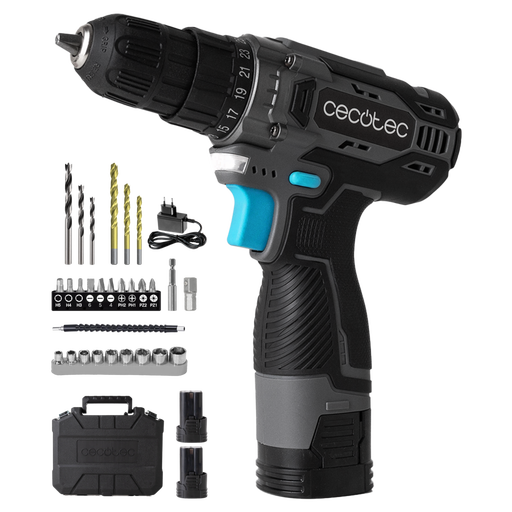
Why it suits this type of user: This kit is designed for household use and includes two 2.0Ah batteries, a charger, a case and various accessories. That makes it easier to get started without having to buy everything separately.
The listing clearly states that batteries and a charger are included. However, check the contents listed, as the product information uses different names for the batteries.
38 Nm, two speeds, 25+1 settings and accessories for wood and metal.
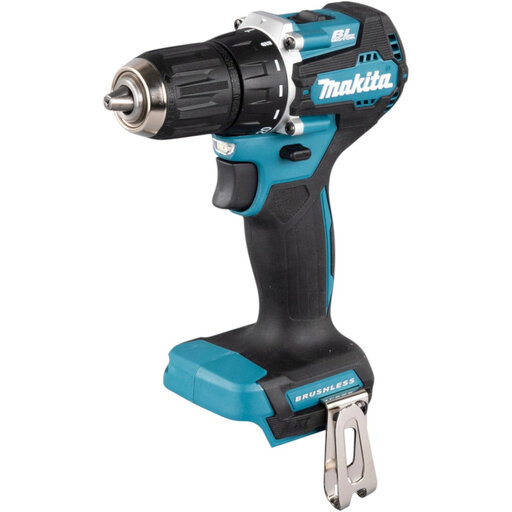
Why it suits this type of user: This 18V drill has a brushless motor, a 13mm keyless chuck, two speeds and an ergonomic handle. Before ordering, check whether the battery and charger are actually included; the description contains conflicting information about this.
The 20 torque settings and separate drilling mode give you more control than a drill with only a high maximum torque.
40 Nm of hard torque, a maximum drilling diameter of 36mm in wood and speeds of 0–500 and 0–1700 rpm.
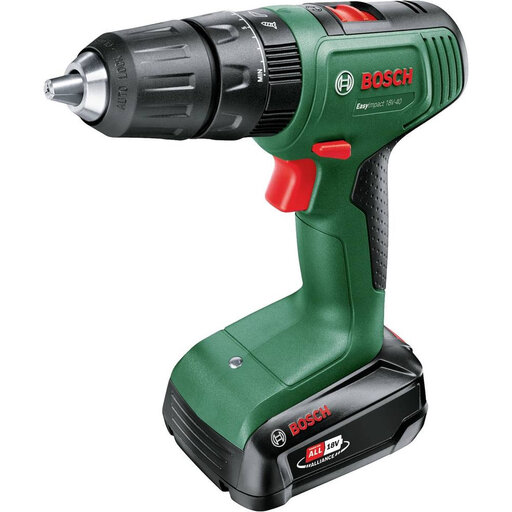
Why it suits this type of user: The combi function is designed for screwdriving, drilling in wood, metal and plastic, and impact drilling in masonry. The Bosch 18V Power for All battery can also be used with other compatible tools.
The kit lists a battery, charger, case and 241-piece accessory set. When it arrives, check that the version you ordered matches the contents exactly.
13mm chuck, 20 torque settings, two gears and an impact function for masonry.
We’ve put together a full, up-to-date list of products that meet these strict selection criteria and comply with current European safety regulations.
Always use a bit or drill bit that’s suitable for the material. Don’t press the drill against the surface with maximum force; let the speed do the work. Wear safety glasses and hearing protection when required by the instructions.
Practical tips:
For furniture assembly, screwdriving and small holes in wood or plastic, a compact 12V or 16V drill is often enough. If you also drill larger holes or do DIY regularly, consider an 18V or 20V model with two gears and several torque settings.
Run time depends on the battery capacity, material, drilling diameter and workload. A 2.0Ah battery is compact, while having two batteries makes it easier to work for longer. Also check whether replacement batteries are available for your chosen platform.
For occasional holes in soft stone, a combi drill with an impact function may be suitable. For frequent drilling into hard concrete or stone, a hammer drill designed for the job is a better choice. Always check the maximum drilling diameter and the manufacturer’s instructions.
