
Vandaag of morgen in huis

Kwaliteit gegarandeerd

Welkomstaanbiedingen ontgrendelen: GRATIS bezorging | Tot 80% korting | Gratis 30 dagen JoyPlus-proefperiode
Download de app
A cordless drill might seem straightforward to choose at first. But models can vary considerably in power, battery life, drilling capacity and included accessories. A compact cordless drill can be ideal for assembling furniture, while a drill/driver with a hammer function is better suited to work on stone or masonry.
Most poor purchases come down to three common misconceptions:
An 18V cordless drill is a versatile choice for wood, metal, plastic and many assembly jobs. Voltage gives you an indication of the system, but on its own it doesn’t tell you how long you can work. Battery capacity is measured in Ah. A 2.5 Ah battery can last longer than a 1.5 Ah battery under the same conditions, but it’s usually heavier too.
Pay attention to the battery platform as well. Bosch POWER FOR ALL 18V, Greenworks 24V and Einhell Power X-Change are examples of systems where one battery fits several tools. This can be a good-value option if you plan to add a saw, sander or garden tool later. Always check whether the battery is actually included with the model.
Torque in Nm determines how much rotational force the machine can deliver. For driving screws into sheet material or assembling furniture, multiple torque settings are important. They help prevent screws from being driven too far into the material.
A machine with two gears generally gives you more control:
A brushless cordless drill uses a motor without traditional carbon brushes. Product descriptions suggest this can help extend the working time per battery charge and reduce maintenance. Treat such statements as product specifications or brand claims; actual working time depends on the material, drill bit, pressure and battery.
Check the maximum drilling diameter for each material separately. For example, a machine may drill up to 30 or 35 mm in wood, but only 10 mm in steel or masonry. Use suitable drill bits and don’t exceed the stated capacity.
A hammer drill or combi drill has a hammer function for light work in stone or masonry. For concrete, large holes or prolonged professional drilling, a dedicated rotary hammer is generally more suitable. An ordinary cordless drill/driver without a hammer function is mainly intended for wood, metal, plastic and driving screws.
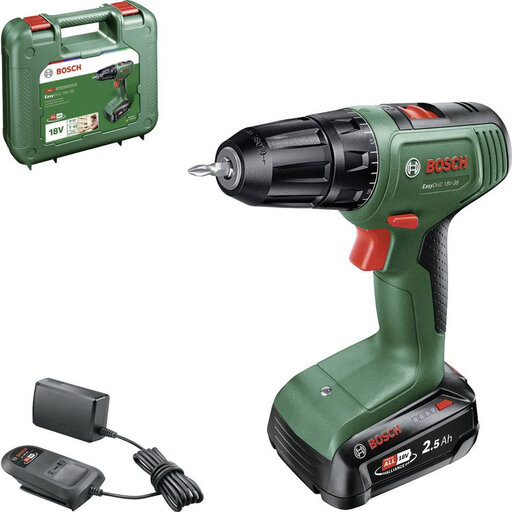
Why it suits this type of user: A compact machine for small projects, furniture assembly and general jobs around the home. The 18V battery and two gears offer flexibility without the need to go straight for a heavy-duty model.
The 20 torque settings make it easier to fine-tune than a model with only a few settings. Before ordering, check whether the battery and charger are included in the current package.
10 mm keyless chuck, two gears, LED light and compatibility with Bosch POWER FOR ALL 18V.
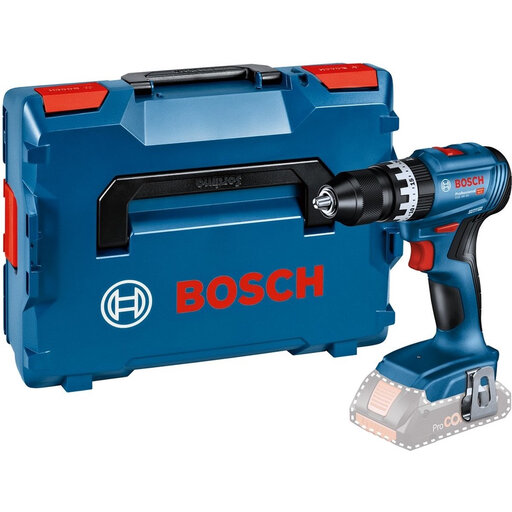
Why it suits this type of user: Suitable for anyone looking for a compact professional drill/driver for regular assembly work and light masonry jobs.
The specifications list the capacity for wood, metal and masonry separately. This model is supplied bare, so you’ll need to already have a battery and charger or buy them separately.
13 mm metal chuck, 45 Nm maximum torque, hammer function and a weight of around 1 kg without the battery.
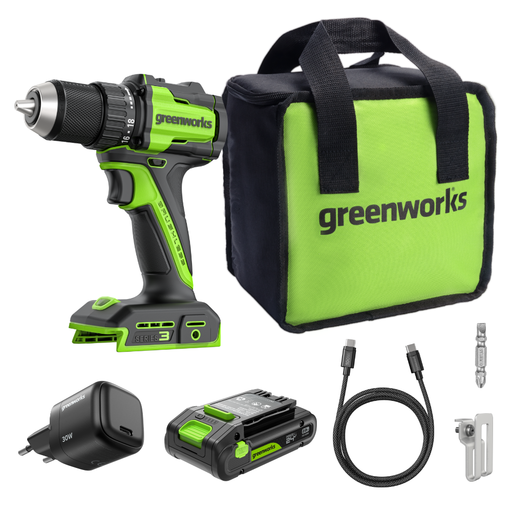
Why it suits this type of user: An option for DIYers and tradespeople looking for greater drilling capacity, a brushless motor and a complete starter kit.
The kit explicitly includes a 2.0 Ah battery and a 30 W USB-C charger. This makes the contents clearer than with a bare machine, but the 1.92 kg weight is worth considering for prolonged overhead work.
Brushless motor, 45 Nm torque, drilling capacity of up to 30 mm in wood and 10 mm in steel, plus an LED light.
When buying a cordless drill, consider the total purchase price. A bare model may look appealing, but the battery and charger can push up the final cost. If you already own tools on the same platform, a bare machine may be the sensible choice.
Also check:
Always follow the instructions when using the tool, wear suitable safety glasses and use hearing protection if needed. Before drilling into walls, check for pipes and cables. Remove the battery before changing bits or carrying out maintenance.
We’ve put together a complete, up-to-date list of products that meet these strict selection criteria and current European safety regulations.
An 18V model is suitable for many screwdriving and drilling jobs in wood, plastic and metal. With a hammer function, you can also tackle light masonry work. For concrete, large holes or prolonged heavy-duty work, a rotary hammer is more suitable.
It depends on the battery capacity, material, drill bit and how much power is needed. A 2.0 or 2.5 Ah battery generally offers more capacity than a 1.5 Ah battery. A second battery means you won’t have to wait during bigger jobs.
That depends on how you’ll use it. If you work regularly or intensively, the stated efficiency, longer working time per charge and lower maintenance requirements may be appealing. For occasional assembly or small repairs, a conventional cordless drill/driver may be enough. Consider the complete package of motor, battery, charger, drilling capacity and warranty rather than focusing on the motor type alone.
