
Vandaag of morgen in huis

Kwaliteit gegarandeerd

Welkomstaanbiedingen ontgrendelen: GRATIS bezorging | Tot 80% korting | Gratis 30 dagen JoyPlus-proefperiode
Download de app
A cordless drill may seem straightforward to choose at first. However, many buyers pay for features they rarely use, or choose a model that isn’t suited to the materials they work with. A lightweight cordless drill is handy for assembling furniture, while drilling into concrete calls for a cordless impact drill or rotary hammer.
As Joybuy Product Recommendation Officer, I focus on the practical details in product information. Before you buy, look out for these common pitfalls.
An 18V cordless drill isn’t automatically more powerful or better suited to the job than every 12V or 20V model. Voltage tells you something about the battery platform, but it isn’t the only factor that affects working performance. Maximum torque, the gearing, motor type and battery capacity all matter too.
For light screwdriving jobs, 12V may be enough. For larger holes in wood, assembly work or longer periods of use, 18V is often more practical. Always consider voltage and torque together.
Many models are sold as bare tools. This usually means they come without a battery or charger. A bare tool may look attractively priced, but it can work out more expensive if you then need to buy a compatible battery and charger.
Before you buy, check:
A drill with battery and charger is often a simpler option for beginners. If you already own tools from the same brand, a bare tool may be better value.
A standard cordless drill driver is suitable for driving screws and drilling into wood, plastic and, often, metal. An impact function can help with light masonry work, but it isn’t the same as a pneumatic hammer function.
If you regularly drill into concrete, an SDS-plus drill or cordless rotary hammer is a more suitable choice. It uses SDS-plus drill bits and is designed for heavier drilling and chiselling. Don’t use a standard drill driver for jobs where the manufacturer recommends a rotary hammer.
Torque is measured in Nm. A higher maximum torque can be useful for larger screws and harder materials, but having good control over the settings is just as important. Multiple torque settings help reduce the risk of damaging a screw head or driving a screw too far into a soft material.
A range of adjustable settings is useful for assembling furniture and mounting items on walls. For construction or automotive work, plenty of peak torque is also important. Bear in mind that a high-torque machine may be heavier and less comfortable to use for long periods.
Battery capacity is measured in Ah. A battery with a higher Ah rating will generally run for longer before it needs recharging, but it will usually weigh more too. A compact battery can be more comfortable for overhead work, while a second battery is handy for longer assembly sessions.
A brushless cordless drill has a motor without traditional carbon brushes. According to manufacturers’ product descriptions, this can help improve efficiency and extend runtime. Treat this as a product specification, not a guarantee of a particular lifespan.
A 13 mm keyless chuck accommodates standard drill bits and lets you change them without a key. A 10 mm chuck is often enough for light jobs, but offers less room for larger accessories.
Check the maximum drilling capacity separately for:
The stated figures are product specifications based on particular conditions. Always use the right type of drill bit and avoid applying excessive pressure.
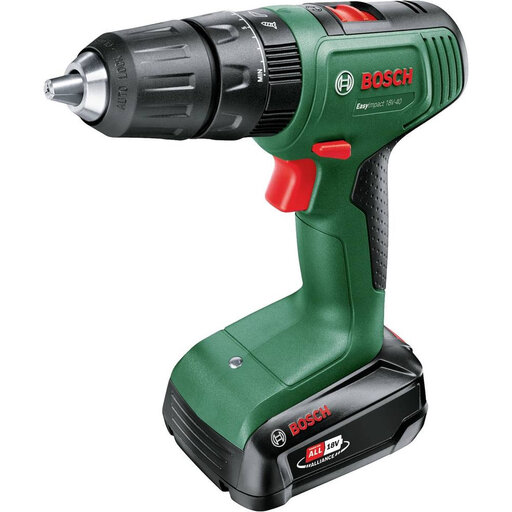
Why it suits this user: This 18V kit comes with a 1,5 Ah battery, charger, case and accessories. So you can get started straight away with driving screws and drilling into wood, metal, plastic and masonry.
The included battery and charger help you avoid unexpected extra purchases. The 20 torque settings give you more control when driving screws.
13 mm chuck, two gears, LED light and compatibility with the 18V Power For All platform.
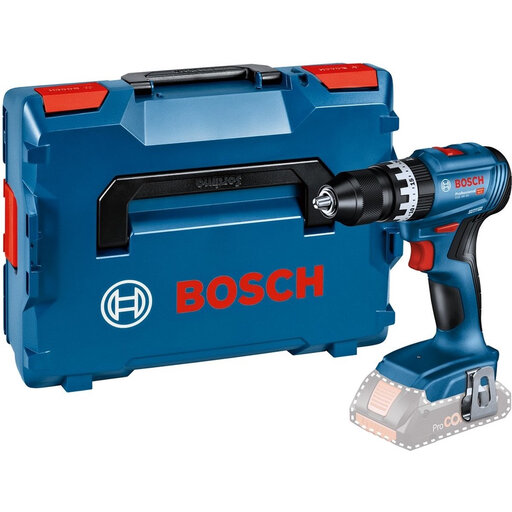
Why it suits this user: This compact model is designed for users who value a metal chuck, low weight and control for regular assembly and renovation work.
The specifications list separate drilling capacities for wood, metal and masonry. The 45 Nm of torque and two gears give you more to go on than a voltage rating alone.
45 Nm hard torque, 13 mm metal chuck, speed of up to 1.900 rpm and a weight of 1 kg without the battery.
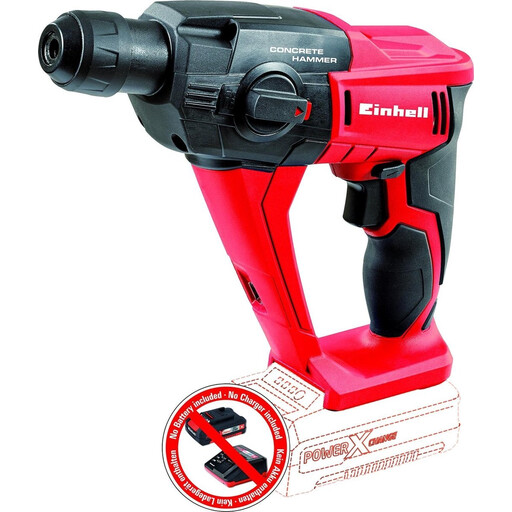
Why it suits this user: For drilling into stone and concrete, a cordless rotary hammer with a pneumatic hammer function is a more suitable choice than a standard cordless drill.
The machine is specifically designed for driving screws, drilling and hammer drilling. The SDS-plus fitting is compatible with accessories for heavier-duty work.
18V Power X-Change platform, 1,2 J impact energy, drilling capacity of up to 12 mm in concrete and a built-in LED.
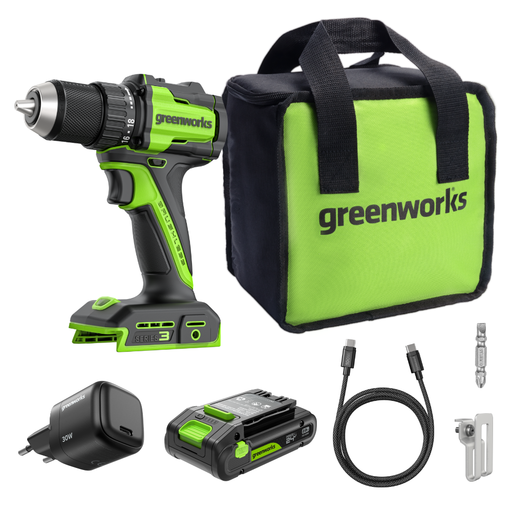
Why it suits this user: This kit includes a 2 Ah battery and USB-C charger, and is designed for regular work in wood, steel and light masonry applications.
The included battery and charger mean the kit is ready to use straight away. The 18+1 settings offer more control than a machine with just an on/off switch.
Brushless motor, maximum torque of 45 Nm, drilling capacity of up to 30 mm in wood and 10 mm in steel, plus an LED light.
We’ve put together a complete, up-to-date list of products that meet these strict selection criteria and the applicable European safety requirements.
Always use a drill bit that’s suitable for the material and the machine. Remove the battery before changing accessories or carrying out maintenance. When drilling into stone, metal or concrete, it’s a good idea to wear safety glasses and hearing protection. Before working on walls, check for cables and pipes.
Let the machine do the work and don’t apply more pressure than necessary. Too much pressure can put strain on the drill bit, motor or battery. Store lithium-ion batteries in a dry place and avoid exposing them to extreme temperatures for long periods.
Look for a model with two gears, adjustable torque and a keyless chuck. Check the stated drilling capacity for wood and metal separately. For regular work in hardwood or steel, a model with around 18V and plenty of torque is practical, but using the right drill bit is still essential.
It depends on the battery capacity, material, workload and age of the battery. A 2 Ah battery is lighter and suitable for shorter jobs; a higher Ah capacity is useful for longer periods of use. A second battery means you won’t have to wait while the first one charges.
The price depends on the voltage, battery platform, motor type, torque and included accessories. So compare the complete kit, not just the price of the machine. A bare tool can be good value if you already own compatible batteries; for your first purchase, a complete kit may be a simpler option.
