
Vandaag of morgen in huis

Kwaliteit gegarandeerd

Welkomstaanbiedingen ontgrendelen: GRATIS bezorging | Tot 80% korting | Gratis 30 dagen JoyPlus-proefperiode
Download de app
A good cordless drill is indispensable for any project, from hanging a picture to a full-scale renovation. But the market is vast, and you're constantly bombarded with marketing jargon. This makes it easy to overpay for features you don't need, or to buy a drill that disappoints after just a few uses. As a Joybuy Product Recommendation Officer, I'm here to help you make the right choice based on facts, not sales pitches.
Before you make a decision, it's important to recognise the most common pitfalls.
cordless drill kit with dozens of accessories might seem like a great deal. However, the quality of the included bits and drills is often subpar. You end up paying for extras that you'll need to replace quickly, when you could have invested in a better machine instead.hammer drill function sounds impressive. But if you're mainly assembling furniture, these features are overkill and unnecessarily drive up the price.battery-powered drill from a specific brand often means you're locked into that same ecosystem for future tools. A poorly considered initial purchase can cost you a lot more down the line.To avoid a bad purchase, it's smart to focus on a few technical specifications that truly matter. Don't get distracted by marketing terms; instead, look at the following three points.
Voltage (V) indicates the motor's power. For most jobs in and around the house, an 18v cordless drill is an excellent standard. It offers a great balance between power and weight. Models with a lower voltage (10.8V or 12V) are lighter and more compact, ideal for driving screws in tight spaces.
The amp-hour (Ah) rating of the battery determines how long you can work before needing to recharge. A 2.0 Ah battery is fine for light-duty tasks. If you plan on working all day, a 4.0 Ah or 5.0 Ah battery, or a kit with 2 batteries and a charger, is a wiser choice.
Torque, expressed in Newton-metres (Nm), indicates the drill's rotational force. This is crucial for driving screws.
Many drills have adjustable torque settings. This feature prevents you from driving screws too deep into the material or damaging the screw head.
You'll see the term more and more often: brushless cordless drill. A brushless motor has no physical carbon brushes that wear out. According to manufacturers, this leads to several advantages:
Drills with a traditional brushed motor are often cheaper to purchase. For occasional use, they can be perfectly adequate. However, if you use your drill regularly, the extra cost for a brushless model is often a wise investment.
Not everyone needs the same drill. Below are several models suited for different types of users, based on their specifications.
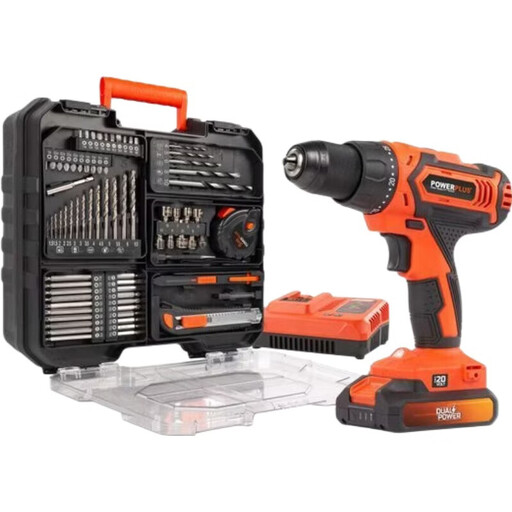
Why it's a match: Ideal for those who tackle occasional jobs and don't want to build an entire tool arsenal at once. You can get started right away with hanging lights, assembling cabinets, or other light projects.
This kit addresses the "complete set" pitfall by providing a functional foundation. You get a drill with a battery, charger, and an extensive accessory case, equipping you for the most common jobs right out of the box.
A very complete cordless drill kit with 78 accessories. With 40 Nm of torque, it's powerful enough for most jobs in and around the home.
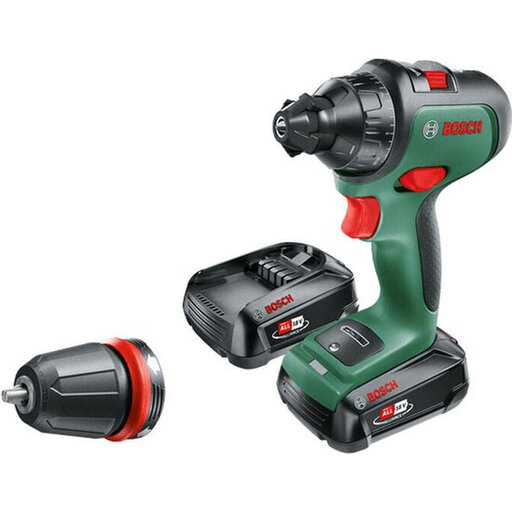
Why it's a match: For the DIYer who works on projects regularly and is looking for a reliable, versatile, and durable machine. This Bosch cordless drill is suitable for a wide range of projects involving wood, plastic, and metal.
This model cleverly tackles the battery platform problem. It's part of the POWER FOR ALL ALLIANCE, meaning its batteries are interchangeable with a wide range of tools from different brands. This saves money and space in the long run.
The combination of an efficient brushless motor and the flexibility of a broad battery platform. This kit comes with 2 batteries and a charger.
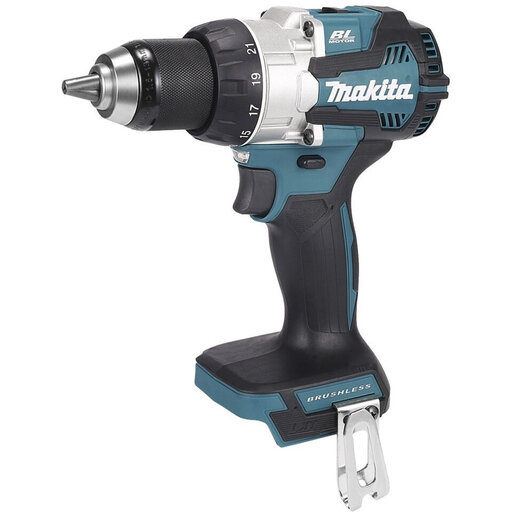
Why it's a match: For those undertaking a renovation or regularly performing heavy-duty jobs. This Makita cordless drill is built for performance and durability, delivering the power needed for intensive driving and drilling tasks.
This is not an entry-level model. You're paying for performance that you genuinely need for demanding jobs. The high torque and robust construction aren't superfluous luxuries but requirements for durable, intensive use.
Very high torque of 73 Nm and a durable construction with an aluminium gear housing. The drill features an efficient brushless motor. Note: this model is sold as a 'bare tool', without a battery and charger.
We have compiled a complete and up-to-date overview of products that meet these objective selection criteria and applicable regulations.
A standard drill/driver is designed for driving screws and drilling in materials like wood, metal, and plastic. A hammer drill has an additional function: the hammer mode. In this mode, the drill bit makes a pulsating, hammering motion in addition to rotating. This makes the tool suitable for drilling into harder stone and masonry. For drilling into concrete, a rotary hammer is typically a better choice.
For occasional use, a brushed motor drill is often perfectly fine and more affordable. However, if you tackle projects regularly, a brushless cordless drill offers clear advantages. According to manufacturer specifications, they are more energy-efficient, allowing you to work longer on a single charge. They also generally have a longer lifespan because there are fewer parts subject to wear and tear.
This is also known as a 'bare tool' or 'body only'. You are purchasing only the tool itself. This is a cost-effective option if you already own other tools from the same brand and battery platform. You can use the batteries you already have for your new tool. Always double-check that the batteries from your current tools are compatible with the new model.
