
Vandaag of morgen in huis

Kwaliteit gegarandeerd

Welkomstaanbiedingen ontgrendelen: GRATIS bezorging | Tot 80% korting | Gratis 30 dagen JoyPlus-proefperiode
Download de app
A cordless hand-held vacuum for your car is handy for cleaning up crumbs, sand, hair and dust between the seats. However, a compact car vacuum can sometimes disappoint in practice. The suction may quickly weaken, the battery may run out before you’ve finished the back seats, or the attachments supplied may not suit your car’s interior.
Use these points to compare models based on verifiable features rather than vague marketing claims.
A high figure in pascals, watts or revolutions per minute doesn’t tell you everything about day-to-day use. The nozzle design, airflow and a clean filter all affect how easily dirt is picked up. Always check whether the manufacturer provides clear information about suction power, motor output or running time.
A cordless car vacuum often runs for only a few minutes on its highest setting. That’s usually enough for a quick clean, but not always for the whole car interior. Check the difference between the running time on the lowest and highest settings. A USB-rechargeable hand-held vacuum is practical, but charging it with a power bank or car adapter doesn’t automatically make it suitable for extended use.
A HEPA filter or fine-dust filter needs to be emptied and cleaned regularly. A blocked filter restricts airflow and can reduce performance. Check whether the filter is washable or replaceable, and whether a spare is included.
For crumbs, sand and dust in a car interior, suction power and a suitable nozzle matter more than a high wattage figure on the packaging alone. A 30- to 60-watt model may be suitable for light cleaning, while a more powerful appliance will use more energy.
Look at how these features work together:
A hand-held vacuum with a HEPA filter may be a good choice if you want to pick up fine dust from upholstery, mats or crevices. However, the name alone doesn’t tell you how well the whole appliance filters. Check the filter type, care instructions and availability of replacement parts.
A transparent dust container makes it easier to see when it needs emptying. A capacity of 50 to 150 millilitres is suitable for short cleaning sessions. A larger container may be more practical for a bigger household or several vehicles.
A narrow crevice nozzle is useful for rails, seams and the space around the gear stick. A brush nozzle helps remove dust from dashboards and upholstery. A hand-held vacuum with a blowing function can dislodge dust from air vents or keyboards, so you can then vacuum it up.
If you’re considering a wet and dry vacuum for your car, check the instructions carefully. Not every model is suitable for liquids. For example, the Tracer hand-held vacuum featured below is intended for dry dirt only. For spills or wet upholstery, you’ll need an appliance specifically designed for wet use.
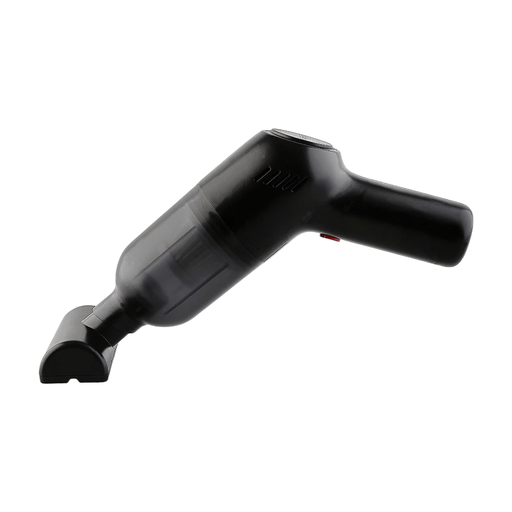
Why it suits this type of user: This compact model is designed for quick cleaning sessions in the car and at home. The supplied curved, brush and flat nozzles make it suitable for a range of crevices and surfaces.
The product specifications list a 2Ah battery, around 10 minutes’ running time on the lowest setting and two F7 filters. This helps you assess how you’ll use it and plan for filter maintenance in advance.
60W motor, USB charging, weighs 0.50 kg, three attachments and two HEPA filters included. Suitable for dry dirt only.
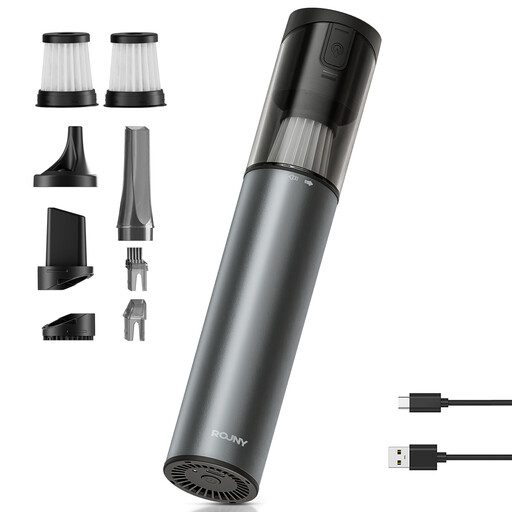
Why it suits this type of user: An aluminium body, two speeds and Type-C charging make this a good fit for anyone who plans to use a compact hand-held vacuum regularly in the car and at home.
The specified running time is 25 minutes on low speed and 12 minutes on high speed. This makes the difference between the two settings clearer than it is with models that don’t provide this information.
70W power, washable HEPA filter, two speeds, weighs around 0.3 kg, with accessories for vacuuming and blowing.
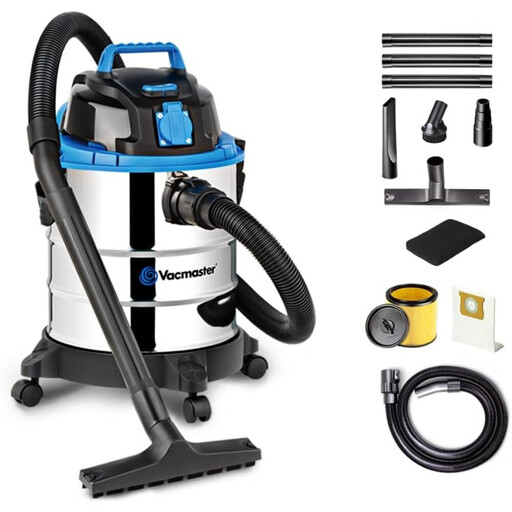
Why it suits this type of user: This isn’t a mini car vacuum, but a larger option for garages, workshops and deep cleaning vehicles, carpets and upholstery.
Its capacity and intended use are clearly different from those of a cordless hand-held vacuum: it has a 20-litre tank, 1250W of power and is designed for wet and dry use. This makes the difference between quick and intensive cleaning clear.
Stated suction power of 18 kPa, wet and dry functions, blowing function, stainless steel tank and upholstery-washing function. The appliance is mains-powered.
We’ve put together a complete, up-to-date list of products that meet these strict selection criteria and the applicable European safety requirements.
For the best results when cleaning your car’s interior, work from top to bottom. Remove loose mats first, then use a narrow nozzle for seams and rails, and clean upholstery with a brush. Empty the dust container after every use. Only wash the filter according to the instructions, and don’t put it back until it’s completely dry.
Don’t use a compact car vacuum for liquids, hot ash, sharp objects or flammable substances unless the product specifications explicitly say it’s suitable. Before buying, also check what charger is included, the warranty terms and whether replacement filters are available.
That depends on the nozzle and the motor. A brush nozzle helps loosen hair from upholstery. Also check that the running time is long enough to clean the whole car, and clean the filter more often if you vacuum up a lot of hair.
Compact models often have a stated running time of around 10 to 15 minutes on a high setting. Some models specify a longer running time on the low setting. Always check both settings and the charging time before you buy.
You can, if the model charges via USB or Type-C and you use a suitable USB port, adapter or power bank. Check the required voltage, and use the cable or charger supplied if the manufacturer recommends it.
