
Workshop host with a permanent workspace
You store several punnets of berries during the class and want them close to hand without cluttering your workspace.


Start by considering how many berries you need to store and where you need them: an under-counter fridge without a freezer compartment could suit a permanent workshop space, while a portable compressor cool box is useful if you need to take your cooling with you to different venues. Only choose a freezer compartment if you really need the extra space. The Netherlands Nutrition Centre recommends setting your fridge to 4 °C; check with a thermometer that your storage area reaches this temperature, and keep the berries dry.
You store several punnets of berries during the class and want them close to hand without cluttering your workspace.
You bring ingredients with you or move your cooling equipment between venues. In that case, capacity, power connections and the temperature at the venue are important considerations.
As well as chilled berries, you want to freeze ingredients or leftovers, so you need to consider how much fridge space will remain.
Best for: a permanent, accessible place to store berries and other ingredients.
Consider: you can't freeze leftovers in the same appliance; check that the layout suits your containers.
Best for: a workshop space where you want to freeze a small amount of food as well as keep ingredients chilled.
Consider: the freezer compartment takes up space; according to Inventum, it accounts for 19 litres of the Inventum KV600's stated total capacity of 136 litres.
Best for: workshops at different venues, provided a suitable power connection is available.
Consider: check the capacity and measure the temperature where you plan to store the berries once you arrive.
Best for: situations where you can check that the contents stay cold enough for the ambient temperature and the length of your workshop.
Consider: Dometic states that the TCX 21 cools to up to 27 °C below the ambient temperature; this alone doesn't mean that the contents will reach 4 °C.
| What to consider | What should you check? | Who should consider this? |
|---|---|---|
| Cooling temperature | Measure the temperature where the containers are kept. The Netherlands Nutrition Centre recommends setting your fridge to 4 °C. | If I want to know whether the berries will stay sufficiently cool during the class, I check the temperature where they're stored. Around 36% of consumers put confidence in the temperature first. |
| Usable space | Measure your containers and compare the layout and fridge space; the total capacity isn't necessarily the space available for your containers. | I want to be able to place my containers where they're dry and easy to reach, without them getting wedged in. Around 29% of consumers prioritise having enough suitable fridge space. |
| Portability | Check the capacity, weight, available power connection and temperature at the workshop venue. | If my workshops take place at different venues, I need cooling equipment that I can take with me and use there. Around 21% of consumers prioritise portable cooling. |
| Energy consumption | For appliances that are the right size, compare their annual energy consumption in kWh on the energy label; the European Commission explains what information the labels provide. | As well as having enough fridge space, I want to know how much electricity an appliance is expected to use per year, according to its label. Around 14% of consumers give the most weight to expected energy consumption. |
The temperature can vary from one part of a fridge to another. A selected setting or stated temperature doesn't necessarily tell you what temperature the berries will reach during your workshop.
Measure the temperature where you plan to store the berries once they're in place, and check it while the appliance is in use.
The stated capacity and usable volume may be measured differently. A freezer compartment also takes up space that can't be used for chilled berries.
Measure your containers and compare the fridge and freezer space, as well as the internal layout.
If the containers don't fit, you may need a larger fridge or a second cooling appliance.
A stated difference from the ambient temperature doesn't guarantee that the contents will reach a set temperature in all workshop conditions. Dometic states that the TCX 21 cools to a maximum of 27 °C below the ambient temperature.
Measure the temperature at the venue before using the cool box for fresh berries.
The energy rating takes the size of the appliance into account. Its absolute annual energy consumption is listed separately in kWh.
Compare the annual energy consumption in kWh of models that suit your space and how you plan to use them.
The KTR15NWEB is an under-counter fridge without a freezer compartment, designed for a permanent cooling spot.
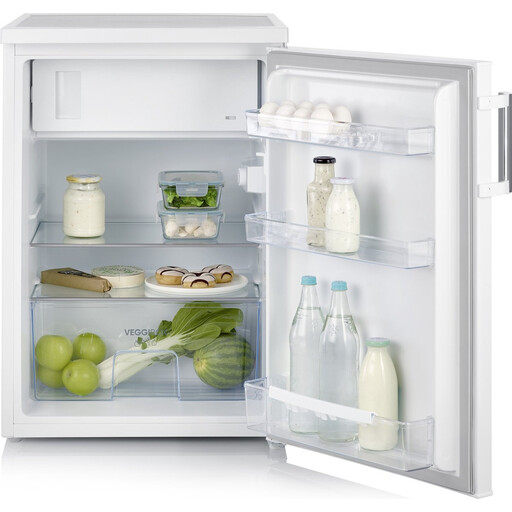
The Rci 1620 Plus is an under-counter fridge with an EasyFresh drawer.
The KV600 is an under-counter fridge with a small freezer compartment, for those who want to chill and freeze food.
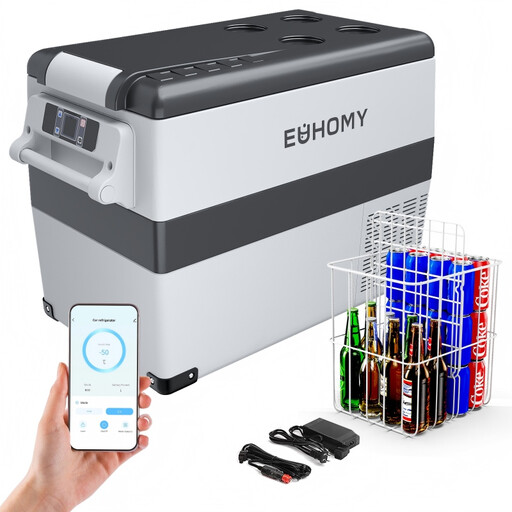
The CFX2 37 is a portable compressor cool box for workshops at different venues.
The TSE1285N is an under-counter fridge to consider if you have limited width for a permanent cooling spot.
This selection includes a portable compressor cool box and under-counter fridges for a permanent cooling spot. Check that each model's layout, available space and temperature suit your workshop.
 No image available
A portable option if you need to take your cooling equipment to different workshop venues.
The product name states a capacity of 40 L, an adjustable range of −20 °C to +20 °C, and connections for 12/24 V DC and 100–240 V AC.
Leave at least 10 cm of clearance around the ventilation openings.
 No image available
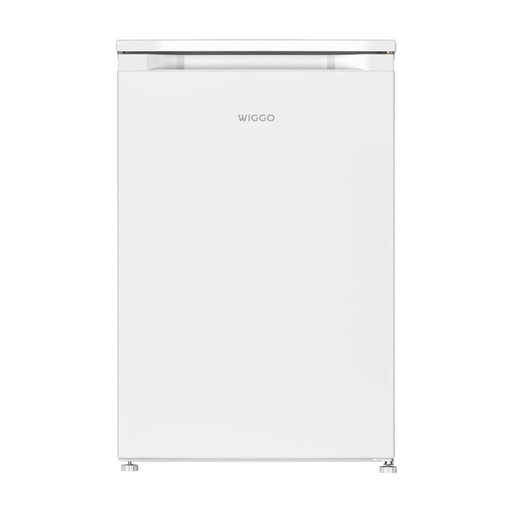
An under-counter fridge for a permanent cooling spot; compare the internal space with the containers you'll use during your workshop.
The product name states a width of 54 cm and an E energy rating.
 No image available
An under-counter fridge for a permanent spot; check in advance that the layout suits your berry containers.
The product name states a width of 55 cm and a D energy rating.
 No image available
An option if you need freezer space as well as chilled berries; check how much fridge space will be left for your containers.
The product name states a total capacity of 120 L and a C energy rating.
 No image available
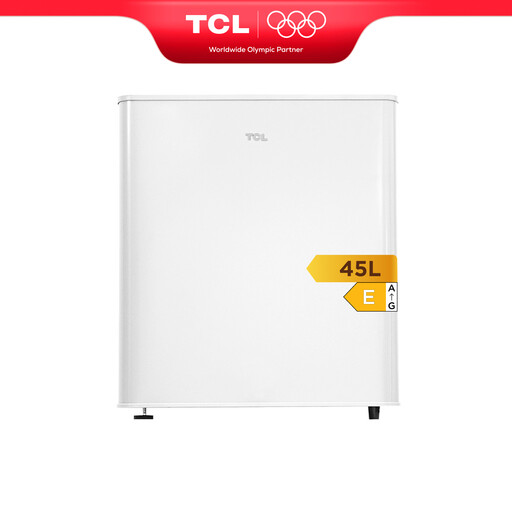
A compact cooling option for a permanent spot; check that its capacity and layout are suitable for your containers.
The product name states a capacity of 45 L and an adjustable foot.
The Netherlands Nutrition Centre recommends setting your fridge to 4 °C and checking the temperature with a fridge thermometer. This is storage advice, not a legal limit established for every cookery workshop.
The Netherlands Nutrition Centre recommends storing strawberries dry, with their tops on, in a sealed container in the salad drawer. Blueberries are best kept dry in a paper bag in the fridge. Wash fruit and vegetables under running water when preparing them for use.
Compare the annual energy consumption in kWh on the energy labels of models that suit your space and how you plan to use them. Actual consumption may differ from the figure on the label.
Check the manual to find out how much ventilation space your chosen model needs. Clean removable parts, the door and the door seal; the Consumers' Association also explains how to clean the grille at the back of a freestanding fridge.
Yes, if you prepare, process or sell food as a food business. The Netherlands Food and Consumer Product Safety Authority (NVWA) requires you to have a food safety plan based on HACCP or an applicable hygiene code. This doesn't automatically apply to every private class.