
Vandaag of morgen in huis

Kwaliteit gegarandeerd

Welkomstaanbiedingen ontgrendelen: GRATIS bezorging | Tot 80% korting | Gratis 30 dagen JoyPlus-proefperiode
Download de app
A new pan set, frying pan or saucepan may seem like an easy choice. Yet many poor purchases only reveal their drawbacks after a few weeks. A pan may not fit an induction zone properly, for example, a non-stick coating may become damaged through incorrect use, or a large set may contain mostly sizes you hardly ever use.
Joybuy Product Recommendation Officer filters the key product specifications and compares them with practical situations in British kitchens. This helps you compare cookware by material, size, hob type, maintenance and intended use, rather than simply by colour or marketing claims.
Gas, electric, ceramic and induction hobs each heat pans in a different way. With induction, a magnetic base is essential. Always check that induction is explicitly listed in the product specifications. A pan designed only for gas and electric hobs will not automatically work on an induction hob.
Also pay attention to the base diameter. A 28 cm pan may have a smaller effective base than expected, meaning it heats less evenly on a large induction zone.
A cookware set containing eight or sixteen pieces may seem appealing, but the number of items says little about its practical value. Check:
For a beginner, a small milk pan, a medium-sized saucepan and a frying pan are often more useful than a large set containing duplicate sizes.
Stainless steel pans are generally built to withstand intensive everyday use, but food can stick more easily if the pan gets too hot or is not preheated correctly. Non-stick pans are useful for eggs, pancakes and delicate ingredients, but they usually require gentler kitchen utensils and careful maintenance.
A description such as 304 stainless steel pans refers to a commonly used stainless steel alloy. It does not automatically mean that every pan has the same heat distribution, base construction or handle. So also look at the construction, thickness and hob compatibility.
Claims about heat distribution or lifespan come from the relevant brands’ product information. Treat them as product specifications, not as a guarantee of every cooking experience.
The following sizes are practical for everyday cooking:
Bear in mind that a stated capacity may refer to the pan’s total capacity. Do not fill a pan right to the brim, particularly when cooking soup, pasta or using deep-frying oil.
According to the product description, a multi-layer base with an aluminium core can provide more even heat distribution than a simple single-layer base. A glass lid is useful when you want to monitor the cooking process. However, check the maximum oven temperature and handle glass carefully when temperatures change.
With a milk pan, the handle is at least as important as the size. A wooden handle, for example, may not be suitable for oven use and often requires hand washing. A detachable handle saves cupboard space, but check the maximum load capacity and make sure the connection locks securely.
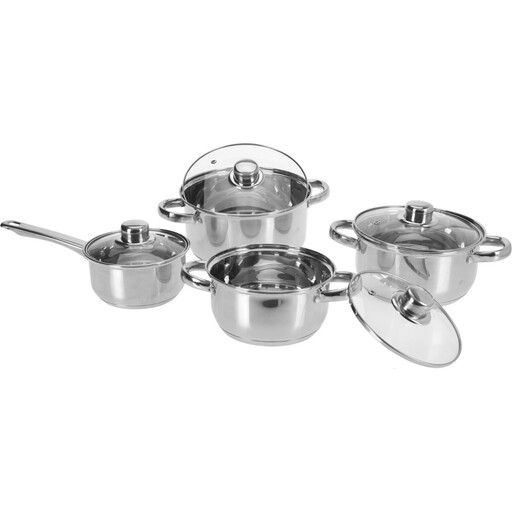
Why it suits this profile: The set contains four pans and four glass lids, ranging from 1.1 to 3.3 litres. This gives beginners a straightforward foundation for sauces, vegetables, rice and smaller meals.
The sizes and capacities are clearly stated, so you do not have to judge the set solely by the number of pieces.
Four pans, four glass lids, suitable for gas, electric, ceramic and induction hobs according to the product information.

Why it suits this profile: According to the product description, the 28 cm frying pan has a three-layer construction with 304 stainless steel and an aluminium core, plus a glass lid.
The construction and hob compatibility are specified, so you do not have to guess what “multiple layers” means.
28 cm, oven-safe up to 220 °F according to the product information, and suitable for gas, induction, electric, ceramic and halogen hobs.
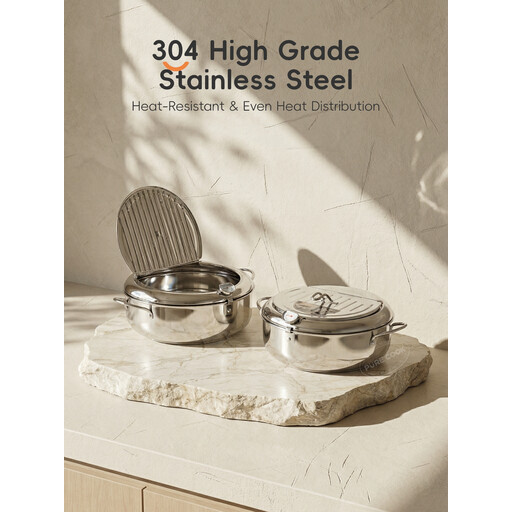
Why it suits this profile: This deep-frying pan is aimed at home cooks who want to monitor the oil temperature. According to the product information, the pan has a built-in Celsius thermometer and a deep design.
The temperature is not merely mentioned as a marketing term: the product description specifies a built-in probe thermometer.
24 cm, 304 stainless steel, multi-layer base, and suitable for gas, induction and ceramic hobs.
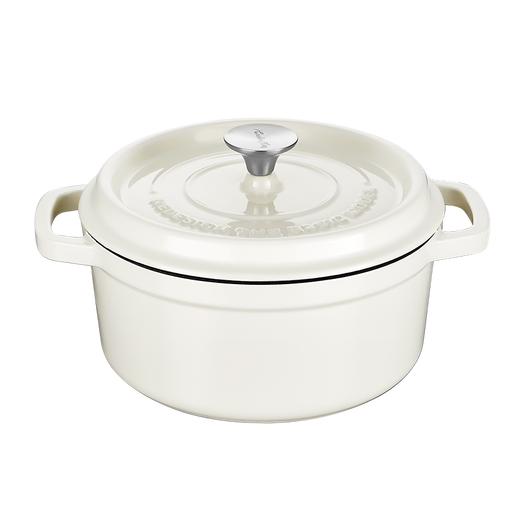
Why it suits this profile: An enamelled cast-iron Dutch oven is ideal for stews, slow cooking and meals where heat retention is important.
The choice of cast iron makes its purpose clear: this is not a lightweight all-rounder, but a heavy pan for dishes with longer cooking times.
24 cm, enamelled cast iron and a construction that, according to the product type, can retain heat for a long time.
We have put together a complete, up-to-date list of products that fully meet these strict selection criteria and the applicable European safety regulations.
The right care can prevent many problems:
A dishwasher can be convenient, but “dishwasher-safe” does not always mean that the appearance or coating will remain in the same condition for as long. Always follow the care instructions on the product page.
Start with a frying pan of around 24 to 28 cm, a 2 to 4-litre saucepan and a 1 to 2-litre milk pan. If you often cook soup or prepare meals for several people, add a soup pot of approximately 5 litres. A pan set is particularly practical when the included sizes suit your recipes and hob.
They can be, but always check the product specifications. Not every stainless steel pan has a magnetic base. In this overview, the PURECOOK and MAXCOOK models, among others, explicitly state that they are induction-compatible. Also use a suitably sized zone and avoid prolonged dry heating.
For eggs, fish and pancakes, a non-stick pan can require less oil and make it easier to release food. Stainless steel is more versatile for searing, sauces and high temperatures, but it requires careful temperature control. The right choice therefore depends on your cooking style, maintenance preferences and the dishes you prepare most often.
