
Vandaag of morgen in huis

Kwaliteit gegarandeerd

Welkomstaanbiedingen ontgrendelen: GRATIS bezorging | Tot 80% korting | Gratis 30 dagen JoyPlus-proefperiode
Download de app
A new cookware set, saucepan or multicooker may seem easy to choose at first glance. Yet many disappointing purchases are caused by details that only become apparent when cooking. A pan may not work properly on an induction hob, a coating may become damaged quickly or a large cooking pot may take up more space than expected.
As a Joybuy Product Recommendation Officer, I filter product information based on practical points: materials, dimensions, hob compatibility, maintenance and intended use. This allows you to compare cookware using verifiable specifications rather than marketing claims.
Not every metal pan will automatically work on an induction hob. Check that the manufacturer explicitly states induction compatibility. The diameter of the base is also relevant. A base that is too small may heat less efficiently or may not be detected properly by the cooking zone.
Aluminium cookware often requires a separate stainless steel induction disc. The 5five saucepans, for example, have an aluminium pan body and a stainless steel induction disc. According to the product information, they are suitable for gas, electric, ceramic, halogen and induction hobs.
Non-stick pans and ceramic-coated cooking pots are generally easy to clean, but abrasive sponges, metal spatulas and sudden temperature changes can damage the surface coating. What is described as “dishwasher-safe” also does not always mean that the coating will remain in optimal condition over time.
Allow a pan to cool before washing it. Use a soft sponge and mild washing-up liquid. Also check whether a product description contains contradictory information. Some items are described as both “dishwasher-safe” and suitable for hand washing. In that case, hand washing is the safer option.
A 5-litre cooking pot sounds spacious, but the usable space is smaller once you allow for splashes, foam and ingredients that expand. Pressure cookers often have additional filling limits. According to the safety information, the Midea multicooker must not be filled above the “MAX” marking or, when cooking foods that expand, such as beans or grains, above the halfway mark.
Also consider cupboard dimensions, handles and where you will place the lid. A cookware set with several sizes is only practical if you can store all the pieces easily.
Stainless steel is resistant to corrosion and suitable for everyday cooking. 304 stainless steel is often used in cooking pots, while 316 stainless steel is listed in the product information for some saucepans as a material offering greater corrosion resistance. This does not automatically indicate how quickly a pan will heat up. The construction and thickness of the base are at least as important.
Aluminium is lightweight and, according to the product descriptions of several models, heats up quickly. With aluminium pans, check that a suitable induction base is present.
A practical guide for many households is:
The stated capacity is not always the same as the amount you can safely prepare. When pressure cooking, follow the safety markings.
A glass lid allows you to monitor the cooking process, but glass requires care to protect it from drops and sudden temperature changes. Removable handles save space in a kitchen organiser, while fixed handles are often more convenient for everyday use.
Also check whether a saucepan or sauté pan is oven-safe. A product that is suitable for induction is not automatically suitable for use in the oven.
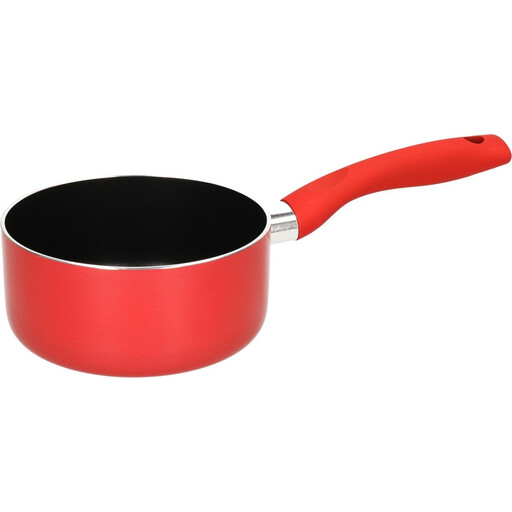
Why it suits this profile: A compact saucepan for small portions, sauces and breakfast. The pan is compatible with several types of hob and has a capacity of 1.5 litres.
The product information explicitly mentions a stainless steel induction disc and compatibility with gas, electric, ceramic and induction hobs.
Lightweight at 500 grams, with an aluminium pan body and a compact 16 cm size.
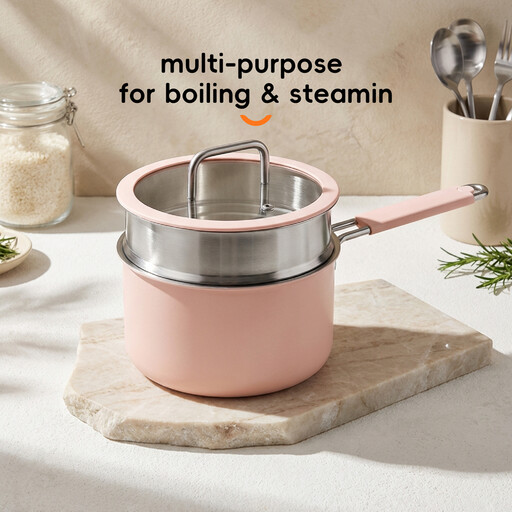
Why it suits this profile: For anyone looking for a versatile saucepan for milk, sauces, porridge and steaming. The pan has a steamer insert and a diameter of 16 cm.
The specifications state that it is made from 316 stainless steel, is compatible with induction and other types of hob, and should be maintained without abrasive tools.
316 steel interior, glass lid, silicone-wrapped handle and included steamer basket.

Why it suits this profile: For families and home cooks who want to combine several cooking methods in one appliance, including pressure cooking, rice cooking, steaming and slow cooking.
The capacity, programmes and safety limits are clearly stated. Never open the lid while under pressure and always follow the MAX and halfway-fill markings.
12 pre-set programmes, a non-stick inner pot and a stated capacity of approximately 7.6 to 8 litres.
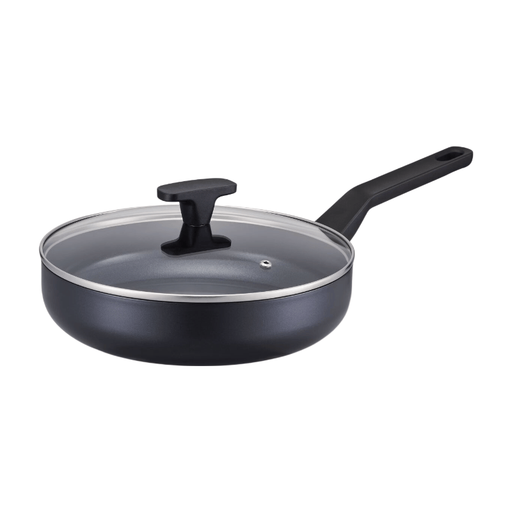
Why it suits this profile: Handy for stir-fries, stews and sauces when you do not want to use several cooking pots. The pan comes with a glass lid.
The product description states that it is suitable for induction, has a base diameter of 17 cm and a maximum food load of 2 kg.
26 cm diameter, recycled aluminium according to the product information and a ceramic coating described as PFAS-free.
A cookware set is practical when you are setting up a kitchen from scratch. The PURECOOK 304 stainless steel set contains four cooking pots: a 1.5-litre milk pan, a 2-litre soup pot with steamer insert, a 2.5-litre pan and a 5-litre stockpot. According to the product information, these cooking pots are suitable for gas, electric and induction hobs.
An individual saucepan or sauté pan makes more sense if you already own basic pans. This helps you avoid duplicate sizes and leaves more space in a kitchen organiser. With compact sets, also check whether the handles, lids and steamer insert genuinely suit your cooking routine.
Tefal Ingenio So’Light has a different configuration: five pans, lids and a removable handle in a 16-piece set. The product description states diameters from 18 to 28 cm, induction compatibility and stackability. A removable handle is particularly useful in small Dutch kitchens, but store it safely after use.
We have put together a complete, up-to-date list of products that fully meet these strict selection criteria and the applicable European safety regulations.
Start with a 16 to 18 cm saucepan, a medium-sized cooking pot of approximately 20 cm and a 24 to 26 cm sauté pan. Add a larger cooking pot if you often make soup, pasta or meals for several people.
Lifespan depends on the material, use and maintenance. Stainless steel cooking pots do not have a delicate non-stick coating, while non-stick pans need to be used with care. Avoid overheating, metal utensils and abrasive cleaning products. Replace a pan when the base becomes distorted, the handle comes loose or the coating becomes visibly damaged.
This depends on the dish, cooking time, quantity and electricity consumption. A multicooker can combine several appliances and keep food warm automatically, but the keep-warm function also uses energy. Compare the power rating, cooking time and your own usage pattern before buying a pressure cooker or multicooker.
