
Vandaag of morgen in huis

Kwaliteit gegarandeerd

Welkomstaanbiedingen ontgrendelen: GRATIS bezorging | Tot 80% korting | Gratis 30 dagen JoyPlus-proefperiode
Download de app
A pan may look sturdy in the product photo but still disappoint in practice. With cooking pans, problems often arise from choosing the wrong size, an unsuitable base or care requirements that do not fit your cooking habits. You usually only notice this when the pan heats unevenly, food keeps sticking or the handle turns out to be awkward.
The main pitfalls:
Aluminium is relatively lightweight and heats up quickly. This makes an aluminium wok or saucepan convenient for everyday use. A coating can make cleaning easier, but always check the information about dishwasher use, oven use and permitted heat levels.
Stainless steel, also known as rvs, generally has no non-stick coating and is suitable for boiling, frying and simmering. Cooking technique is important when using a stainless steel pan: allow the pan to come up to temperature gradually, then add oil or ingredients. A multi-layer base can help distribute heat more evenly.
Cast iron retains heat for a long time and is well suited to slow cooking. However, a cast-iron pan is heavy. So do not look only at the capacity; also check the product weight and the handles. Enameled cast iron is easier to maintain than untreated cast iron, but hand washing may still be the recommended option.
If you have an induction hob, choose an induction pan with a magnetic base. Also check the diameter. A pan that is much larger or smaller than the cooking zone may heat less efficiently.
You have more choice with gas, electric and ceramic cooking. A pan for all heat sources is useful if you move house later or use different types of hob. However, pay attention to individual limitations: a wooden handle may rule out oven use, while a glass lid often has a maximum temperature.
For one or two people, a saucepan of around 1 to 2 litres or a small casserole is often sufficient. A 4- to 5-litre cooking pan with a lid is practical for families. For larger portions, a pan of 6 litres or more may be suitable, but check that it will still fit comfortably in your sink and kitchen cupboard.
A large pan is not automatically more convenient. A heavy 5.3-litre casserole may be suitable for a family meal, while a 6.1-litre wok is particularly useful when you stir-fry large portions or serve food at the table.
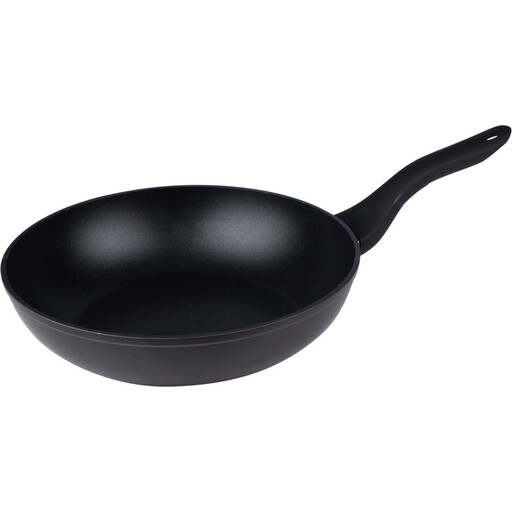
Why it suits this profile: This 28.5 cm aluminium wok is lightweight and designed for everyday stir-frying. According to the product information, it works on ceramic, halogen, gas and electric hobs.
Its heat-source compatibility is clearly specified. If you cook on induction, you will need to choose a different model, as induction is not listed in the specifications.
Aluminium body, deep shape, 1 mm non-stick coating, with the product specifications stating that it is PFOA-free and PFAS-free.
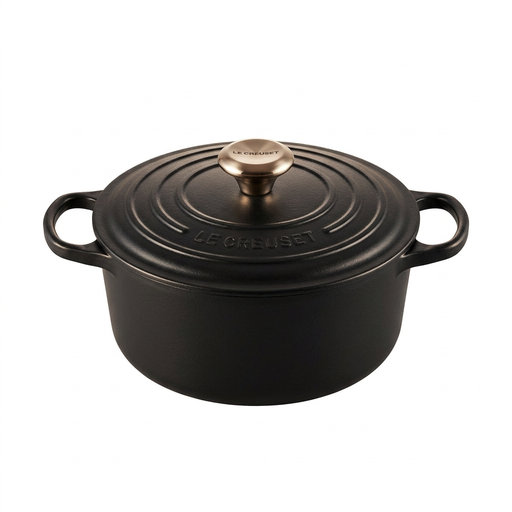
Why it suits this profile: This enamelled cast-iron casserole has a capacity of 4.2 litres and, according to the product description, is suitable for all heat sources, including induction and the oven.
The capacity, diameter and heat-source compatibility are clearly stated. Bear in mind that it weighs 4.305 kg and that cleaning it in the dishwasher is not recommended.
4.2-litre capacity, cast-iron construction, lid included and a stainless steel knob for oven use.
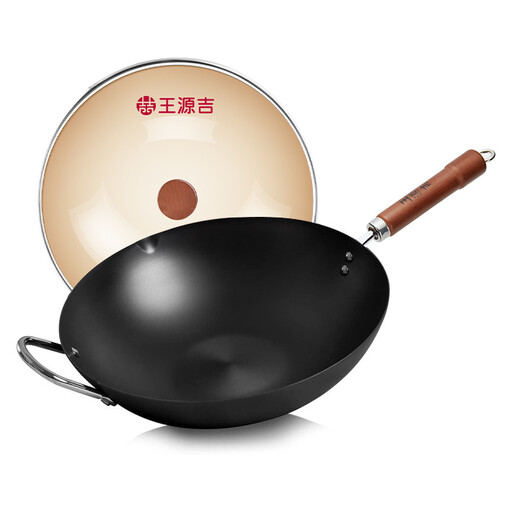
Why it suits this profile: This carbon-steel wok is designed for high-temperature stir-frying and has a flat base for gas, induction, electric and ceramic cooking.
The flat base and four specified heat sources make the choice easy to verify. However, the pan needs seasoning, hand washing and thorough drying after use.
Coating-free carbon-steel construction, glass lid, wooden handle and capacity for approximately 2 to 4 portions.
Read the care instructions before buying. It is best to clean a non-stick pan with a soft sponge and suitable utensils. Stainless steel can develop white marks or discolouration due to minerals in the water or overheating; follow the manufacturer's instructions for dealing with these.
A carbon-steel wok needs to be seasoned and dried thoroughly after washing. A thin layer of oil helps protect it during storage. Cast iron stays in good condition for longer if you avoid hard knocks, prolonged soaking and sudden changes in temperature.
Also check the handle. A wooden handle is comfortable on the hob but often limits oven use. A metal handle can become hot, even when the pan itself is suitable for high temperatures.
We have put together a complete, up-to-date list of products that fully meet these strict selection criteria and the applicable European safety regulations.
Choose a pan that explicitly lists induction in its product specifications. A magnetic base is generally required for induction. Also check that the base diameter matches the cooking zone and that the handle or lid is suitable for your intended use.
Its lifespan depends on the material, use and care. A stainless steel or cast-iron pan can last a long time with careful use. A non-stick coating is more susceptible to scratches and overheating. Therefore, do not use sharp metal utensils if the manufacturer advises against them.
A 1.5- to 2-litre saucepan is often sufficient for sauces, milk or small portions. For a family, cooking pans and casseroles of around 4 to 5 litres are practical. If you prepare large quantities, you can choose a wok or cooking pan of 6 litres or more, provided that its weight and the available storage space are not an issue.
