
Baker with limited freezer space
You want to prepare portions of dough in advance, but are wondering whether there’s enough room in your existing freezer compartment or whether a compact extra appliance would be a better fit.


For a few portions of cookie dough, an extra freezer may not be necessary: use your existing freezer compartment if it has a four-star rating, has enough space and can reach at least −18 °C. If you regularly need extra freezer space, compare a table-top model with a larger upright freezer by looking at drawer layout, freezing capacity and annual energy consumption. Any new appliance must be cold enough before you use it.
You want to prepare portions of dough in advance, but are wondering whether there’s enough room in your existing freezer compartment or whether a compact extra appliance would be a better fit.
You also freeze dough or food at other times, so you want a layout and freezing capacity that suit your regular use.
You may have room for an extra freezer, but want to weigh up its dimensions and annual energy consumption against how often you’ll use the extra space.
Choose this if: you’re making a few portions and have enough spare space.
Bear in mind: check the star rating and temperature. A freezer compartment with one to three stars is not an equivalent alternative for fresh dough.
Choose this if: you often freeze small quantities and have limited space for an appliance.
Bear in mind: measure up to make sure the drawers and door opening will accommodate your containers or baking tray. Also compare annual energy consumption.
Choose this if: you regularly store more than just cookie dough or want to freeze larger packs.
Bear in mind: both take up more room than a table-top model. A chest freezer also requires a different approach to organising its contents than an upright model with drawers.
For fresh dough, start with a four-star freezer compartment. Set the freezer to at least −18 °C and check that it has reached this temperature before use. The Consumentenbond says that freezer compartments with one, two or three stars are mainly intended for storing food that is already frozen.
| What to consider | What should you check? | Who should pay particular attention? |
|---|---|---|
| Suitable for freezing and ready in time | Check for a four-star rating and confirm that the freezer can reach at least −18 °C. If you’re freezing several portions, compare the stated freezing capacity in kg/24 hours with the quantity you have, and allow time for the appliance to cool down beforehand. | When I’m preparing dough for guests, I want to know whether the freezer compartment is suitable and whether I can get started in time. Around 36% of consumers prioritise suitability and timing above all else. |
| Space and layout | Measure the space where you plan to put the appliance and check that the drawers, containers or baking tray will fit. As well as the capacity in litres, consider how usable the layout is. | I want to fit in the portions without giving up more kitchen space than necessary. For around 29% of consumers, having space that suits their portions of dough is the main priority. |
| Annual energy consumption | Compare the consumption in kWh/year of models that are large enough. The EU energy label shows, among other things, annual energy consumption and freezer volume. | If I’m considering an extra appliance, I want to take its energy use into account, even after the guests have left. Around 21% of consumers focus mainly on ongoing energy consumption. |
| Location and maintenance | Compare the lowest expected ambient temperature with the specifications for the exact model, and check whether it has NoFrost if you want to reduce the need for manual defrosting. | I want to know whether the freezer is suitable for the place where it will go and what maintenance it will need. For around 14% of consumers, location and maintenance are the main priorities. |
According to the Consumentenbond, freezer compartments with one, two or three stars are mainly intended for storing food that is already frozen. For fresh dough, check whether the exact freezer compartment is suitable.
Check for a four-star rating, make sure there’s enough space and confirm that the freezer can reach at least −18 °C.
The capacity in litres doesn’t tell you whether your containers or portions of dough will fit in the drawers. An energy rating alone also doesn’t show the absolute annual consumption of models with different capacities.
Measure your containers and the drawers, then compare the annual consumption in kWh of models with enough space.
The permitted ambient temperature varies by model. The operating range for one freezer tells you nothing about whether another model is suitable.
Compare the lowest expected temperature where you plan to put the appliance with the specifications and installation instructions for the exact model.
Raw egg and flour can contain harmful bacteria. The Voedingscentrum advises against tasting raw dough; freezing does not make it safe to eat raw.
Bake the cookies before serving.
The VR550 is a compact table-top model to compare if you’re looking for extra freezer space with drawers.
The GTV15NWEB is a table-top model to compare if you want compact freezer space with a SuperFreezing function.
The FNe 1404 is a table-top model to consider if low-maintenance defrosting or installation in a cold space is important to you.
The FS166020 is a narrower table-top model to include in your comparison if floor space is limited.
The BREMEN132-040BW is a table-top model to compare if you’re looking for a different combination of size and energy consumption.
Below are Joybuy product options for extra freezer space, from a table-top model to larger upright freezers. For fresh dough, check the exact model’s four-star rating, temperature setting and freezing specifications.
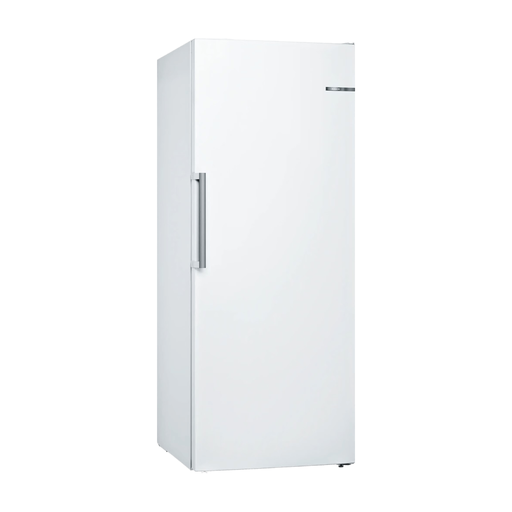 Image unavailable
A spacious upright freezer to compare if you want to store regular supplies as well as cookie dough; this isn’t a compact table-top model.
Capacity: 328 litres. Energy class: C.
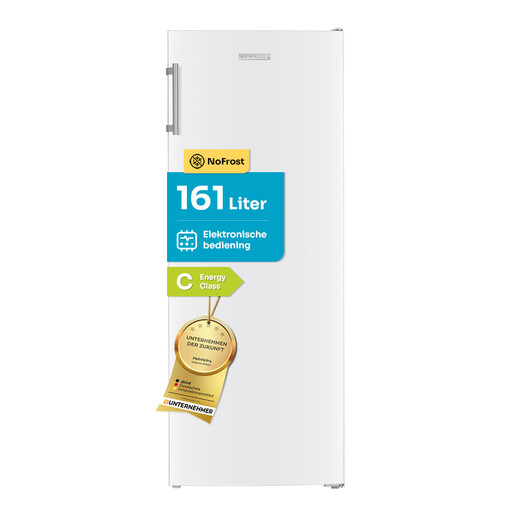 Image unavailable
A model with freezer drawers to compare if you want to organise extra supplies. Before using it for fresh dough, check that the temperature setting and star rating are suitable.
Capacity: 161 litres. Energy class: C. The product name lists three freezer drawers, two extra drawers and a temperature range of −14 °C to −22 °C.
 Image unavailable
A table-top model to compare if you’re looking for extra freezer space without using much floor space. Check whether its stated ambient temperature range of 10 °C to 43 °C suits the place where you plan to put it.
The product name lists No-Frost and energy class D.
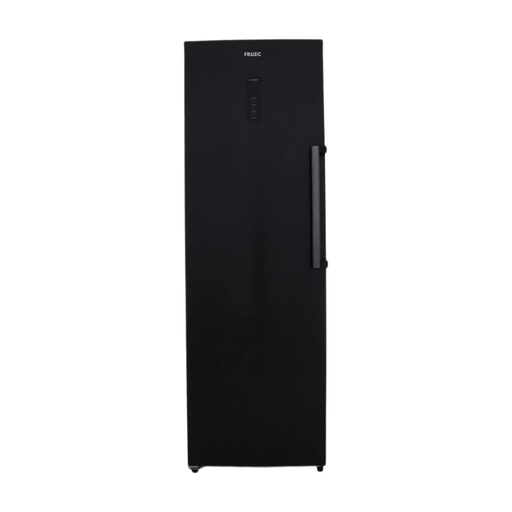 Image unavailable
A spacious freezer to compare if you want to store more supplies regularly. With a capacity of 274 litres, this isn’t a compact table-top model.
Capacity: 274 litres. Energy class: C. The product name lists No-Frost.
 Image unavailable
A compact option to compare if you want multiple operating modes. Before freezing fresh dough, check that it can reach at least −18 °C and that its operating conditions suit the place where you plan to put it.
The product name lists four stars, No-Frost, a switchable fridge mode and energy class E.
No. For fresh dough, choose a freezer compartment with four stars and set the temperature to at least −18 °C. Freeze small portions and don’t put too much in the appliance at once. According to the Consumentenbond, compartments with one, two or three stars are mainly intended for food that is already frozen.
No, bake the cookies before eating them. Raw egg and flour can contain harmful bacteria. The Voedingscentrum advises against tasting raw dough, particularly for young children, pregnant women, older people and those with a weakened immune system. Freezing doesn’t make raw dough ready to eat.
Compare the lowest expected ambient temperature with the operating range of the exact model. Inventum lists a minimum of 10 °C for the VR550; Liebherr states that the FNe 1404 can operate at ambient temperatures down to −15 °C. These specifications don’t automatically apply to other models.
The EU energy label shows, among other things, the energy class, annual consumption, freezer volume and noise level. Compare the consumption in kWh per year for models that are both large enough. The European Commission explains this information for freezers on the energy label.
When you buy at a distance, you usually have a 14-day cooling-off period, according to the Rijksoverheid. This is separate from your rights if a product, when used normally, doesn’t do what you could reasonably expect. ACM ConsuWijzer explains that your statutory guarantee applies in addition to any manufacturer’s guarantee, and that the seller is responsible for providing an appropriate solution.