
Vandaag of morgen in huis

Kwaliteit gegarandeerd

Welkomstaanbiedingen ontgrendelen: GRATIS bezorging | Tot 80% korting | Gratis 30 dagen JoyPlus-proefperiode
Download de app
A cooker hood needs to do more than simply look the part in your kitchen. It has to extract cooking fumes effectively, be easy to use and match the way your home is set up. Yet many buyers focus mainly on appearance or a standout figure on the product page. That can lead to a unit that’s too loud, doesn’t capture enough, or proves difficult to maintain.
In this guide you’ll learn which features of a cooker hood you really need to check. We also compare a few models for different use cases, from a compact kitchen to an open-plan space.
A high m³/h figure sounds appealing, but it doesn’t tell the whole story of day-to-day performance. Also check which speed setting the figure relates to, how much noise the hood makes at that setting, and whether the capacity is for ducted extraction or recirculation.
A ducted cooker hood vents cooking air outside through a duct. With a recirculation hood, the air passes through a grease filter and usually a carbon filter and then returns to the kitchen. Recirculation is practical in apartments without a suitable duct, but carbon filters need to be replaced periodically.
“Silent motor” isn’t a fixed technical standard. Look at the stated noise level in decibels at its lowest and highest settings. A difference of a few decibels can be noticeable in an open-plan kitchen. Also consider airflow noise, the ducting and non-return valves; not everything is caused by the motor.
A 60 cm hood typically fits above a hob of similar width. A 90 cm hood offers more capture at the sides and can be handy for a wide hob or intensive cooking. Measure not only the width but also the depth, chimney length, fixing points and the diameter of the duct.
With an angled hood, the clear space above the hob is often greater. Always check the minimum mounting distance in the manual. For the Siemens LC87KFN60 model, for example, a distance of at least 65 cm above a gas hob and 55 cm above an electric hob is specified.
For a small, enclosed kitchen, a mid-range capacity may be sufficient. In an open-plan kitchen, if you fry a lot or cook with multiple pans, a hood with high extraction capacity is more practical. Use the stated m³/h primarily to compare models under the same conditions.
Note the difference between normal and intensive settings. According to the product information, the Bosch DWK91LT60 lists a capacity of up to 441 m³/h in normal mode and up to 1007 m³/h in intensive mode. That intensive setting is intended for temporary extra ventilation and may produce more noise.
A dishwasher-safe grease filter makes maintenance easier. Aluminium filters capture grease particles and need regular cleaning. With heavy use, that can be every two to four weeks. Check whether the filter really is dishwasher-safe and whether a carbon filter is included.
For recirculation, the carbon filter is a recurring consumable. Check which filter type is needed, how often it should be replaced, and whether the cost suits your usage.
An energy rating such as A+, A++ or A+++ can help when comparing energy consumption, but also look at the stated annual consumption in kWh. For example, the Ciarra CBCB6102-B states 12 kWh per year and energy class A+++. These figures come from the product information; actual consumption depends on usage time and the chosen setting.
A hood with touch controls has a smooth surface that’s easy to wipe clean. Physical buttons can be handy if you want to select a setting quickly while cooking. LED lighting is useful for the cooking zone; check where the lights are positioned and whether the colour temperature suits your kitchen.
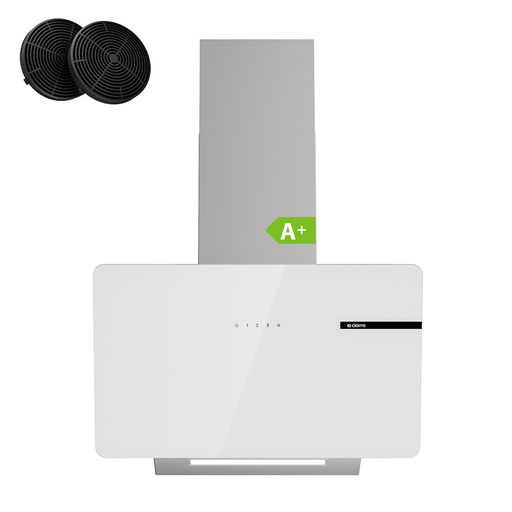
Why it suits this profile: This 60 cm wall-mounted hood fits a standard hob and lets you choose between ducted extraction and recirculation.
The product information lists both ducted and recirculation options, a five-layer aluminium filter and dishwasher-safe filters. That makes installation and maintenance easier to assess in advance.
580 m³/h, three speeds, touch controls, energy class A+ and a stated maximum noise level of 64 dB.
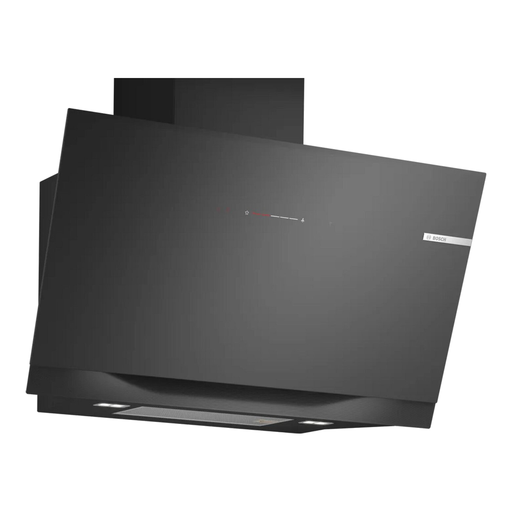
Why it suits this profile: A 90 cm black hood for anyone who values a wide cooking area, LED lighting and advanced controls.
The specifications distinguish between normal and intensive extraction. A dishwasher-safe filter, timer and touchscreen are also listed.
90 cm wide, energy class A+, LED lighting with adjustable colour temperature and five speeds.

Why it suits this profile: For home cooks and apartment dwellers who want to combine recirculation, a boost function and app control.
The product description lists both installation options, two black aluminium filters and a separate filter type for recirculation. Check in advance whether the Wi‑Fi function suits your network.
650 m³/h, boost function, energy class A+++, stated annual consumption of 12 kWh and a maximum of 59 dB.
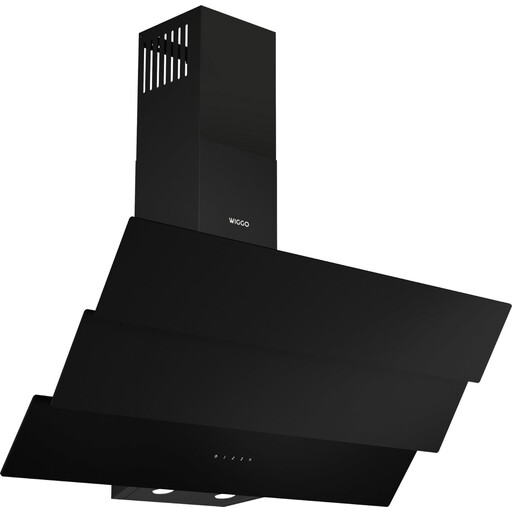
Why it suits this profile: This black, angled 90 cm hood combines a glass front with touch controls and lighting for a modern kitchen.
The listed features include a dishwasher-safe cassette filter and support for both ducted extraction and recirculation. The stated noise level ranges from 47 to 66 dB.
615 m³/h, four settings, two LED lamps and energy class B according to the product listing.
We’ve compiled a complete, up-to-date list of products that fully meet these strict selection criteria and comply with current European safety regulations.
The width should be at least as great as the hob. A 60 cm hood is common for a standard hob. With a wide hob or intensive cooking, an 80 or 90 cm model can offer more capture around the pans.
That depends on your home. Ducted extraction vents moisture and cooking odours outside but requires a suitable duct. Recirculation is more flexible for apartments and kitchens without an external wall, but relies on filters that require maintenance and replacement.
Service life depends on motor load, cleaning, installation and use. Regular filter maintenance prevents grease build-up. Also check whether parts and filters remain available. Most of the models mentioned come with a statutory warranty of at least two years; this is separate from the total service life.
