
Vandaag of morgen in huis

Kwaliteit gegarandeerd

Welkomstaanbiedingen ontgrendelen: GRATIS bezorging | Tot 80% korting | Gratis 30 dagen JoyPlus-proefperiode
Download de app
A cooker hood needs to do more than simply hang above the hob. In a flat, noise can quickly become a nuisance; in a rented property, an outside vent is not always possible; and in a small kitchen, every centimetre counts. Even so, many buyers are guided mainly by appearance, a high m³/h figure or a low price.
This can lead to three common buying mistakes:
A built-in cooker hood is fitted into a kitchen cabinet. This makes it less noticeable and suitable for modern kitchens or renovations where a streamlined frontage is important. Check the opening dimensions, product depth and required ventilation connection in advance. A 52 cm model is not automatically suitable for a 60 cm cabinet without checking the installation instructions.
An undermount cooker hood is fitted beneath a cabinet or directly to the wall. This type is often practical for flats, rented properties and compact cooking areas. A 60 cm cooker hood is a common size, but always measure the available width and the distance to the hob.
A wall-mounted cooker hood is positioned against the wall and forms a visible part of the kitchen design. Models measuring 80 or 90 cm provide more coverage above a wide hob. A black cooker hood complements dark appliances, while a stainless steel cooker hood often suits a classic or industrial-style kitchen.
An island cooker hood is attached to the ceiling and requires a sturdy mounting structure. Check the ceiling height, weight and position of the ducting. With an island layout, a recirculating model can sometimes be simpler, as a long extraction duct may be difficult both aesthetically and technically.
Choose the width based on the hob and the available space. Many households look for a 60 cm cooker hood, while an 80 cm cooker hood or 90 cm cooker hood may be a better fit for a wide cooking area. Also check:
The installation must be carried out according to the instructions and local safety regulations. If you are unsure about the electrical connection or an external wall outlet, it is advisable to seek help from a qualified installer.
Capacity is usually stated in m³/h. A higher figure does not automatically mean that the hood will work better in your kitchen. Actual performance also depends on the length and bends in the ducting, the condition of the filters and the installation.
Therefore, check the capacity for each setting and the corresponding noise level. A quiet cooker hood producing 51 to 61 dB on its highest setting may be more pleasant to use every day than a more powerful model that reaches around 70 dB. Bear in mind that manufacturers and product pages do not always present measurements in exactly the same way.
A cooker hood with a metal grease filter is practical when the filter can be removed and washed. Aluminium filters should be cleaned regularly according to the instructions, for example every two to four weeks with intensive cooking. In recirculation mode, a carbon filter is also required. This filter must be replaced or maintained in accordance with the manufacturer’s instructions.
A cooker hood with LED lighting can illuminate the cooking area effectively without the need for an additional light. Also compare annual energy consumption in kWh. The energy rating is useful for comparison, but it does not by itself indicate what you will actually pay: usage time, ventilation setting and energy prices also play a part.
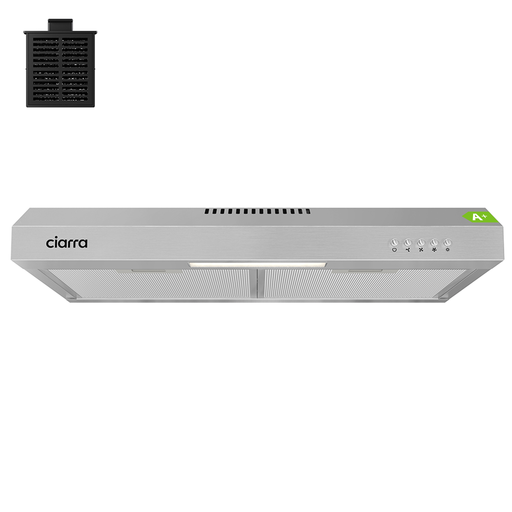
Why it suits this profile: This compact model is designed for a small kitchen, a low cabinet or a rented property. It has push-button controls and supports both external extraction and recirculation.
The dimensions are 596 × 440 × 85 mm. The two washable aluminium grease filters mean you do not need replacement filters for normal grease-filter maintenance.
The product information lists an A+ energy rating, three settings from 138 to 184 m³/h, a maximum noise level of 61 dB and integrated lighting.
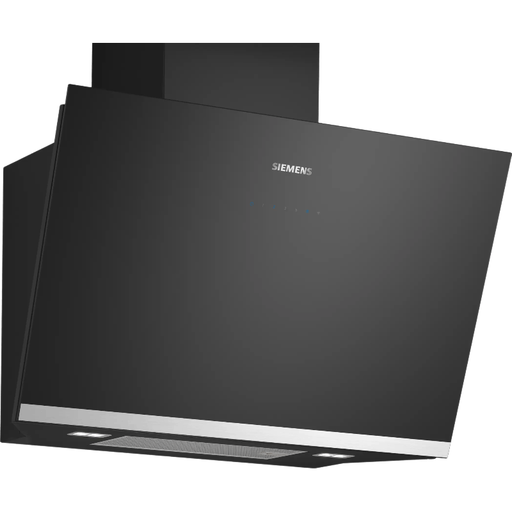
Why it suits this profile: This 80 cm-wide wall-mounted cooker hood is ideal for a renovated kitchen where noise level, controls and finish are important considerations.
The stated figures make the noise level easy to assess: 35 dB on the lowest setting and 51 dB on the highest. According to the product information, the metal filters are dishwasher-safe.
Listed specifications include an A+ energy rating, a maximum capacity of 432 m³/h, LED lighting and a 150 mm extraction diameter.
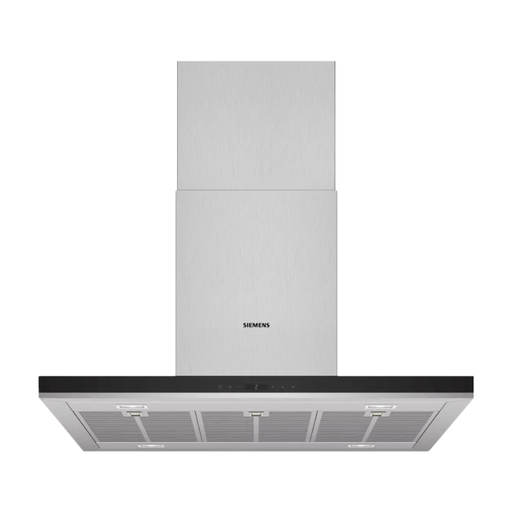
Why it suits this profile: This 90 cm-wide island cooker hood is designed for a fully equipped kitchen with a cooking island and permanent ceiling mounting.
The product details specify a 150 mm connection, dishwasher-safe grease filters and a noise level of 44 to 54 dB. However, check the mounting structure because the unit weighs 31,8 kg.
Listed features include touchControl, LED lighting with dimming function, an intensive setting and an A+ energy rating.
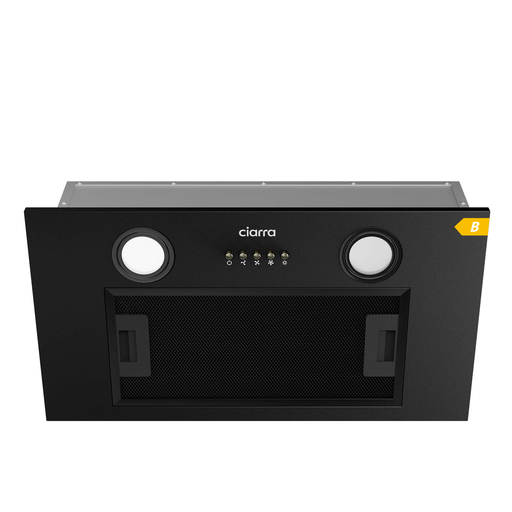
Why it suits this profile: The fully integrated design is suitable for a compact cabinet arrangement and offers a choice between recirculation and external extraction.
The dimensions are 520 × 280 × 130 mm. The aluminium grease filter is removable and washable. Recirculation requires CBCF005 carbon filters, which are sold separately according to the product information.
The specifications list three settings from 135 to 206 m³/h, a maximum noise level of 62 dB and an integrated light.
We have put together a complete, up-to-date list of products that fully meet these strict selection criteria and the applicable European safety regulations.
Before ordering, check whether a carbon filter is included. Some models include one, while others require you to purchase the correct filter type separately. Also check whether the extraction duct is included in the delivery. In a rented property, recirculation may be the simplest solution, but the air is then released back into the room and the filters need to be replaced on time.
Finally, consider your cooking style. If you often use a wok, fry food or cook with several pans, you will benefit from sufficient coverage and multiple settings. If you mainly prepare light meals in a small kitchen, you may place more value on compact dimensions, easy cleaning and a lower noise level.
Ideally, the hood should be at least as wide as the hob. For a 60 cm hob, a 60 cm cooker hood is a logical choice. With wider hobs, an 80 or 90 cm model can provide more coverage. Always check the available cabinet or wall space.
Yes, when external extraction is not possible or not permitted. A recirculating model uses a grease filter and usually a carbon filter. The carbon filter requires periodic replacement. Check the instructions for the model you choose.
This depends on the annual consumption in kWh, the ventilation setting selected and how often the hood is used. Therefore, compare both the energy rating and the stated annual consumption. Cleaning the grease filter regularly also helps to prevent unnecessary restriction of the airflow.
