
Vandaag of morgen in huis

Kwaliteit gegarandeerd

Welkomstaanbiedingen ontgrendelen: GRATIS bezorging | Tot 80% korting | Gratis 30 dagen JoyPlus-proefperiode
Download de app
Picking out a new cooker hood seems simple—until you dive into the specifications. Suddenly, terms like m?/h, recirculation, and decibels are flying around. A lot of marketing focuses on impressive numbers, but they don't always tell the whole story. The result? You pay for features you don't need, or you end up with a noisy appliance that only does half the job.
As a Joybuy Product Recommendation Officer, I see where things go wrong every day. Let's avoid the most common pitfalls.
recirculating cooker hood, the cost of replacing carbon filters can add up significantly over time.Let's look at the specifications that really matter, so you can choose a model that fits your kitchen and your cooking habits.
Before you choose a model, there are a few technical decisions to make. These will determine the effectiveness, noise level, and installation.
This is the most important decision. Do you have an opening to the outside or not?
ductless cooker hood): Does not require an external vent. The air is drawn through a grease filter and a carbon filter, which neutralises odours. The clean air is then blown back into the kitchen. This is an ideal solution for apartments or kitchens where a duct is not feasible. Keep in mind that the carbon filters need to be replaced periodically.The extraction capacity, expressed in cubic metres per hour (m?/h), indicates how much air the hood can move. A simple rule of thumb for the required capacity is:
For an open-plan kitchen, add about 30% to this number.
The noise level (dB) is just as important. A normal conversation is about 60 dB. A quiet cooker hood often produces around 45-50 dB on its lowest setting. Pay attention to the maximum noise level, as that's what you'll hear when the hood is running at full power.
Cooker hoods come in various shapes and sizes, each with its own installation method.
black cooker hood or stainless steel cooker hood finishes for a modern look.The most common widths are 60 cm cooker hood and 90 cm cooker hood. Choose a model that is at least as wide as your hob.
Based on these criteria, we have selected a few models that suit different households.

Why This Fits Their Persona: This model is designed for the modern city dweller. It supports recirculation, has a powerful motor for open-plan kitchens, and can be controlled via an app, which suits a tech-savvy user in an apartment.
Tackles the overcapacity pitfall with an energy-efficient cooker hood (A+++ label). The powerful 650 m?/h motor is efficient, and you only use the boost function when necessary, preventing needless consumption and noise.
Flexible installation (recirculation or ducted) and smart control via Wi-Fi and app. The washable aluminium grease filters are practical and low-maintenance.
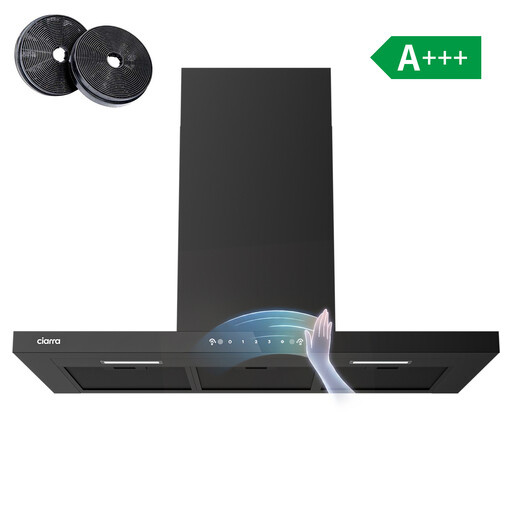
Why This Fits Their Persona: For those who want to combine aesthetics with performance. The ultra-slim (40mm) black glass panel and the 90 cm cooker hood width make this a statement piece in a larger, modern kitchen. The gesture control (Wave Control) is both hygienic and high-tech.
Bypasses the myth of the "silent" hood. Despite its high capacity of 650 m?/h, the maximum noise level of 59 dB is relatively low for its class. The A+++ energy label proves that power doesn't have to come at the expense of efficiency.
Innovative Wave & Touch control and a highly energy-efficient motor. The slim design is a visual upgrade for any kitchen.
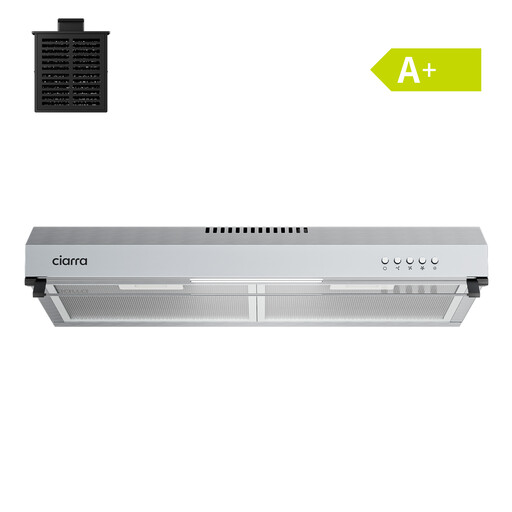
Why This Fits Their Persona: Perfect for those seeking an unobtrusive yet functional solution. This integrated cooker hood is seamlessly built into a kitchen cabinet, preserving the clean lines of the kitchen. The stainless steel finish is timeless and durable.
Avoids the hidden costs pitfall. The washable aluminium grease filters don't need replacing, which saves money in the long run. With an A+ energy label and a modest motor, this is an economical choice for daily use.
Fully integrable and space-saving design. The push-button controls are reliable and straightforward. Suitable for both ducted and recirculating installation.
We've compiled a complete, up-to-date list of products that meet these selection criteria and comply with Dutch safety regulations.
For the handy DIY enthusiast, installing a cooker hood is often manageable, especially an under-cabinet hood or a recirculation model. Always follow the manufacturer's manual carefully. For more complex installations, like an integrated cooker hood or creating a new duct, professional help may be wise. For recirculation models, we also offer an installation service for wall-mounted models and a service for built-in models.
You can identify an energy-efficient cooker hood by its energy label. Models with a label A or higher (such as A+, A++, or A+++) consume significantly less power. This is often due to a more efficient motor (like a BLDC motor) and energy-saving LED lighting. An efficient model is not only better for the environment but also for your wallet.
