
Vandaag of morgen in huis

Kwaliteit gegarandeerd

Welkomstaanbiedingen ontgrendelen: GRATIS bezorging | Tot 80% korting | Gratis 30 dagen JoyPlus-proefperiode
Download de app
A cooker hood with a carbon filter is useful if you live in a flat or can’t install an exhaust duct to the outside. The air passes through a grease filter and a carbon filter before being returned to the kitchen. This makes installation more flexible, but choosing the right model involves more than just its appearance or the number of settings.
A cooker hood with a carbon filter still needs maintenance. The grease filter must be cleaned regularly, and an activated carbon filter needs replacing over time. According to product information for various Ciarra filters, the recommended replacement interval under normal use is around 2 to 4 months. How often you cook, and how much you bake or fry, will determine where you fall within that range.
A high figure in m³/h sounds appealing, but it doesn’t tell you everything about how the hood performs in practice. With a recirculating cooker hood, the air is blown back into the room. The filters, positioning and noise level also affect day-to-day use. Check whether the stated extraction rate applies to a standard setting or a boost setting, too.
A 60 cm cooker hood usually fits above a standard hob, while a 90 cm cooker hood can cover a larger cooking area. Always measure the available width, depth and height of the flue space. If you’re buying a replacement cooker hood filter, the exact model number is particularly important. A round filter with a similar diameter isn’t necessarily suitable for your motor or fitting.
A wall-mounted cooker hood can sometimes be used in two ways: with an exhaust duct to the outside, or as a recirculating system with carbon filters. In a rented flat or apartment, recirculation is often more practical because you don’t need an opening through an external wall. Check whether the required carbon filters are included. Some models come with them as standard; for others, you’ll need to order them separately.
The extraction rate is usually given in m³/h. A model with an extraction rate of 300 m³/h may suit light everyday cooking, while more intensive cooking may require a higher rate. Also check the maximum noise level in dB. A quiet cooker hood is particularly useful in an open-plan kitchen. For example, the Ciarra CBCB6102-B recirculating cooker hood has a maximum noise level of 59 dB and an airflow of up to 650 m³/h, according to its product specifications.
A washable aluminium grease filter helps keep regular maintenance costs down. Consider the controls, too: mechanical buttons are simple and straightforward, while touch controls or an app may offer extra features. A cooker hood with LED lighting provides focused light over the hob. Finally, check the energy label and annual energy consumption. An energy-efficient cooker hood may be a good choice if it runs for several hours a day, but always compare the full specifications rather than just the energy rating.
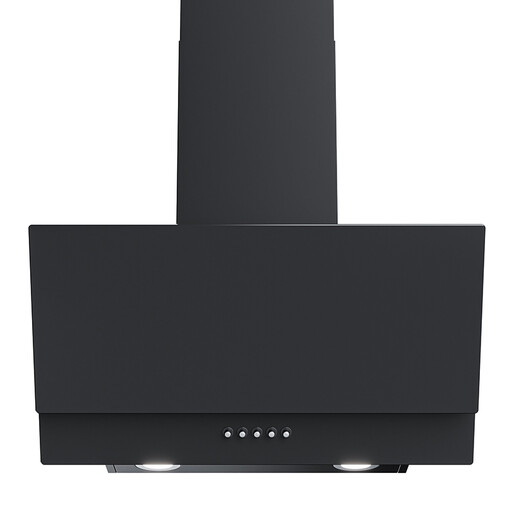
Why it suits this need: This 60 cm model offers both extraction and recirculation and, according to the product information, comes with a set of carbon filters. That keeps additional costs down when you first buy it.
The product information clearly states the width, recirculation option and included filters. So you don’t have to choose based on looks alone.
60 cm wide, 300 m³/h airflow, LED lighting and a five-layer aluminium grease filter, according to the product specifications.

Why it suits this need: Ideal if touch controls, Wi-Fi and app connectivity are important to you. According to the product specifications, this model can be used for recirculation or connected to an exhaust duct.
Having two ventilation options means you’re not tied to a single type of installation. The included CBCF003 filters are useful when using the recirculation setting.
Maximum airflow of 650 m³/h, maximum noise level of 59 dB, four settings and two CBCF003 carbon filters, according to the product information.
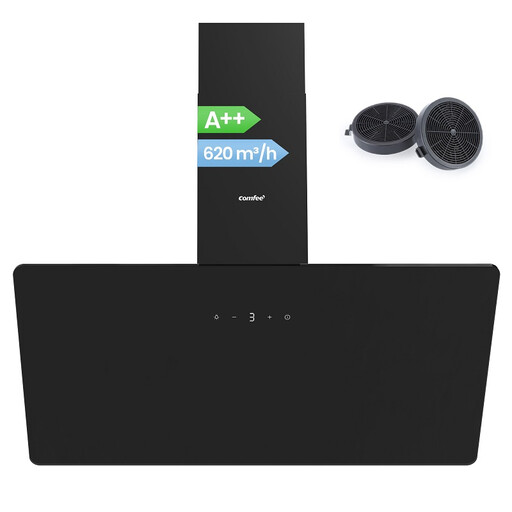
Why it suits this need: This 90 cm-wide angled cooker hood is designed for larger cooking areas and intensive cooking. Four speeds allow you to fine-tune the settings.
The specifications list both recirculation and extraction options. This lets you choose the installation that suits a home with or without an existing exhaust duct.
90 cm wide, 620 m³/h airflow, 59 dB and a five-layer aluminium filter, according to the product details.
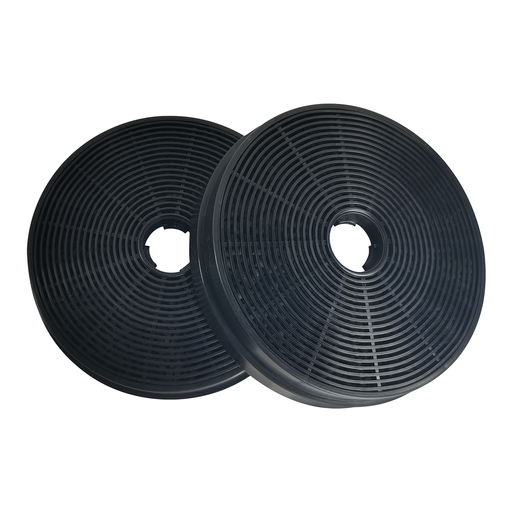
Why it suits this need: For owners of specific Ciarra models that use a CBCF003 filter and who want to fit a replacement filter without tools.
The compatible models are listed in the product description. Always compare this list with the rating plate on your cooker hood before ordering.
175 mm diameter, designed for models including CBCB6102-B and CBCB9102-B, and replaceable without tools according to the product description.
We’ve put together a complete, up-to-date list of products that meet these strict selection criteria and the applicable European safety regulations.
Ciarra uses several different filter types. Alongside the Ciarra CBCF003, these include:
Always check the model number and dimensions. A filter that looks almost the same may still not fit properly.
According to the product information for the Ciarra filters mentioned above, replacing them every 2 to 4 months is a guideline. If you fry often or cook intensively every day, you may need to replace the filter sooner. A saturated filter can affect airflow and odour filtration.
Yes, if the model is suitable for recirculation. The air is then passed through the grease filter and carbon filter before being returned to the kitchen. Check whether the correct filter is included or available separately.
Energy use depends on the motor power, energy label, how long you use it and the setting you choose. Check the stated annual consumption in kWh and compare it with other models. A lower setting generally uses less electricity than a boost setting, but the exact figures vary between cooker hoods.
