
Vandaag of morgen in huis

Kwaliteit gegarandeerd

Welkomstaanbiedingen ontgrendelen: GRATIS bezorging | Tot 80% korting | Gratis 30 dagen JoyPlus-proefperiode
Download de app
A cooker hood helps reduce cooking fumes, grease particles and odours in your kitchen. But it’s not wise to choose based only on appearance, high extraction capacity or smart features. A model that isn’t right for your hob, available space or ventilation options may disappoint in practice.
Three common pitfalls are especially worth watching out for in rented homes, student accommodation and small flats:
First, measure your hob, cabinet opening and available wall space. A 60 cm cooker hood is often a practical choice for a standard hob. A wider hood may suit a larger cooking area, but you’ll also need enough wall or cabinet space.
The main types are:
Also check the minimum distance from the hob. The product manual and the requirements for your hob should take priority. Gas hobs generally require more clearance than electric ones.
A ducted cooker hood carries air outside through a duct. This can remove cooking fumes directly from the kitchen, but it requires a suitable connection. Check the duct diameter and route, and whether you need permission from your landlord or residents’ association.
With a recirculating cooker hood, the air stays indoors. A metal or aluminium grease filter traps grease particles; a cooker hood with a carbon filter is also designed to reduce odours. Carbon filters need to be cleaned or replaced according to the product manual. Before buying, check whether the filter is included and how much a replacement costs.
Models with both options offer greater flexibility. Bear in mind, though, that performance in recirculation mode may differ from the stated extraction capacity when vented outside.
Airflow is usually given in m³/u. A compact kitchen doesn’t always need very high extraction capacity, while frequent frying or an open-plan kitchen may call for more power. Check the figures for each setting, not just the maximum.
You can’t tell whether a quiet cooker hood is quiet from the marketing copy alone: check the stated noise level in dB. A model may be pleasantly quiet on its lowest setting but clearly audible on boost. Compare the noise levels at the settings you’ll use day to day.
The stated energy rating and annual consumption in kWh are also useful when comparing models. These figures come from the product specifications. Some brands say that features such as an efficient motor, LED lighting or automatic controls can make a product easier to use. Treat these claims as product-specific information and always compare the technical details.
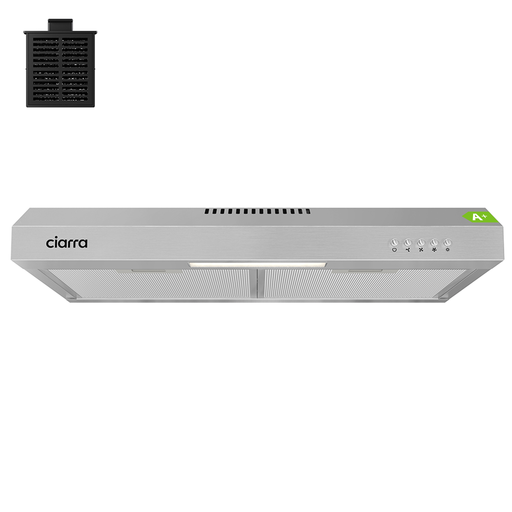
Why it suits this type of buyer: This compact cooker hood is designed for cabinet mounting and measures 596 mm wide. It’s a good fit for many standard kitchens where space is limited.
The product information lists both ducted extraction and recirculation. Check that the carbon filters included or required are suitable for your installation.
A+ energy rating according to the product specifications, three settings, maximum airflow of 184 m³/u and two washable aluminium filters.
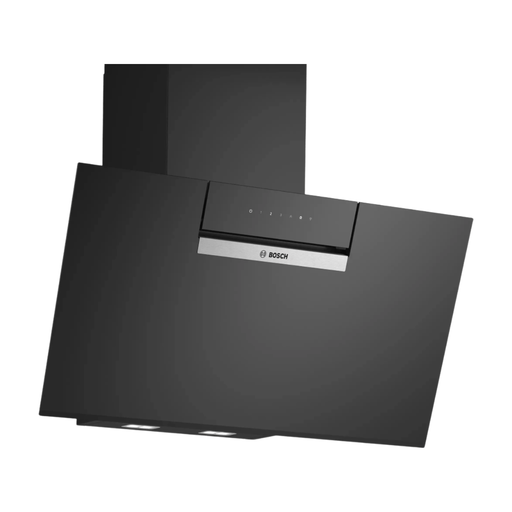
Why it suits this type of buyer: This 80 cm wall-mounted model combines several settings with app control, LED lighting and a stated A+ energy rating.
The specifications give separate figures for standard and intensive extraction. This makes it easier to compare power and noise realistically.
431 m³/u on the highest standard setting, 768 m³/u on intensive mode, four settings and a grease filter that’s dishwasher-safe.
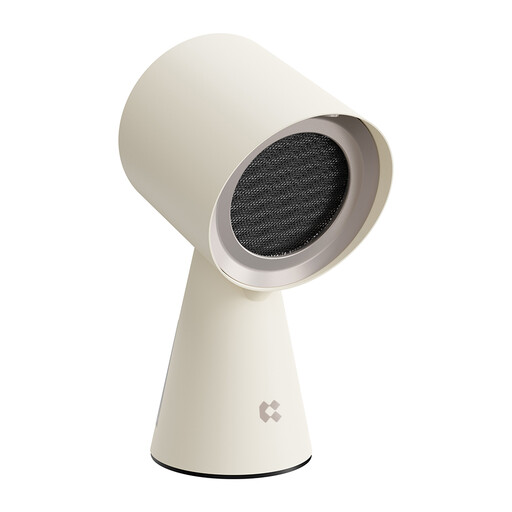
Why it suits this type of buyer: This portable recirculating unit is designed for rented homes, studio flats and temporary cooking spaces where a permanent cooker hood can’t be installed.
There’s no need for a wall duct. The unit uses multi-layer filters, but it does need regular maintenance and good ventilation in the room.
Compact size, two speeds, 36 W power and a maximum noise level of less than 65 dB according to the product specifications.
We’ve put together a complete, up-to-date list of products that meet these strict selection criteria and the applicable European safety regulations.
A cooker hood will only work as intended if the filters and air ducts are kept clean. Clean the metal grease filter regularly according to the manual, especially if you often bake or fry food. If you use a recirculating system, check how saturated the carbon filter is and note when it needs replacing.
Keep these points in mind during installation:
Yes, if venting outside isn’t possible or permitted. A recirculating model doesn’t need a wall duct, but it does use a grease filter and usually a carbon filter. Make sure there’s adequate general ventilation while you cook.
Its lifespan depends on how it’s used and maintained, how it’s installed and the quality of its components. Clean the grease filters regularly, prevent grease from building up and follow the maintenance instructions. The motor may last longer if the filters don’t become clogged.
That depends on its power, how long it’s used and which setting you choose. Compare the stated annual consumption in kWh and check the energy rating. LED lighting generally uses less electricity than older lighting, but overall consumption is mainly determined by how long the motor runs and which setting it’s on.
