
Vandaag of morgen in huis

Kwaliteit gegarandeerd

Welkomstaanbiedingen ontgrendelen: GRATIS bezorging | Tot 80% korting | Gratis 30 dagen JoyPlus-proefperiode
Download de app
A cooker hood needs to suit your hob, kitchen layout and ventilation setup. Yet many buyers focus mainly on design or a high m³/h figure. That can leave you with a model that’s too noisy, doesn’t fit properly or proves less practical in recirculation mode.
This guide helps homeowners, tenants and kitchen renovators compare cooker hoods using specifications they can check.
A stated capacity, such as 370, 580 or 650 m³/h, is a product specification measured under certain conditions. In practice, the length of the duct, bends, filters and selected fan setting all affect performance. With ducted extraction, a proper connection is therefore just as important as the maximum figure.
A recirculating cooker hood doesn’t vent cooking fumes outside. Instead, air passes through a grease filter and usually a carbon filter before being returned to the kitchen. This is useful in a flat or rented home without a suitable duct, but a cooker hood with a carbon filter does need regular maintenance, and the odour filter may sometimes need replacing.
A 60 cm cooker hood will often suit a standard hob, but always check the actual width, depth and mounting height. A 90 cm cooker hood can cover a larger cooking area, but needs enough wall space. With a built-in cooker hood, the recess must match the specified dimensions exactly. A wall-mounted cooker hood also needs room for the chimney or upper duct section.
First, choose the type of installation:
As well as the width, measure the depth and available height. If you have a gas or electric hob, also check the minimum clearance in the manual. Installation must follow the instructions and applicable UK regulations.
Compare airflow at the same fan setting. A model with several settings gives you more control for gentle cooking and intensive frying. Check the noise level in dB, too. A quiet cooker hood is particularly useful in an open-plan kitchen, but compare the figure for each setting rather than looking only at a single maximum or minimum reading.
As a guide, consider your kitchen’s volume, the number of air changes you want and the resistance in the duct. If you’re unsure, ask an installer to check whether your existing duct is suitable. A duct that’s too narrow or long can increase noise and reduce extraction.
A removable aluminium grease filter is practical for regular cleaning. Some models have several filter layers or a dishwasher-safe filter; check the product manual for details. Manufacturers often recommend cleaning grease filters every two to four weeks, depending on use.
A cooker hood with LED lighting illuminates the hob without the need for a separate light. Touch controls are easy to wipe clean, while push buttons provide tactile feedback. Wi-Fi and an app can be useful if you want to control the hood remotely, but they don’t replace effective extraction.
Check the energy label and stated annual consumption. The energy rating and kWh/a shown are the supplier’s product specifications; check the latest information on the product page and label before ordering.
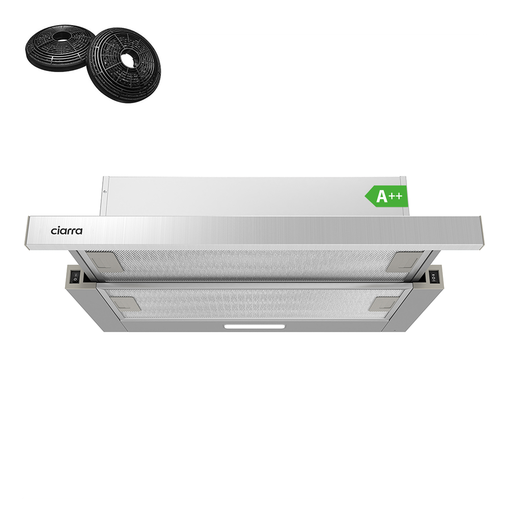
Why it suits this type of buyer: This pull-out 60 cm telescopic cooker hood is suitable for a compact kitchen and can be tucked partly out of sight when not in use.
The specifications list both recirculation and ducted extraction. This lets you choose the ventilation method that suits your home, provided the installation is suitable.
Maximum airflow of 370 m³/h, A++ according to the product listing, LED lighting and two washable aluminium filters.
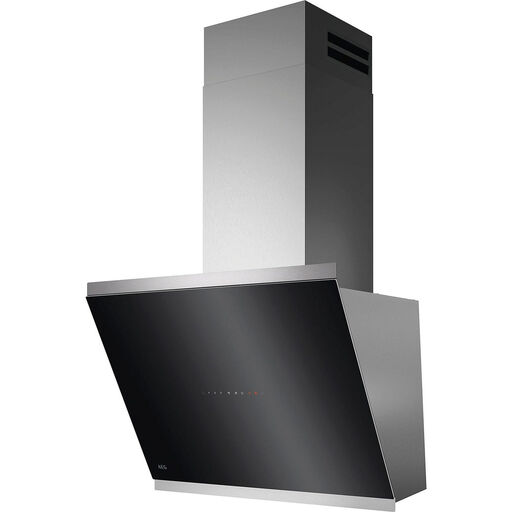
Why it suits this type of buyer: This 60 cm wall-mounted model has touch controls, five fan settings and an automatic Hob2Hood function when paired with a compatible hob.
The listed noise levels range from 50 to 68 dB(A), so you can assess the noise at each setting instead of relying on a marketing claim.
Washable aluminium grease filter, LED lighting and a choice of ducted extraction or recirculation according to the product specifications.

Why it suits this type of buyer: An open-plan kitchen without an easy route for ducted extraction may benefit from a model with recirculation, a boost setting and Wi-Fi and app controls.
The product information explicitly lists two ventilation methods and includes carbon filters for recirculation. Be sure to check the replacement instructions.
Maximum airflow of 650 m³/h, three settings including boost, maximum noise level of 59 dB according to the product listing, and two carbon filters included.
Clean the grease filter regularly and wipe the casing with a soft, damp cloth. Don’t use abrasive products on glass or painted surfaces. Switch off the power before cleaning or maintenance. Don’t leave the cooker hood running unattended for long periods, and keep flammable materials away from the hob.
When using recirculation, check and replace the carbon filter as recommended by the manufacturer. For ducted extraction, make sure the duct is clear and correctly connected. An installer can check that the clearance, electrical connection and ventilation meet local requirements.
We’ve put together a complete, up-to-date list of products that meet these strict selection criteria and the applicable European safety regulations.
It can be a practical option if there’s no duct leading outside. Remember that you’ll need to clean it regularly and replace the carbon filters. Recirculation doesn’t vent moisture through a duct, so good ventilation in the room is still important.
It depends on how often you cook and how much oil or fat you use. Product instructions commonly recommend cleaning the metal grease filter every two to four weeks. Always check the manual for your model, and clean the filter sooner if it looks dirty.
Not necessarily. Compare the noise level at each fan setting and check the airflow at that same setting. Check the duct, too, as bends, an incorrect diameter or dirty filters can cause extra noise.
