
Vandaag of morgen in huis

Kwaliteit gegarandeerd

Welkomstaanbiedingen ontgrendelen: GRATIS bezorging | Tot 80% korting | Gratis 30 dagen JoyPlus-proefperiode
Download de app
Choosing a new cooker hood seems simple, until you have to decide between a chimney hood, an angled hood, recirculation or extraction to the outside. Terms such as ‘quiet’, ‘powerful’ and ‘energy-efficient’ only tell you so much until you look at the technical specifications.
Look out for these three common pitfalls:
First, measure your hob and the available wall space. Popular sizes include:
Check more than just the product width: look at the dimensions of the chimney, the depth and the clearance required above the hob too. The installation height varies depending on the hob and manufacturer. For example, the product specifications for some models state a minimum of 55 cm above an electric hob and 65 cm above a gas hob. Always follow the instructions for your chosen appliance and hob.
Extraction capacity is usually shown in m³/h. A higher figure can be useful in an open-plan kitchen, if you do a lot of frying or cook over a high heat in a wok. However, check several settings:
A quiet cooker hood won’t necessarily be quiet on the boost setting. For example, a model may operate at around 50 to 60 dB on its normal settings, but exceed 65 dB on the intensive setting. So compare figures measured under the same conditions.
A cooker hood with external extraction vents cooking fumes through a duct. This can be a good choice if you already have a suitable extraction duct. Check the diameter of the connection; on some models, this is 150 mm.
With a recirculating cooker hood, air passes through a grease filter and usually a carbon filter before being blown back into the kitchen. This is handy in flats or homes without an extraction duct. Check in advance:
A dishwasher-safe grease filter makes maintenance easier. A filter saturation indicator is handy, but it doesn’t replace regular checks and cleaning.
A cooker hood with LED lighting usually illuminates the worktop directly and, according to the product specifications, often uses less energy than older lighting technologies. Check the colour temperature too, and whether the lighting is dimmable.
A cooker hood with touch controls has a smooth control panel that can be easy to clean. Mechanical buttons may be more convenient if you cook with wet or greasy hands. Smart features, such as app control or a connection to your hob, are most useful when you’ll actually use them.
Compare the energy rating, annual consumption and motor performance together. A high energy rating doesn’t automatically mean the appliance will be cheap to run in every installation. With recirculation, the cost of carbon filters can also make a difference.
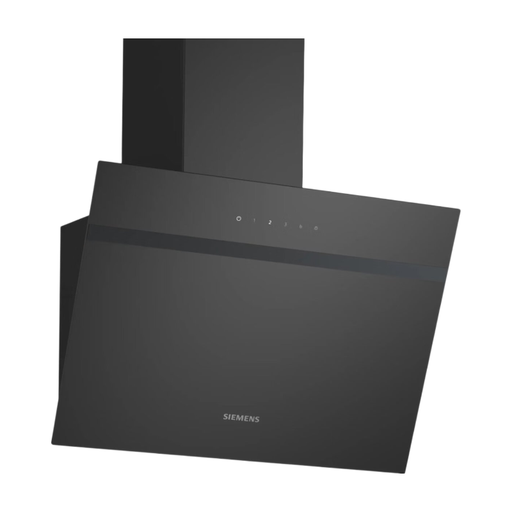
Why it suits this user: This black angled cooker hood is suitable for a compact kitchen and has straightforward touchControl operation.
The product specifications list 3 settings, a capacity of 430 m³/h and a noise level of 51 to 60 dB. The model is 59 cm wide, so check the size of your hob.
An A energy rating, LED lighting, a dishwasher-safe filter and a filter saturation indicator. A carbon filter is not included.
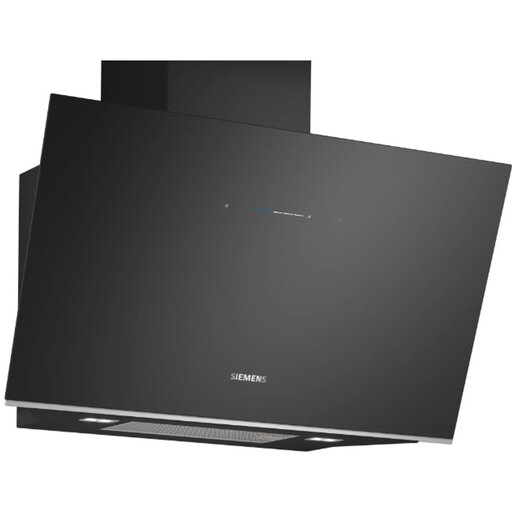
Why it suits this user: This wide chimney hood is a good fit for a spacious kitchen. The product description says it can be controlled using touchControl, Home Connect and a voice assistant.
The specifications give separate figures for normal capacity and a maximum of 1007 m³/h. The maximum noise level is 70 dB, so don’t expect it to be just as quiet on the intensive setting.
89 cm wide, A+ energy rating, dishwasher-safe filters and suitable for either external extraction or recirculation. The recirculation kit is not included.
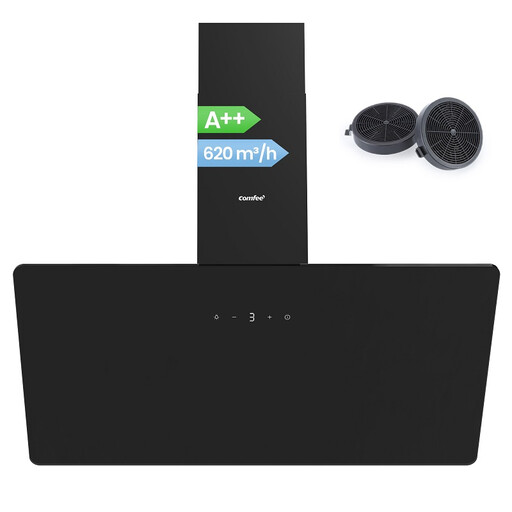
Why it suits this user: This 90 cm-wide angled cooker hood is designed for families and home cooks who use several cooking zones.
The product specifications state a capacity of 620 m³/h, 4 speeds and a noise level of 59 dB. This lets you adjust the extraction more precisely than with a simple on/off control.
A++ energy rating, touch controls and support for both external extraction and recirculation. Check which filters and connection materials are included when you buy.
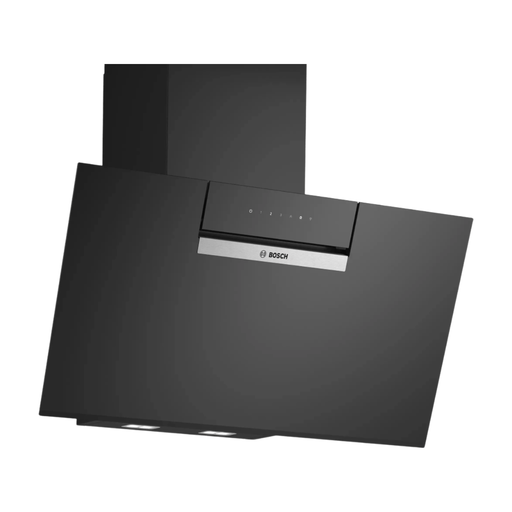
Why it suits this user: This black wall-mounted model combines an 80 cm width with a normal capacity of 431 m³/h and an intensive setting.
The specifications list separate figures for normal extraction, intensive extraction and recirculation. The higher noise level on the boost setting is also clearly stated.
A+ energy rating, LED lighting, Home Connect, a dishwasher-safe aluminium grease filter and the choice of external extraction or recirculation.
We’ve put together a complete, up-to-date list of products that meet these strict selection criteria and the applicable European safety regulations.
Clean metal grease filters according to the instructions. A build-up of grease can reduce airflow and create a safety risk. Switch off the appliance and disconnect it from the power supply before removing filters or lighting.
Have any fixed electrical connection or extraction system installed in accordance with local regulations. If you have a gas hob, pay particular attention to ventilation and the distance to the cooker hood. Don’t use a duct that is already being used to vent flue gases from another fuel-burning appliance.
Yes, if external extraction isn’t possible. The air is then passed through grease and carbon filters. Bear in mind the ongoing cost of carbon filters, and check whether they’re included with the model.
It depends on the setting and installation. Compare the stated noise level in dB on both the normal and intensive settings. A figure around 50 to 60 dB on the normal settings is often more useful than looking at a low minimum figure alone.
Its lifespan depends on how often it’s used, ventilation, cleaning and the quality of the installation. Regularly maintaining the grease filters and replacing carbon filters when needed will help keep performance up. Before you order, also check the warranty and availability of spare parts.
