
Vandaag of morgen in huis

Kwaliteit gegarandeerd

Welkomstaanbiedingen ontgrendelen: GRATIS bezorging | Tot 80% korting | Gratis 30 dagen JoyPlus-proefperiode
Download de app
Choosing a new cooker hood seems simple, until you have to decide whether to choose a 60 or 90 cm hood, ducted extraction or recirculation, and touch controls or push buttons. In a small kitchen, rented home or open-plan kitchen, the wrong specifications can mean more noise, inadequate extraction or unexpected costs for filters and installation.
The main pitfalls to avoid are:
Measure your hob and the available space first. A 60 cm cooker hood often suits a standard hob and is practical in a compact kitchen. A 90 cm cooker hood provides more coverage above a wide hob or kitchen island.
Check the exact product dimensions too. A model sold as 60 cm wide might measure 59.5 or 59.8 cm, for example. Also check the height, depth, fixing points and clearance above an electric or gas hob, as set out in the installation instructions.
Capacity is measured in m³/h. A higher figure can be useful if you cook a lot or have an open-plan kitchen, but only if your installation can support it. So check:
A ducted cooker hood needs a suitable outlet to the outside. A recirculating cooker hood needs compatible carbon filters. These must be replaced according to the instructions, so check the price and availability of the correct type before you buy.
Noise levels are usually stated in dB(A). Compare models at the same setting and check the lowest figure too if you often cook quietly. An energy-efficient cooker hood has a favourable energy rating and low stated annual energy consumption, but lighting and intensive settings affect actual use.
A cooker hood with a dishwasher-safe grease filter is easier to maintain. Washable metal filters need regular cleaning, for example every two to four weeks, depending on use. An LED light is handy above the hob; check whether the light can be replaced and how many lamps the model has.
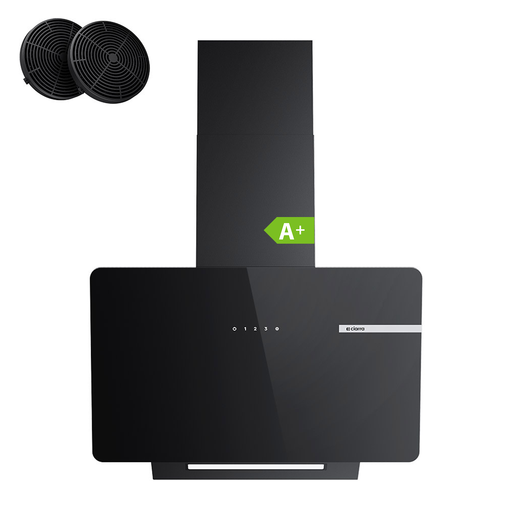
Why it suits this profile: This black wall-mounted model suits a standard cooking zone and offers both ducted extraction and recirculation. Its stated maximum capacity is 580 m³/h, with a maximum noise level of 64 dB.
Its two installation options make it suitable whether or not you have an outlet to the outside. The metal grease filter is washable.
60 cm wide, with LED lighting, touch controls and a washable aluminium filter included.
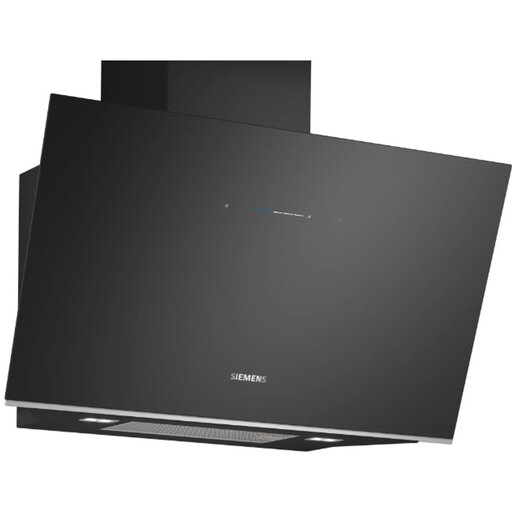
Why it suits this profile: This black, angled wall-mounted model is designed for a wide cooking zone. According to the product specifications, it has a maximum capacity of 1007 m³/h, an A+ energy rating and Home Connect controls.
The product specifications list both ducted extraction and recirculation. Bear in mind that the recirculation kit is not included.
90 cm wide, with a touchscreen, LED lighting, dishwasher-safe filters and a stated duct diameter of 150 mm.

Why it suits this profile: For keen cooks who value smart controls, this 60 cm model offers a boost function, a maximum capacity of 650 m³/h and control via Wi-Fi, app and sensor touch, according to the product specifications.
The manufacturer lists both recirculation and ducted extraction. The included carbon filters are for recirculation; check the instructions for how often to replace them.
A+++ energy rating, stated annual energy consumption of 12 kWh, four settings including boost, and two washable aluminium grease filters.
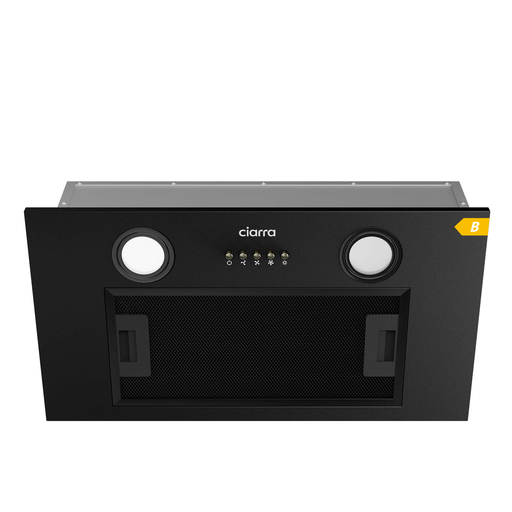
Why it suits this profile: This compact built-in cooker hood is designed to fit into a wall unit and measures 52 cm wide. That makes it a good option for small kitchens with limited wall space.
The dimensions and built-in design are clearly listed. Recirculation requires CBCF005 carbon filters, which are sold separately according to the product information.
Compact size, three settings, push-button controls, LED lighting and a removable, washable aluminium grease filter.
We’ve put together a complete, up-to-date list of products that meet these rigorous selection criteria and the applicable European safety regulations.
Choose one that’s at least as wide as your hob. A 60 cm model usually suits a 60 cm hob. In an open-plan kitchen or above a wide hob, a 90 cm wall-mounted cooker hood can provide more coverage.
Yes, if installing an outlet to the outside isn’t possible. A recirculating cooker hood uses a grease filter and a carbon filter. The air is blown back into the kitchen, so moisture is removed less effectively than with ducted extraction. Replace the carbon filter according to the manufacturer’s instructions.
It depends on the energy rating, stated annual energy consumption, how long you use it and which setting you choose. Check the cost of carbon filters and the energy use of the LED lighting too. A model with low stated annual energy consumption may be economical to run, but actual costs vary from one household to another.
