
Vandaag of morgen in huis

Kwaliteit gegarandeerd

Welkomstaanbiedingen ontgrendelen: GRATIS bezorging | Tot 80% korting | Gratis 30 dagen JoyPlus-proefperiode
Download de app
Buying a new cooker hood seems straightforward, until you have to choose between a built-in model, a telescopic cooker hood or a wall-mounted cooker hood. Manufacturers often highlight a high extraction rate, smart controls or a favourable energy rating. But one standout specification doesn’t tell you everything about whether a hood is right for your kitchen.
There are three pitfalls to watch out for, particularly in small Dutch kitchens, flats and open-plan kitchens:
Your cooker hood should be at least as wide as your hob. A 60 cm cooker hood suits many standard hobs and is practical in a compact kitchen. If you have a wider hob, a 90 cm model may provide more coverage.
A built-in cooker hood is fitted into a kitchen cupboard. This keeps the design streamlined, but check the exact recess width and depth, as well as the ventilation space required, before you buy. A telescopic model slides out when you’re cooking, so the appliance stays partially concealed when it’s not in use.
For example, the Ciarra Under-Cabinet Telescopic Cooker Hood 60cm is 599 mm wide and extends from 298 to 453 mm in depth. According to the product specifications, it offers a maximum extraction rate of 370 m³/h, two speeds, LED lighting, and both extraction and recirculation modes. The listing gives it an A++ energy rating and a maximum noise level of 61 dB.
A wall-mounted cooker hood is visible above the hob and can make a bold style statement. For example, a black glass cooker hood can suit a modern kitchen, while stainless steel often blends in more easily with other appliances.
An angled model can give you more headroom. However, check the height above the hob and always follow the installation clearance specified in the manual. The recommended clearance may vary depending on whether you have an electric, induction or gas hob.
Extraction rate is measured in m³/h. A model with a rate of 650 m³/h may be worth considering for an open-plan kitchen or frequent, intensive cooking, but its performance in practice also depends on the ducting.
Check:
So a 650 m³/h cooker hood won’t automatically be right for every space. With recirculation, air passes through a grease filter and a carbon filter before being returned to the kitchen. A cooker hood with external extraction vents cooking fumes outside through a duct. This can make installation more involved, but it means filtered air isn’t returned to the room.
A quiet cooker hood is usually indicated by a low dB figure. Check the maximum noise level, not just the figure for the lowest setting. For comparison, the product specifications give the Ciarra 60 cm angled cooker hood a maximum noise level of 64 dB, while the Wi-Fi model with a maximum extraction rate of 650 m³/h is listed at 59 dB.
Noise measurements can vary depending on the setting, installation and ventilation method. A restricted duct or extra bends can make a hood noisier. In an open-plan kitchen, it’s worth considering the extraction rate and noise level together.
Check the energy consumption in kWh per year as well as the energy rating. Models with an A++ or A+++ rating may look like an attractive choice, but the annual consumption figure makes comparisons more concrete.
Also look for:
A cooker hood with touch controls isn’t necessarily more convenient than one with push buttons. In a kitchen where controls are often exposed to grease or moisture, a simple mechanical control panel may be more practical. Check the manual for how often the filters need cleaning, too. The maintenance advice listed for several models recommends cleaning every two to four weeks, depending on use.
The selection below is based on verifiable details in the product listings, such as size, extraction rate, noise level, controls and installation options.
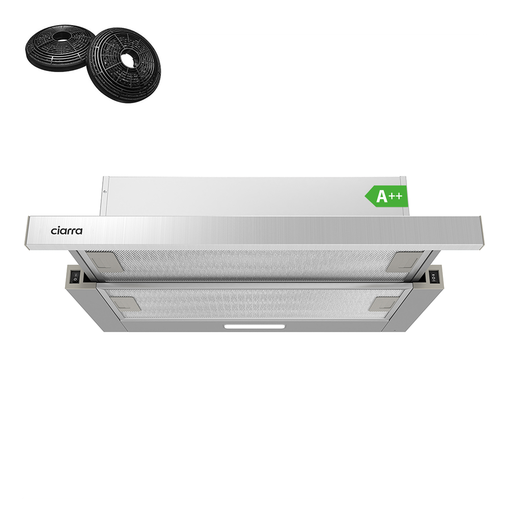
Why it suits this type of buyer: Its compact telescopic design is suitable for a small kitchen or rented home. The model supports both external extraction and recirculation.
The specifications give more than just the maximum extraction rate: they also list two speeds, a maximum noise level of 61 dB and included carbon filters for recirculation.
599 mm wide, maximum extraction rate of 370 m³/h, A++ energy rating according to the product listing, and integrated LED lighting.
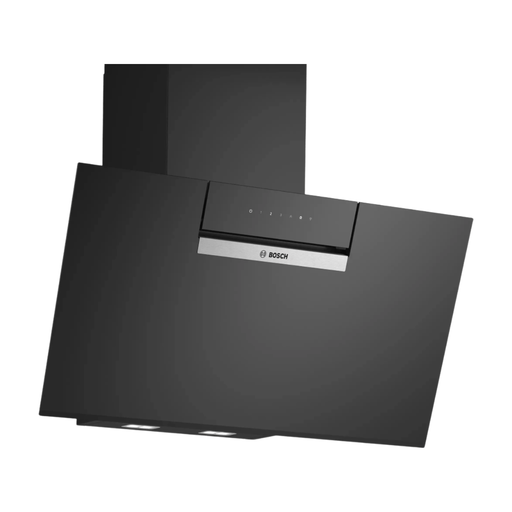
Why it suits this type of buyer: This 80 cm wall-mounted model is designed for quiet operation, app control and adjustable lighting in a modern kitchen.
The listing gives separate figures for normal and intensive extraction. This lets you see the difference between 56 dB during normal extraction and higher noise levels during intensive use.
80 cm wide, A+ according to the product specifications, dishwasher-safe aluminium grease filter and Home Connect functionality.

Why it suits this type of buyer: This 60 cm wall-mounted cooker hood is aimed at people who cook frequently and want to combine touch, Wi-Fi and app controls with recirculation.
The listing gives both the boost extraction rate and the maximum noise level: up to 650 m³/h and 59 dB. This makes it easier to weigh up performance and comfort together.
Four settings, including booster mode, two washable aluminium filters, recirculation and external extraction, and a stated A+++ energy rating.
We’ve put together a complete, up-to-date list of products that meet these strict selection criteria and the applicable European safety regulations.
A recirculating cooker hood is often a practical choice if there’s no suitable ventilation duct leading outside. You’ll need the right carbon filters, which must be replaced periodically. External extraction can vent cooking fumes outside, but it requires a suitable connection. If you live in rented accommodation or a block of flats, you may also need permission.
It depends on how often you cook and how much you bake or fry. The product instructions for the models mentioned generally recommend cleaning every two to four weeks. Always check the manual. A clean grease filter helps maintain airflow and limits grease build-up.
Check the stated annual consumption in kWh per year and multiply it by your electricity tariff. Actual energy use depends on the setting, how long you run the hood, the lighting and whether you use the boost function. A more energy-efficient cooker hood with a low stated annual consumption may therefore cost less to run day to day, but filter replacement and installation costs should also be included in the total.
