
Vandaag of morgen in huis

Kwaliteit gegarandeerd

Welkomstaanbiedingen ontgrendelen: GRATIS bezorging | Tot 80% korting | Gratis 30 dagen JoyPlus-proefperiode
Download de app
Choosing a new cooker hood may seem straightforward at first. Yet many people end up buying a model that’s too noisy, doesn’t extract enough cooking fumes or doesn’t fit their kitchen properly. Three common pitfalls are:
Start by checking the available space and how the air will be extracted. Cooker hoods generally work in one of two ways:
A recirculating cooker hood can therefore be a good choice for flats, rented homes or kitchens without existing ventilation. Always check whether the required filter is included. With some models, it’s an optional extra.
For a small kitchen, a compact built-in hood, visor model or 60 cm wall-mounted model is often a sensible choice. A built-in cooker hood is mostly concealed inside a wall unit. Measure not just the width, but also the available height and depth, as well as the space around the extraction duct.
A 60 cm cooker hood is a common size for standard kitchens. A 90 cm hood provides greater coverage above wider hobs and is often a better fit for a spacious or open-plan kitchen. The hood must also be installed at the correct height above the hob.
The required clearance varies depending on the model and hob. For example, the AEG DVE5661HB specifies a minimum of 50 cm above an electric hob and 54 cm above a gas hob. Always follow the installation instructions, and ensure electrical connections and installation comply with the relevant regulations.
Extraction rate is usually given in m³/h. Check the standard settings, not just the intensive or boost setting. A powerful cooker hood can be useful when stir-frying or deep-frying, but a lower setting is often more comfortable for everyday cooking.
Noise is measured in dB(A). A difference of a few decibels can be noticeable in an open-plan kitchen. Check the noise levels in recirculation mode too: they may be higher than when the hood is vented to the outside.
A metal grease filter traps grease particles and needs to be cleaned regularly. A cooker hood with a carbon filter also needs an odour filter when used in recirculation mode. Check:
You can identify an energy-efficient cooker hood by checking its energy label and annual energy consumption. Compare both, as a good energy rating alone won’t tell you how quiet or powerful the model is. A cooker hood with lighting can also make cooking more comfortable if your kitchen lighting doesn’t adequately illuminate the worktop.
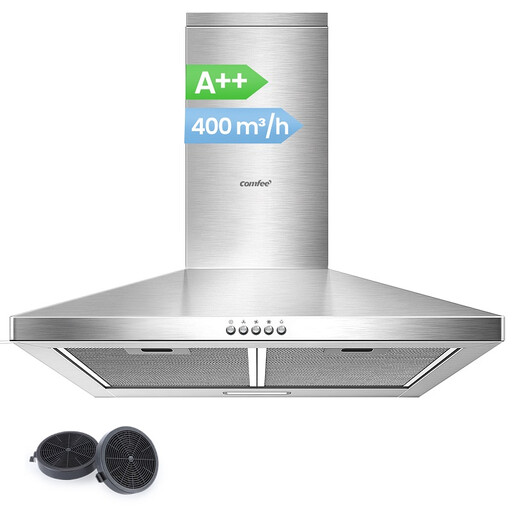
Why it suits this type of user: Its 60 cm width and mechanical controls are a good match for a standard kitchen and are easy to use.
The product information lists a washable five-layer aluminium grease filter and a capacity of 400 m³/h. Check whether the required recirculation filter is included.
400 m³/h according to the product information; adjustable chimney and stainless-steel housing.
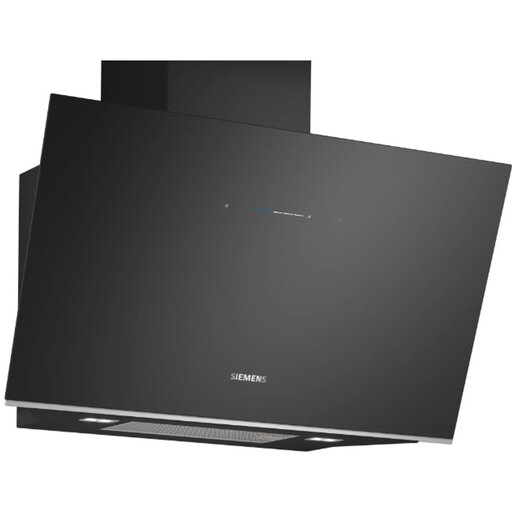
Why it suits this type of user: This model is designed for spacious kitchens with a wide cooking area. The product description lists touchscreen controls and Home Connect.
Its stated width of around 89 cm makes it a good match for a spacious hob. Please note: the product information says the recirculation kit is not included.
Stated maximum capacity of 1007 m³/h; dishwasher-safe filters and LED lighting.

Why it suits this type of user: The combination of recirculation, a boost function and app controls is designed for people who cook often and want to adjust settings easily.
The product information lists both recirculation and external extraction. This lets you adapt the installation to your home, but check the ducting and filter components beforehand.
Stated airflow of up to 650 m³/h; two washable aluminium grease filters and four speeds, including a boost setting.
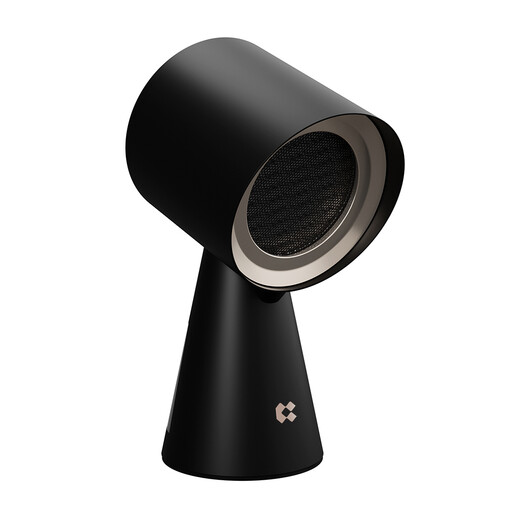
Why it suits this type of user: This tabletop model works without fixed wall mounting or an extraction duct, making it practical for temporary cooking areas.
There’s no need to install a duct. Bear in mind that its stated airflow is lower than that of fixed wall-mounted models, and make sure the room is well ventilated.
Compact tabletop design; two speeds and a multi-layer filtration system according to the product description.
We’ve put together a complete, up-to-date list of products that meet these strict selection criteria and the applicable European safety requirements.
If possible, switch on your cooker hood a few minutes before you start cooking, then leave it running for a little while afterwards. This gives the airflow time to clear cooking fumes. Use a higher setting when frying, stir-frying or cooking with lots of steam.
Clean metal grease filters regularly, following the instructions. A build-up of grease can reduce performance and poses a fire risk. Switch off the appliance and unplug it before carrying out any maintenance. Flambéing beneath a cooker hood is not recommended because of the open flames.
It depends on the size of your kitchen, how intensively you cook and how the air is extracted. A smaller kitchen may be fine with a lower extraction rate, while an open-plan kitchen or frequent, intensive cooking calls for greater capacity. Compare the standard settings, noise level and duct diameter together.
A recirculating model can be a practical solution when external extraction isn’t possible. The grease filter traps grease particles, while the carbon filter helps reduce odours, according to how the product works. The filter needs to be cleaned or replaced in good time. You should also ensure the room has general ventilation.
Its lifespan depends on build quality, how often it’s used and how well it’s maintained. Clean grease filters according to the instructions, prevent grease build-up and check the lighting, controls and extraction regularly. A model with readily available replacement filters is often easier to maintain over the long term.
