
Vandaag of morgen in huis

Kwaliteit gegarandeerd

Welkomstaanbiedingen ontgrendelen: GRATIS bezorging | Tot 80% korting | Gratis 30 dagen JoyPlus-proefperiode
Download de app
Choosing a new cooker hood seems simple until you get tangled in a web of technical specifications, design choices, and marketing promises. Many people make a choice they later regret: a model that's too loud, doesn't extract effectively, or simply doesn't suit their cooking habits. Before you invest in this important kitchen appliance, it's wise to understand the most common pitfalls.
The two biggest mistakes we often see:
This guide will help you see past the marketing hype and choose a cooker hood that is functional, efficient, and perfectly suited to your situation.
To avoid buyer's remorse, focus on a few objective criteria. These specifications determine whether a cooker hood is truly right for your kitchen and lifestyle.
The layout of your kitchen determines which type of cooker hood you need. The most common options are:
The width is also crucial. A 60 cm cooker hood is the standard for most hobs. If you have a wider hob, a 90 cm cooker hood is a logical choice to effectively capture all the fumes.
This is a fundamental choice, especially for apartment dwellers.
These two specifications are inextricably linked. Powerful extraction is great, but not if it sounds like a plane is taking off.
(length x width x height of the kitchen in metres) x 10. For an open-plan kitchen, it's wise to choose a model with a slightly higher capacity.An energy-efficient cooker hood with an A++ or A+++ label consumes significantly less power, which saves money in the long run.
Based on objective specifications, we have selected a number of models that suit different UK households.
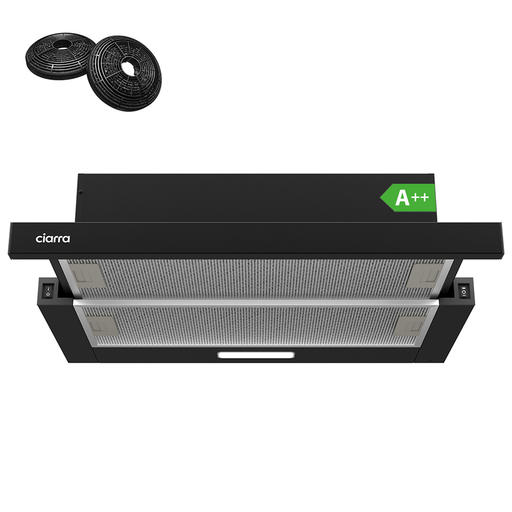
Why This Fits Their Persona: Perfect for compact apartment kitchens where space and flexibility are essential. The telescopic design ensures the hood is only visible when needed. Suitable for recirculation, so no external duct is required.
The extraction rate of 370 m?/h is more than sufficient for a standard kitchen, without the overkill of an industrial model. The noise level of 61 dB is clearly specified.
Space-saving telescopic design. Comes with carbon filters for immediate recirculation installation and has an A++ energy label.
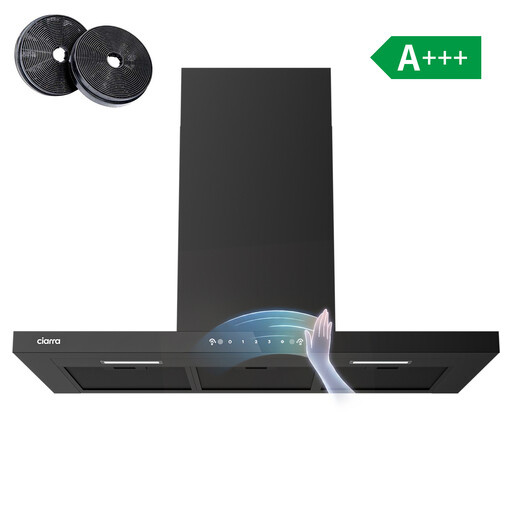
Why This Fits Their Persona: For those who want to make a statement in a modern, open-plan kitchen. The ultra-slim (40 mm) glass panel and 90 cm width combine sleek design with powerful performance, ideal for larger cooking surfaces.
This hood combines a high capacity of 650 m?/h with a very low noise level of 59 dB and an A+++ energy label. Powerful, but not loud or energy-wasting.
Hygienic operation via Wave & Touch Control (hand gesture or touch). The A+++ efficiency ensures low operational costs.
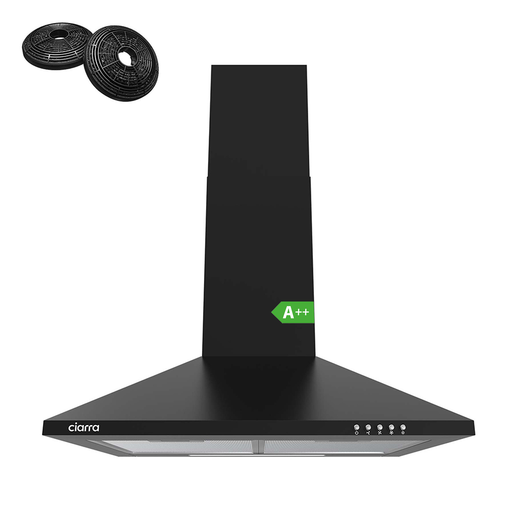
Why This Fits Their Persona: A reliable and affordable all-rounder for a standard kitchen renovation. This 60 cm wall-mounted hood offers everything you need without unnecessary frills. Suitable for both ducted and recirculating installation.
With a maximum capacity of 367 m?/h, this model is perfectly tailored for the average UK kitchen. The mechanical push buttons are durable and less prone to failure than complex touchscreens.
Excellent value for money with an A++ energy label. The washable aluminium grease filters are practical and durable.
We have compiled a complete, up-to-date list of products that meet these strict selection criteria and current regulations.
The required capacity depends on the size of your kitchen. A useful rule of thumb is to multiply the volume of your kitchen (length x width x height in metres) by 10. For a kitchen measuring 4m x 3m with a 2.5m ceiling (30 m?), you would need a cooker hood with a capacity of around 300 m?/h. For an open-plan kitchen, it's wise to choose a model with a higher capacity, as the air volume is larger.
A ducted cooker hood extracts cooking fumes and vents them outside through a duct. This is the most effective way to remove odours, grease, and moisture. A recirculating hood filters the air through a grease filter and a carbon filter (to neutralise odours) and blows the cleaned air back into the kitchen. This is an ideal solution if you don't have or cannot install an external vent, as is common in many apartments.
