
Workshop leader with lots of portions
You want to cool down and refrigerate several containers of pasta. If you prepare food as a food business, you must also follow the applicable NVWA procedures.


Choose a fridge that can actually accommodate sealed portions and whose temperature you can monitor; a compact domestic fridge may be enough for a small workshop. Divide hot pasta into small portions before cooling it down: having more storage space does not, by itself, mean that a large hot portion will cool quickly enough. Food businesses must also follow the applicable HACCP rules set by the NVWA.
You want to cool down and refrigerate several containers of pasta. If you prepare food as a food business, you must also follow the applicable NVWA procedures.
You’re looking for a fridge that fits the venue and want to check in advance whether the containers will actually fit and whether you can monitor the temperature.
You’re comparing fridges for regular use, looking at practical layout, energy consumption and maintenance, as well as the space you need.
For consumers choosing fridge space for a cooking workshop, cooling food down, space for containers, the installation location and running costs all play different roles. Measure your containers and the available space before choosing a model.
| Concern | What should you check? | Who does this matter most to? |
|---|---|---|
| Cooling food down safely | Divide hot pasta into small portions and measure the food’s temperature; also check which hygiene code applies to your workshop. | If I’m handling several portions, I want to cool them down in small quantities and measure the temperature. Around 36% of consumers put cooling food down first. |
| Practical space for containers | Measure your sealed containers and check the shelf dimensions and space for multiple portions at once. | If all the containers need to be chilled at the same time, I want to know how many will actually fit on the shelves. Around 29% of consumers prioritise capacity for containers. |
| Installation space | Measure the space, door swing and required ventilation clearance; check the model’s climate class. | If the workshop is taking place at a venue with limited space, I want to know in advance whether the fridge can be installed there in a practical way. Around 21% of consumers prioritise where the fridge will go. |
| Running costs and maintenance | Check the kWh consumption on the relevant energy label and read the cleaning and maintenance instructions. | For regular use, I want to take electricity consumption and cleaning into account, not just capacity. Around 14% of consumers prioritise running costs and maintenance. |
Storage capacity doesn’t show whether the centre of a large hot portion will cool down quickly enough.
Divide the pasta into small portions and check the food’s temperature. Consider a separate blast chiller if your procedures can’t meet the applicable cooling requirements.
According to the Consumentenbond, some of a fridge’s stated capacity isn’t practical to use.
Measure your containers and check the shelf dimensions and door layout before buying.
The European Commission distinguishes between domestic fridges and professional refrigerated storage cabinets, so they are designed for different purposes and belong to different product categories.
Compare kWh consumption within the relevant product category and weigh it against capacity and intended use.
The Beko TS190340N is an example of a compact freestanding domestic fridge.
The Inventum KK600 is a freestanding under-counter model without a freezer compartment.
The Bosch KSV33VLEP is a taller model for a permanent kitchen.
Polar offers examples of professional storage fridges and a separate blast chiller.
The Liebherr FRPSvh 6511 is a professional GN 2/1 storage fridge for a larger permanent workspace.
These product picks focus on compact domestic refrigeration, from mini and under-counter models to a built-in model. They’re intended for chilled storage; a storage fridge doesn’t automatically replace a controlled process for cooling food down.
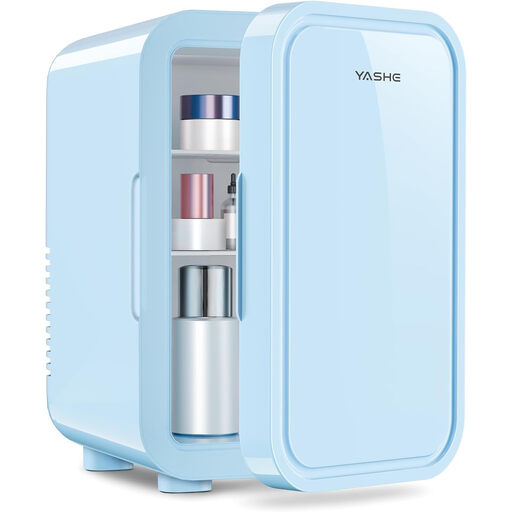 No image available
Suitable for a small amount of chilled food; its limited capacity makes this model unsuitable as the only storage space for several workshop containers.
Capacity: 6 litres, stated to hold 8 cans. Power supply: 220–240 V AC/DC.
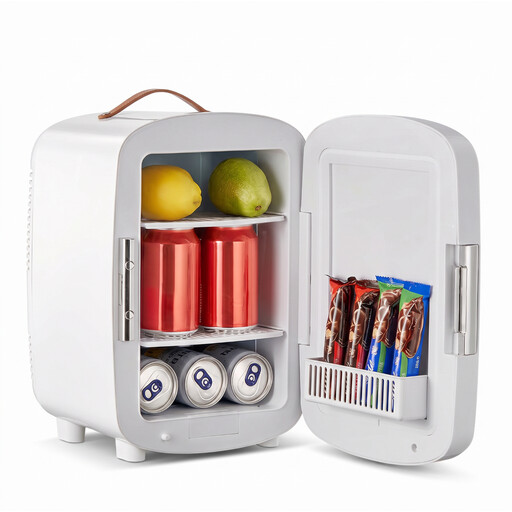 No image available
Could suit a modest need for chilled storage; check whether the capacity and shelf layout work for the containers you’ll use at your workshop.
Capacity: 10 litres. The product description lists a removable shelf, a door compartment and AC/DC power.
The title lists a noise level of 38 dB.
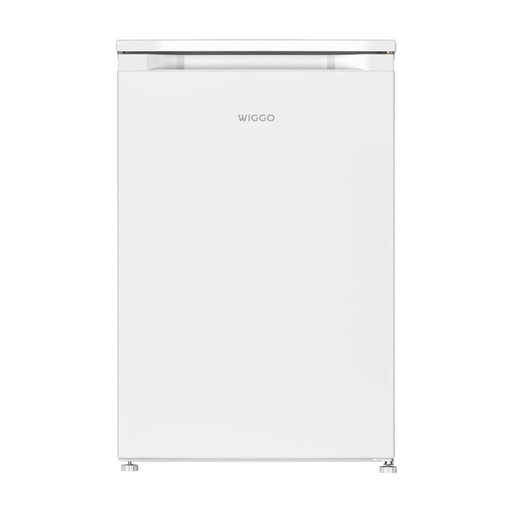 No image available
A domestic under-counter model for anyone looking for more fridge space than a mini fridge offers; measure your containers to check they’ll fit on the shelves.
Net capacity: 107 litres. The description lists mechanical temperature control and a reversible door.
The product name lists energy class D.
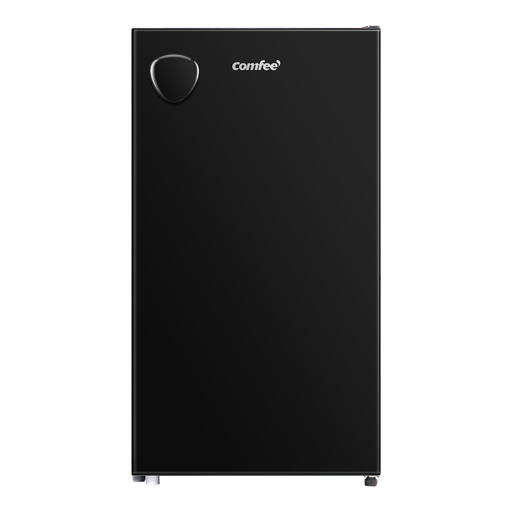 No image available
Could work if you’re looking for extra fridge space under a worktop; check the dimensions and whether the layout suits your containers.
Capacity: 88 litres. The description lists removable glass shelves, an adjustable thermostat and a reversible door.
According to the product description, the separate cooling zone is only intended for short-term chilling; don’t store products there for longer than 2 hours.
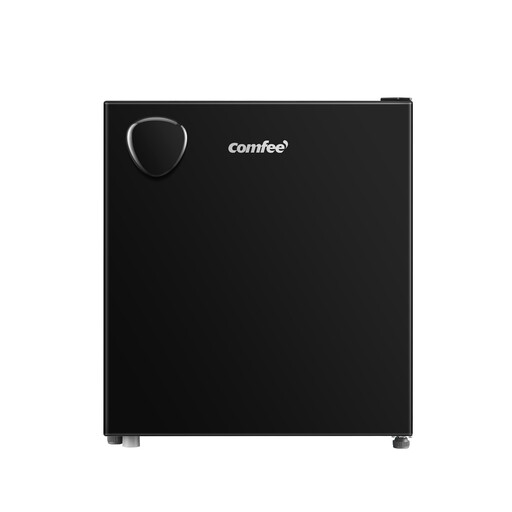 No image available
A compact domestic model for anyone short on installation space; check whether the capacity is enough for all the portions that need to be chilled at once.
Capacity: 43 litres; width: 44,5 cm. The description lists three temperature settings and a reversible door.
The product name lists energy class E.
Voedingscentrum recommends setting your fridge to 4 °C and checking the temperature with a fridge thermometer. Food businesses may also need to follow the applicable NVWA rules for storage and cooling food down; check the food’s temperature and follow your own hygiene code.
Divide the pasta into small portions, cool it down quickly and store leftovers in a sealed container in the fridge or freezer. Voedingscentrum advises not leaving perishable food out of the fridge for more than 2 hours. For heated food in an applicable business setting, the NVWA states that the food’s temperature must fall below 7 °C within 5 hours; measure the food’s temperature, not just the fridge temperature.
Voedingscentrum recommends keeping cooked pasta in the fridge for 2 days. When preparing food for a business, you must also follow the applicable hygiene code and procedures.
If the activity falls under a food business that prepares, processes or sells food, the NVWA requires a food safety plan based on HACCP or an applicable hygiene code. The description ‘cooking workshop’ alone doesn’t make it clear whether this applies.
Measure the installation space and check the climate class and maintenance instructions for the exact model. Compare the kWh consumption on the relevant domestic or professional energy label; actual electricity use also depends on how long and how often the fridge is used.