
Cook with limited kitchen space
This cook wants to store sealed containers of cooked lentils without choosing an appliance that’s too large. That makes the external dimensions, door clearance and usable shelf layout important.


First, measure the space available and check that your sealed portion containers will fit on the fridge shelves. If you’ll eat the lentils within two days, a model without a freezer compartment may offer more room for chilled food. If you want to keep portions for longer, compare the freezer capacity separately and bear in mind that it takes up space that could otherwise be used for refrigeration. The Netherlands Nutrition Centre advises setting your fridge to 4 °C and checking the temperature once it’s in place.
This cook wants to store sealed containers of cooked lentils without choosing an appliance that’s too large. That makes the external dimensions, door clearance and usable shelf layout important.
This batch cook wants to keep portions for longer than the recommended fridge storage time, so compares the freezer space with the fridge space left over.
This buyer first looks for a fridge that fits in their kitchen, then compares the annual energy consumption of suitable models. An energy label doesn’t prove that the fridge is at the right temperature.
| What to consider | What to look for when buying | Who is this important to? |
|---|---|---|
| Size and layout | Measure the width, height and depth, allow for the door and required clearance, and compare the shelf layout with your containers. | If I have limited kitchen space, I want to know whether the fridge will fit where I plan to put it and whether my containers will fit inside. Around 36% of consumers prioritise size and layout. |
| Temperature you can check | Once the fridge is in place, measure the temperature on the bottom shelf with a fridge thermometer; the Netherlands Nutrition Centre advises 4 °C. | When storing cooked food, I want to be able to check the temperature rather than rely on the setting alone. This is the main consideration for around 29% of consumers who prioritise temperature control. |
| Space to freeze portions | Compare the fridge and freezer capacities separately, and check whether the freezer compartment can freeze fresh food. | If I want to keep cooked lentils for longer than the recommended fridge storage time, I need freezer space that can also accommodate my portions. Around 21% of consumers make freezing their top priority. |
| Annual energy consumption | Compare the annual consumption in kWh and the compartment volumes on the EU energy label for models that fit in your kitchen. | If several models meet my space and storage needs, I want to compare their annual energy consumption. For around 14% of consumers, energy use is the deciding factor. |
According to Inventum, the Inventum KV550 has 97 litres of fridge space and 16 litres of freezer space. These compartments aren’t interchangeable: freezer capacity can’t be used for chilled containers.
Compare the fridge and freezer capacities separately, and check that the compartments suit the containers and portions you want to store.
The temperature setting doesn’t tell you the actual temperature inside the fridge once it’s in place. The Netherlands Nutrition Centre advises 4 °C.
Measure the temperature on the bottom shelf with a fridge thermometer and adjust the appliance if needed.
An energy label helps you compare product information, but it won’t tell you whether the fridge is at the right temperature or has enough room for your containers.
First choose a suitable size, then compare the annual energy consumption of models that meet your fridge or freezer needs.
The KK550 and KV550 offer two under-counter options: one without a freezer compartment and one with a built-in freezer compartment.
The KTR15NWEB is an under-counter model without a built-in freezer compartment to consider if fridge space is your priority.
The Rd 1400 Pure is an under-counter model without a freezer compartment, for anyone mainly looking for separate fridge space.
The KKV956WIT is a freestanding under-counter model without a freezer compartment to compare with other options for a small kitchen.
This selection includes compact fridges and under-counter models for anyone looking to store chilled food in a limited space, with or without a freezer compartment. Check that the usable fridge space is large enough for your containers; the smallest models have limited capacity.
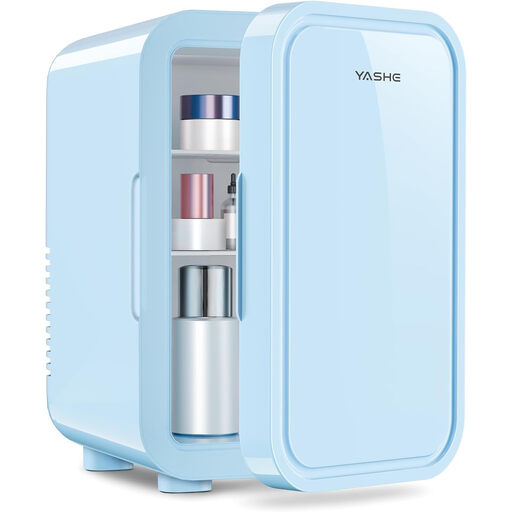 No image available
With a capacity of 6 litres, this model is designed for a small amount of chilled food; check whether your portion containers will fit inside.
The product name states that it holds 8 cans and runs on 220–240 V AC/DC.
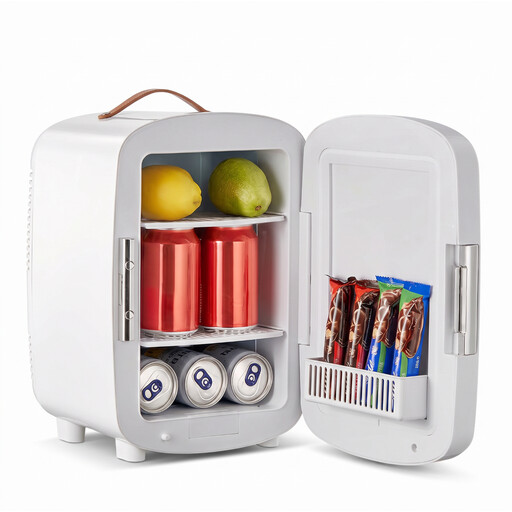 No image available
With a capacity of 10 litres, this model is designed for a small amount of chilled food; compare the available space with the dimensions of your containers.
The product description lists a removable shelf, a door compartment and AC/DC power.
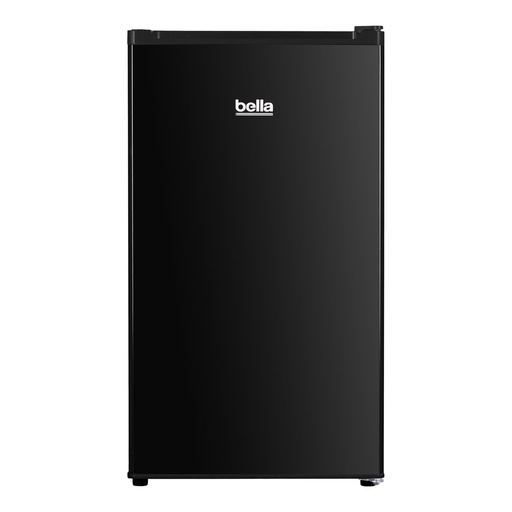 No image available
This model has no freezer compartment, so it’s an option if you want fridge space for containers but don’t need a freezer.
The product description lists an 88-litre fridge capacity, three adjustable shelves and a reversible door. The stated dimensions are 48 × 45 × 85 cm.
 No image available
This model has both fridge and freezer space. Compare the separate compartments with the room you need for chilled containers and portions to freeze.
The product description lists 95 litres of fridge space and 14 litres of freezer space, two glass shelves, a salad drawer and three door compartments. The stated dimensions are 85 × 55 × 58 cm.
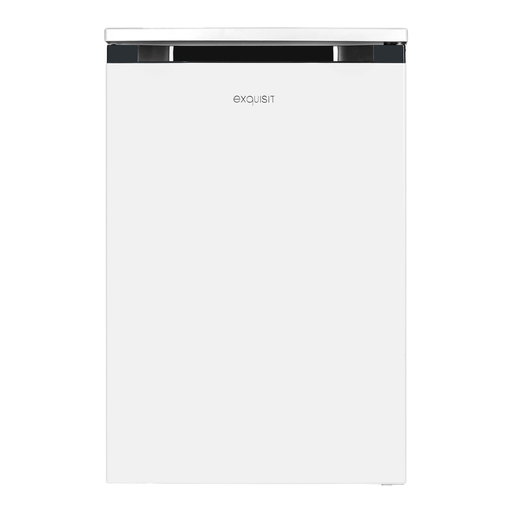 No image available
An under-counter model with a freezer compartment may suit you if you need space for frozen portions as well as chilled containers. Bear in mind that the freezer compartment takes up space alongside the fridge section.
The product name lists a capacity of 107 litres and energy rating C. The product description gives dimensions of 84,50 × 54,90 × 55,70 cm and says the temperature is controlled with a dial.
The Netherlands Nutrition Centre advises keeping cooked lentils without salt in the fridge for no more than two days, and says they can be kept in the freezer for three months. Cool leftovers quickly, seal them well and don’t leave them out of the fridge for more than two hours. If the food is ready-made and in sealed packaging, follow the instructions on the label.
The Netherlands Nutrition Centre advises keeping your fridge at 4 °C. Place a fridge thermometer in the middle of the bottom shelf, leave it there for half a day or overnight, and adjust the appliance if the reading is too high.
The EU energy label for household fridges uses a scale from A to G and includes information such as annual consumption in kWh and compartment volumes. Use these details to compare suitable models; the label doesn’t measure the temperature inside your fridge once it’s in place.
According to the Dutch government, you’re entitled to a product that works properly in the Netherlands, and you can contact the retailer to find a solution. There’s no fixed statutory guarantee period: what you can expect from a product depends, among other things, on the product and the information provided. Any manufacturer’s guarantee is in addition to this.
According to the Dutch government, when you buy a new, similar appliance, the retailer must take your old one from you free of charge. This also applies to online purchases, although the practical arrangements for handing it over may vary depending on the delivery.