
Workshop host demonstrating thin slices of ham
You want to adjust the slice thickness and check that the right blade is actually included with the model you choose. The term ‘multi-purpose slicer’ doesn’t tell you which blade comes in the box.


Choose a slicer based on your preferred slice thickness, the amount of ham and the length and type of workshop. Check which blade comes with the exact model, how the machine should be cleaned and whether the ham joint will fit within its stated cutting capacity. A domestic machine is not automatically suitable for commercial or prolonged use.
You want to adjust the slice thickness and check that the right blade is actually included with the model you choose. The term ‘multi-purpose slicer’ doesn’t tell you which blade comes in the box.
Look for a food holder and finger guard, as well as components that the instructions say can be accessed for cleaning.
Compare the size of the ham joint and planned operating time with the machine’s stated cutting capacity and usage restrictions.
The right choice depends on the size of the ham, the result you want and how long the machine will be used, and by whom. Start with the blade and capacity, then check the controls, cleaning requirements and available workspace.
| What to consider | What should you check? | Who should pay particular attention? |
|---|---|---|
| Slice thickness and blade | Check the adjustment range and which blade comes with the exact model. A suitable smooth blade may be sold separately for some models. | If I’m demonstrating how to slice ham, I want to match the blade and thickness to the job. That’s why around 33% of consumers prioritise their preferred slice thickness and a suitable blade. |
| Operation and cleaning | Check for a food holder and finger guard, and find out how to clean the relevant components as set out in the instructions. Unplug the machine before cleaning it. | When participants share a workspace, I want to be able to operate and clean the machine in accordance with the instructions. Around 27% of consumers prioritise safe operation and ease of cleaning. |
| Ham size and operating time | Measure your largest piece of ham and compare it with the stated maximum cutting diameter. Also check the duty cycle and whether the machine is for domestic or commercial use. | For larger pieces or longer sessions, I want to know whether the machine can handle the stated capacity and operating time. Capacity and operating time are the main considerations for around 20% of consumers. |
| Workspace and accessories | Compare the machine’s dimensions with the space available, allowing room for the carriage and controls. Also check which blades are included with the offer. | If workspace is limited, I want to know whether the machine will fit and whether I’ll need a suitable blade for slicing ham. Around 20% of consumers prioritise space and the accessories they need. |
The blade diameter is not the same as the maximum cutting diameter. HENDI lists a blade diameter of 195 mm and a maximum cutting diameter of 120 mm for the 195 Profi Line.
Measure the ham and compare it with the stated maximum cutting capacity of the exact model.
The blades supplied vary by model. For example, Graef lists a compatible smooth blade for the Master M90 as a separate product.
Check the model number and what’s included before ordering.
A suitable smooth blade may therefore need to be bought separately, so check whether it’s included with the offer.
The manufacturer states that the ritter E 16 has a duty cycle of 5 minutes and describes it as intended exclusively for domestic, non-commercial use.
Check the planned session length and whether the machine will be used privately or commercially against the instructions for the model you’re considering.
Severin describes the AS 3915 as a domestic multi-purpose slicer with an adjustment range of 0–15 mm and a supplied cold-meat blade.
Graef lists ham as a suitable use for the Master M90 and specifies a compatible smooth blade for this model.
HENDI describes the Profi Line 195 and 250 as machines for commercial use, with different stated maximum cutting diameters.
According to ritter, the E 16 is a compact domestic multi-purpose slicer with a 17 cm serrated blade.
Clatronic lists a 190 mm serrated universal blade and continuously adjustable slice thickness from 0–15 mm for the MA 3585.
These electric slicers have stated uses or features that are relevant to cold meats and adjustable slice thickness. Check the blade, operating time and whether the ham joint fits within the stated capacity for each model.
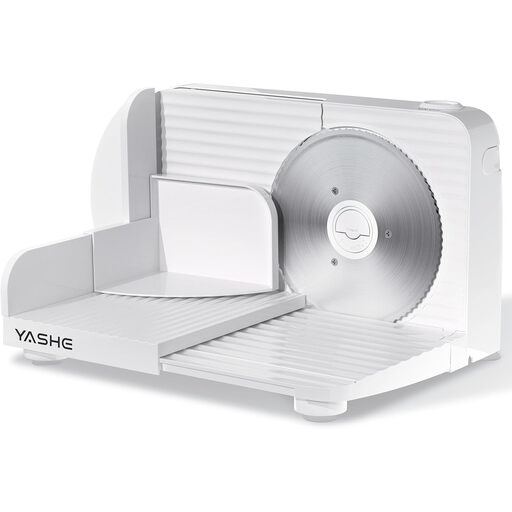 No image available
The stated use for meat and adjustable slice thickness make this a good fit if you want to cut ham into slices of different thicknesses.
Adjustment range: 0–15 mm. Serrated stainless steel blade: 17 cm. Foldable design.
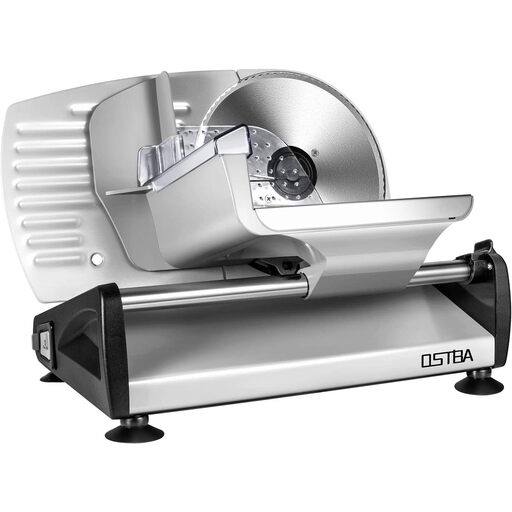 No image available
This machine is worth comparing if you’re looking for an adjustable cutting range and a stated use for meat.
Blade: 19 cm. Adjustment range: 0–15 mm. Power: 150 W. The product information lists a child lock.
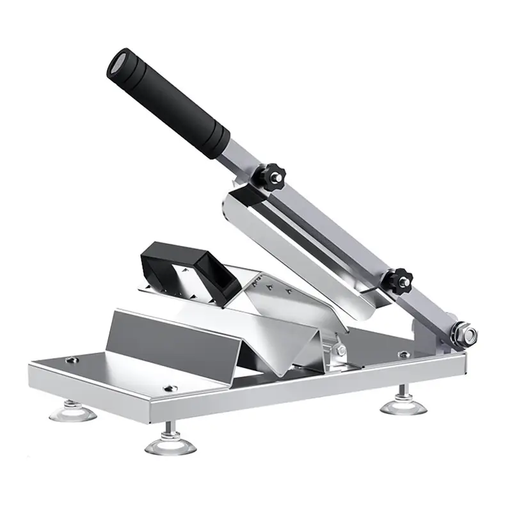 No image available
The product description lists ham as a suitable use. Check the exact blade type and whether the capacity suits the piece of ham you want to slice.
The product name specifies SS304 stainless steel.
 No image available
The product description lists a smooth blade for meat. Check that this blade type suits your preferred slice and how you plan to use the machine at your workshop.
The description also lists a serrated bread blade, a removable carriage and an adjustable range of up to 23 mm.
 No image available
The product description mentions cold meats and adjustable slice thickness. Check whether the serrated blade is suitable for the slices of ham you want to make.
Blade: 17 cm. Adjustment range: 0–15 mm. Power: 100 W. The description lists a food holder and a foldable design.
If you prepare, process or sell food as a food business, the NVWA says you must work with an HACCP food safety plan; you can use an appropriate hygiene code for this. Whether this applies to your workshop depends on the circumstances: it’s not a general requirement for every private cookery gathering.
Follow the storage instructions on the label and keep perishable cold meats chilled. The Voedingscentrum recommends setting your fridge to 4 °C and putting food that spoils quickly back in the fridge as soon as possible. Food businesses must also follow the rules that apply to their specific food and storage arrangements.
Unplug the machine before cleaning it and follow the instructions for your chosen model on stopping, dismantling and cleaning it. Severin instructs users to remove food residue from its slicer after use and unplug it before cleaning.
No. For a consumer purchase, your statutory rights are separate from the manufacturer’s warranty. According to ACM ConsuWijzer, the seller is responsible if a product doesn’t meet what you could reasonably expect under normal use. This consumer rule doesn’t automatically apply to business purchases.
Check the instructions for the exact model. ritter states that the E 16 is intended exclusively for domestic use and must not be used commercially, while HENDI describes the 195 Profi Line as suitable for commercial use. These terms don’t automatically apply to every model from these brands.