For cooked chicken, choose a storage fridge based on the actual space available for trays and whether you can check the temperature. The Voedingscentrum recommends setting your fridge to 4 °C. If you have a large, hot batch, cooling it down is a separate step: a storage fridge is not automatically a blast chiller. For commercial food preparation, the NVWA specifies cooling food to below 7 °C within 5 hours; check which hygiene code applies to your workshop.
Who is this choice relevant to?
Workshop leader handling several batches of chicken
You want to store portions separately and manage temperatures and cooling during a busy session. The NVWA describes procedures for commercial food preparation, while the Voedingscentrum provides advice on storing food at home.
Organiser with limited kitchen space
You need refrigeration for a small number of cooled, covered portions and want to know how many trays will actually fit on the shelves. The Consumentenbond points out that the stated capacity does not always reflect the usable space.
Workshop leader who serves portions during the session
You need regular access to chilled portions and want to arrange the appliance to suit your workspace. A refrigerated counter could also be an option if you have enough room and your trays are the right size.
What should you look for?
Compact storage fridge
Suitable for: a small number of pre-portioned, cooled trays and limited floor space.
Consider: a compact model may offer less room for several batches at once. Check the usable shelf space and measure the temperature once the fridge is in place.
Professional storage fridge or refrigerated counter
Suitable for: regular access to portions, or working with GN containers and a worktop beside your preparation area.
Consider: a refrigerated counter needs more floor space. Its temperature range does not prove that hot chicken will cool down quickly enough.
Storage fridge with separate chilling equipment
Suitable for: large quantities of hot chicken prepared at the same time, where the product temperature needs to be brought down in line with the relevant procedure.
Consider: a separate blast chiller takes up space. Its stated capacity is based on the manufacturer's test conditions, so make sure it suits your batch size.
| Factor |
What should you check? |
Who should give this more weight? |
| Temperature and cooling |
Measure the fridge temperature separately from the thermostat setting. For commercial cooling, the NVWA specifies a product temperature below 7 °C within 5 hours. |
If I have several hot batches, I want to check that the chicken cools in time, not just read the fridge setting. Around 40% of consumers put temperature control at the top of their list. |
| Space for portions |
Measure your trays and compare their dimensions with the shelf layout and fridge capacity. Keep cooked chicken separate from raw products. |
If I need to store several covered trays at once, I want to know how many will actually fit. Space for batches is the top priority for around 30% of consumers. |
| Access and worktop |
Compare the external dimensions and door clearance with the space available. If you use GN containers, check which sizes the exact model supports. |
During a workshop, I want to be able to reach portions regularly and have the fridge conveniently positioned next to my workspace. Access and worktop space matter most to around 20% of consumers. |
| Size and energy use |
Compare the external dimensions, fridge capacity and stated annual energy consumption of the exact models. Then decide whether you need separate cooling equipment. |
In a small kitchen, I want enough fridge space without taking up more room than necessary. Around 10% of consumers start by considering size and running costs. |
Common mistakes
-
Using a standard storage fridge as a blast chiller
The fridge's set or measured temperature does not tell you how quickly the centre of a hot batch will cool.
Plan cooling separately from storage and use a food thermometer to check that your procedure meets the relevant requirements.
Large hot batches may require separate cooling equipment, which takes up extra space.
-
Assuming all the stated litres are available for chicken trays
Total volume, fridge capacity and usable shelf space are not the same thing. The Consumentenbond points out that the stated capacity may not all be usable.
Compare your tray dimensions with the exact shelf layout, and leave enough room to store cooked and raw products separately.
-
Confusing the thermostat setting with the temperature of the chicken
A set temperature does not tell you the actual temperature of the food.
Check the fridge temperature separately. Use a digital probe thermometer to check the food temperature when you need to monitor cooling.
Brands and models to consider
Bosch
Domestic under-counter models without a freezer compartment provide a useful comparison for smaller quantities of portions.
- Bosch lists 134 l of fridge space, external dimensions of 850 × 560 × 580 mm and a door alarm for the KTR15NWEB.
- These model specifications are not an independent measure of cooling performance during workshop use.
Liebherr
The Rc 1400 Pure is a compact under-counter model you can compare for size and layout.
- Liebherr lists a total volume of 125 l, external dimensions of 85 × 55 × 60,7 cm and an adjustable range of +2 °C to +8 °C.
- The adjustable range is not a measured food temperature, and total volume is not the same as usable space for chicken trays.
TEFCOLD
The range includes professional refrigerated counters and separate blast chillers for different purposes.
- TEFCOLD lists GN1/1 compatibility and a net capacity of 270 l for the EURO GN3. For the separate BLCA3X1 blast chiller, the brand states that it cools from +70 °C to +3 °C in 90 minutes under the stated test conditions.
- The EURO GN3 is a refrigerated counter, not a blast chiller. The stated capacity of the BLCA3X1 applies to the test conditions given.
Beko
The TS190340N is worth comparing if width is limited.
- Beko lists a width of 47,5 cm and 73 l of space for fresh chilled food.
- The product title gives a total appliance volume of 86 l. For chicken trays, compare the specified fridge capacity and the actual shelf layout.
Joybuy products
This selection includes a domestic fridge and portable compressor cool boxes for chilled portions. Compare capacity, placement and power connections with your workshop's procedures and available space.
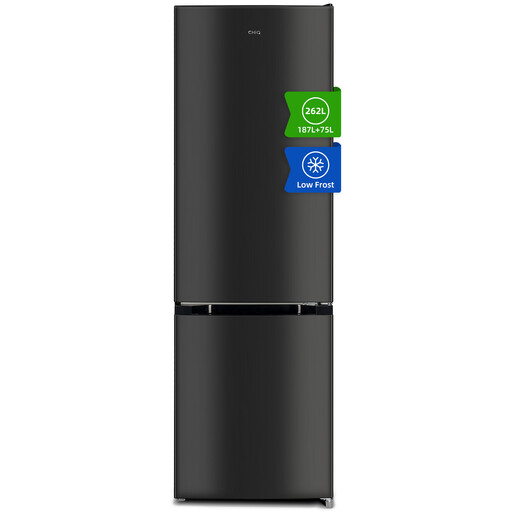 Image unavailable
CHiQ JR263LGE 262 L Low Frost fridge with bottom freezer
Could suit chilled portions if you need a larger fridge with a separate freezer compartment.
262 l total capacity; Low Frost; 4-star freezer compartment.
View at Joybuy
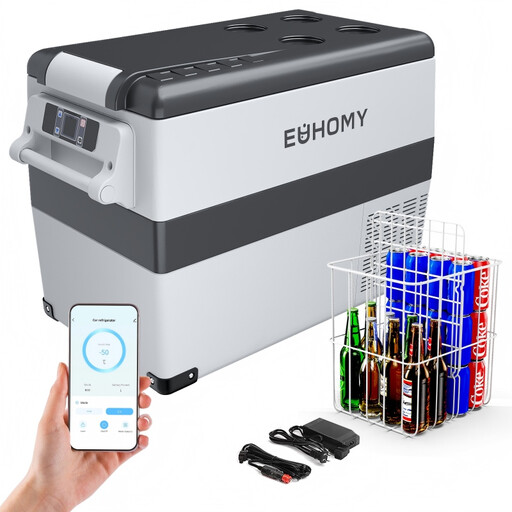 Image unavailable
EUHOMY 40 L compressor cool box
A portable option for chilled portions if the available power connection at your workshop venue is suitable.
Capacity: 40 l; temperature range: −20 °C to +20 °C; power supply: 12/24 V DC and 100–240 V AC.
View at Joybuy
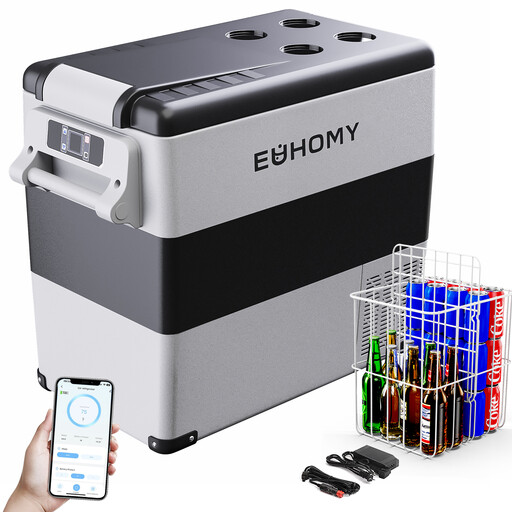 Image unavailable
EUHOMY 49,4 L compressor cool box
The larger stated capacity may be useful if you need more room for chilled portions and can connect the cool box at your venue.
Capacity: 49,4 l; power supply: 12/24 V DC and 240 V AC.
View at Joybuy
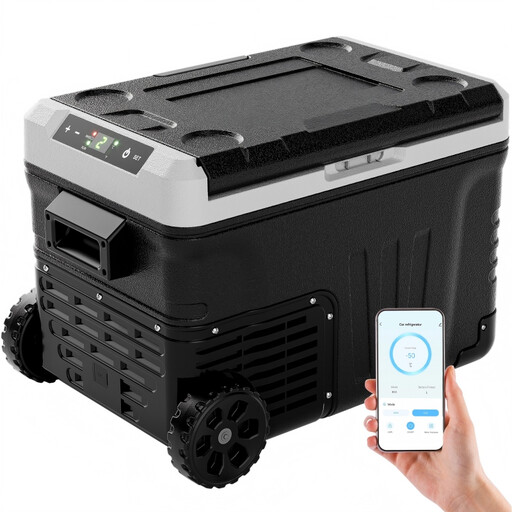 Image unavailable
EUHOMY 35 L compressor cool box with two baskets
Could suit you if you want a portable cooling option with baskets and your venue has a compatible power connection.
Capacity: 35 l; two baskets; power supply: 12/24 V and 220–240 V.
View at Joybuy
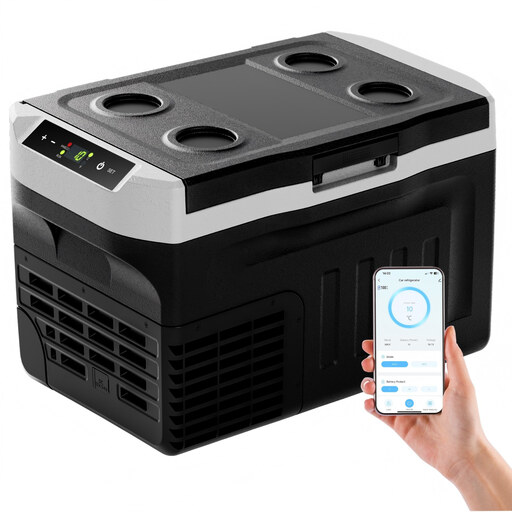 Image unavailable
EUHOMY 21 L compressor cool box with app control
An option for a smaller quantity of chilled portions if you can connect the cool box to a suitable mains or vehicle power supply.
Capacity: 21 l; temperature range: −20 °C to +20 °C; power supply: 12/24 V DC and 220–240 V AC.
View at Joybuy
Frequently asked questions
Is 4 °C a legal temperature limit for every workshop fridge?
No. The Voedingscentrum recommends setting your fridge to 4 °C. For the commercial handling of perishable, unpackaged food, the NVWA states a storage temperature of 7 °C or below; a label may specify a different storage temperature. Check which rules apply to your workshop and measure the actual temperature.
Can freshly cooked chicken go straight into a full fridge?
Do not assume that a storage fridge will cool a large hot batch quickly enough. The Voedingscentrum recommends cooling leftovers quickly and placing them, covered, in the fridge or freezer within 2 hours. For commercial cooling, the NVWA specifies a product temperature below 7 °C within 5 hours and checking it with a digital probe thermometer; these are different sets of guidance for different situations.
How long can cooked chicken be kept chilled?
For opened, cooked chicken breast, the Voedingscentrum advises consumers to keep it in the fridge for 2 days, provided its storage advice is followed. If it is in unopened factory packaging, also follow the label; this advice does not automatically apply to every packaged chicken product.
Does a cookery workshop need a HACCP plan?
If you prepare, process or sell food commercially, the NVWA says you must work with a HACCP food safety plan; an approved hygiene code can be used for this purpose. The term ‘cookery workshop’ alone does not mean that every private gathering is subject to this commercial requirement.
How can you tell if your chicken trays will fit in the fridge?
Measure your trays and compare their dimensions with the shelves, layout and fridge capacity of the exact model. The Consumentenbond points out that stated capacity does not always match usable space; also remember to store raw and cooked products separately.
Can a fridge be placed in an unheated or warm workshop?
Check the climate class and permitted ambient temperature of the exact model. The Consumentenbond warns that both low and high ambient temperatures can affect performance. Measure the temperature inside the fridge once it is in place.


