If you want chopped cooked chicken for a salad or filling, choose a food processor or mini chopper with a chopping blade, and check the texture as you go using short pulses. For shredding chicken, KitchenAid describes a different method using a mixer and beater; portion size and cleaning between workshop sessions are also important considerations.
Who is this suitable for?
Cook who wants chopped chicken
You want to control how finely the cooked chicken is chopped for a salad or filling during the workshop. The Dutch Consumers’ Association lists chopping as one use for a food processor. For this task, look for a chopping blade and controls that let you check the texture as you go.
Workshop host preparing several portions
You’re preparing portions for participants one after another and want to know how much will actually fit in the appliance each time. Compare the stated processing capacity with the total bowl capacity, and check the manual for the exact model.
Cook who cleans between sessions
You want to clean parts according to the model’s instructions and use clean equipment for cooked chicken. The Netherlands Nutrition Centre advises keeping raw and cooked food separate to prevent cross-contamination.
What should you look for when buying?
Food processor with chopping blade
Choose this option: if you want chopped pieces and also need to slice or grate ingredients.
Bear in mind: extra functions and parts can mean more cleaning, and the bowl capacity doesn’t tell you how much chicken you can process in one go.
Compact electric mini chopper
Choose this option: if you mainly want to chop small quantities and don’t need separate slicing and grating functions.
Bear in mind: a smaller bowl may mean you need to work in several batches. Check the manual for the permitted quantity and method.
Mixer with beater
Choose this option: if you mainly want stringy pulled chicken rather than chopped pieces.
Bear in mind: KitchenAid describes this method for a mixer with a beater; that doesn’t prove a food processor will give the same result.
First decide whether you want pieces or strands, then match the portions, controls and cleaning requirements to the exact appliance. The percentages below show which buying priorities may matter most to consumers in this workshop setting.
| What to consider |
What to look for when buying |
Who this matters most to |
| Chicken texture |
Check whether the appliance has a chopping blade and pulse control; check the texture as you go. |
If you want to control how coarsely the chicken is chopped for a salad or filling, this is a key consideration. Around 36% of consumers prioritise texture control. |
| Portion size per batch |
Compare the processing capacity with your portion sizes, and check the manual for usage limits. |
If you’re preparing portions for participants one after another, you’ll want to know how much you can practically process in each batch. For around 29% of consumers, portion size is the main priority. |
| Cleaning between preparations |
Check which parts of the exact model can be cleaned, and keep clean equipment separate for cooked chicken. |
If you’re also preparing raw ingredients during the workshop, you’ll want to prevent cross-contamination and be able to clean the parts thoroughly. Around 21% of consumers give cleaning top priority. |
| Compact and easy to use |
Compare the worktop space required, bowl size and number of batches you expect to prepare. |
For small portions, a compact set-up may be more appealing than extra functions you won’t use. Around 14% of consumers prioritise a compact, straightforward appliance. |
Common buying mistakes
-
Assuming the total bowl capacity is the amount of chicken you can process per batch
The stated bowl capacity isn’t necessarily the amount you can process according to the instructions. For example, Magimix lists a total capacity of 2.6 litres and a processing capacity of 1 litre for the CS 3200 XL.
Work out your portion sizes and check the manual for the exact model before planning how much to process in each batch.
A low processing capacity may mean more batches and more cleaning.
-
Taking power or price as proof of the chicken texture you want
A higher wattage on its own doesn’t prove that an appliance will chop cooked chicken more evenly. The available model specifications and the Dutch Consumers’ Association’s test information don’t offer comparable results for this particular task.
First decide whether you want pieces or strands, then compare the attachment, controls and portion capacity.
-
Counting the accessories but overlooking the cleaning
Extra bowls and attachments can mean more cleaning. The Dutch Consumers’ Association points out that cleaning food processors can take time; the Netherlands Nutrition Centre advises using clean equipment and keeping raw and cooked food separate.
Consider which parts you’ll actually use, and follow the manufacturer’s cleaning instructions for each one.
Allow extra time to clean parts between workshop sessions.
Relevant brands to consider
Bosch
The MultiTalent 3 MCM3501M is a food processor for tasks including chopping, slicing and grating.
- Bosch lists two speeds, a pulse setting and a 2.3-litre bowl capacity for this model.
- The bowl capacity doesn’t tell you how much cooked chicken you can process in one go. Also check the cleaning instructions for each attachment.
KitchenAid
According to KitchenAid, the 5KFP0719EBM food processor has a 1.7-litre bowl. The brand also describes a separate mixer method for pulled chicken.
- KitchenAid lists a multi-purpose blade and a pulse setting for the food processor.
- The method for shredding chicken uses a mixer with a beater. It doesn’t show how the food processor chops cooked chicken.
Magimix
The CS 3200 XL and CS 5200 XL have stated capacities that you can compare when planning portions.
- Magimix lists three bowls, a total capacity of 2.6 litres and a processing capacity of 1 litre for the CS 3200 XL. For the CS 5200 XL, these are 3.6 litres and 1.8 litres.
- These figures don’t guarantee how much chopped chicken you can prepare. Extra bowls also mean more parts to clean.
Kenwood
The Easy Chop CHP61.100WH is a compact mini chopper to consider if you want to process small quantities.
- Kenwood lists a 500-millilitre bowl capacity, two speeds and dishwasher-safe accessories.
- A small bowl may mean extra batches if you’re preparing several portions; no cooked-chicken capacity per batch is specified.
Philips
The HR1501/00 from the Chopper 3000 series is a compact mini chopper with a 1-litre bowl.
- Philips lists two speeds and a dishwasher-safe bowl and blades.
- The stated specifications don’t confirm a maximum portion size or a specific result when chopping cooked chicken.
Mini choppers for cooked chicken
These Joybuy products are compact electric mini choppers to consider for chopping cooked chicken. Before use, check the instructions for the exact model, portion size and cleaning.
 No image available
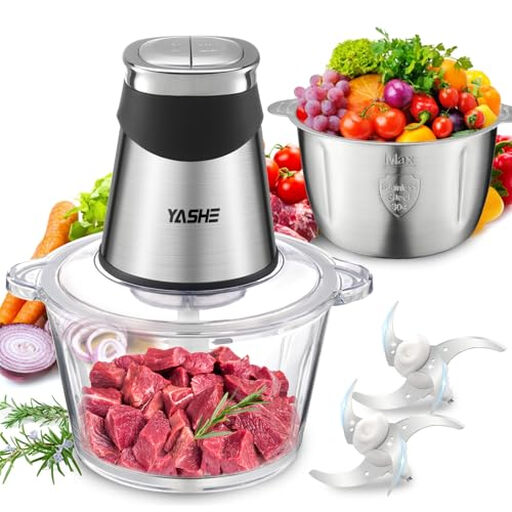
YASHE BM-217A electric mini chopper with 1.8-litre and 2-litre bowls
An option to consider if you want to process different ingredients during workshop sessions.
According to the product name: 1.8-litre and 2-litre bowls, a 500 W motor, two speeds and two sets of blades.
View at Joybuy
 No image available
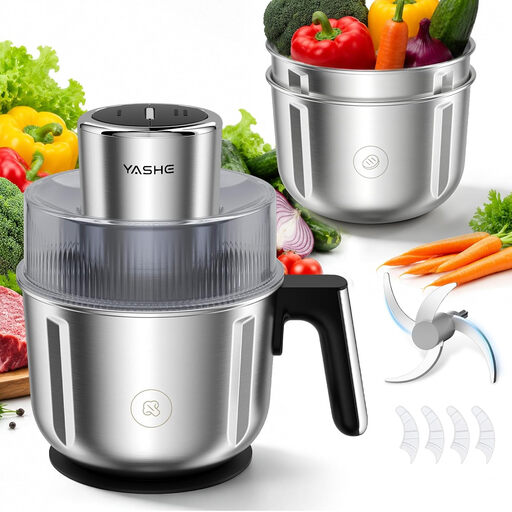
YASHE 25JM08-Q electric mini chopper with three bowls
An option to consider if you want to compare different bowl sizes when planning workshop portions.
The product name lists three bowls for meat, vegetables and sauces.
View at Joybuy
 No image available
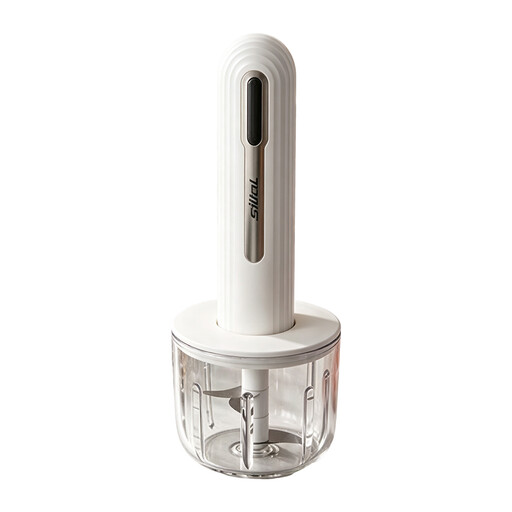
Cordless mini chopper for meat, white
A compact option to consider for small portions when you don’t need a fixed set-up.
The product name specifies a cordless design and a transparent bowl. The product information warns against processing hot ingredients; let the chicken cool first and check the manual before use.
View at Joybuy
 No image available
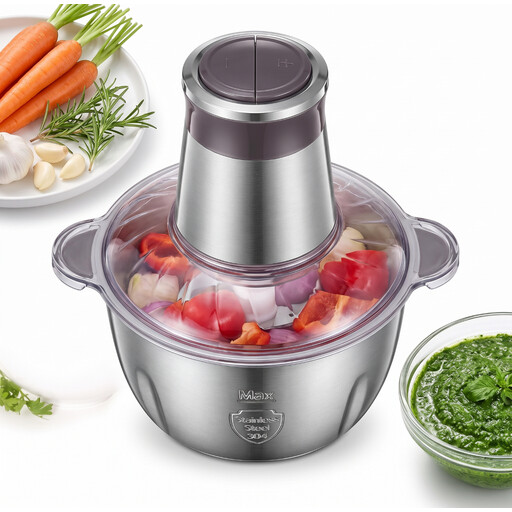
FOHERE electric mini chopper, 350 W, 2.5 litres
An option to consider if you want to compare a mini chopper with a larger stated bowl capacity for your workshop portions.
The product name lists a 350 W motor and a 2.5-litre bowl.
View at Joybuy
 No image available
Bear QSJ-D03Q1 electric mini chopper with 2-litre and 0.6-litre bowls
An option to consider if you want to compare two bowl sizes for different preparations.
The product name lists 2-litre and 0.6-litre glass bowls and a power rating of 300 W.
View at Joybuy
Frequently asked questions
Do I need a food processor to make pulled chicken?
Not necessarily: for cooked chicken without bones or skin, KitchenAid describes using a mixer with a flat beater or dough hook on a low speed. This advice is for shredding chicken, not chopping it into pieces or describing the performance of other mixers.
How can you prevent cross-contamination if participants also prepare raw chicken?
Keep raw and cooked chicken separate, use clean equipment for the cooked chicken and wash your hands. The Netherlands Nutrition Centre recommends keeping them separate to prevent cross-contamination. Also follow the cleaning instructions for your appliance’s bowl and blade.
How long can you keep cooked chicken after the workshop?
The Netherlands Nutrition Centre advises keeping cooked chicken breast in the fridge for no more than two days. Cool leftovers quickly, store them in a tightly sealed container and don’t leave them out of the fridge for more than two hours. If the packaging is unopened, follow the label.
Do Dutch food safety requirements apply to your cooking workshop?
If you prepare, process or sell food as a food business, the Netherlands Food and Consumer Product Safety Authority (NVWA) requires a food safety plan based on HACCP or an applicable approved hygiene code. Whether a particular workshop falls under this requirement, and what registration may be needed, depends on the activities; describing it simply as a ‘cooking workshop’ isn’t enough to determine this.
What does a longer motor guarantee cover?
Check the cover for the motor separately from that for other parts and accessories. Magimix states that the CS 3200 XL has a 30-year motor guarantee and a three-year guarantee for accessories; these are separate cover periods.


