
Cook who prepares small portions
You usually process only a little cooked beetroot and want a bowl that suits the amount. Tefal, Braun and Philips list different bowl capacities, so always compare the specific model you’re considering.


For small portions of cooked beetroot, choose a chopper based on the texture you want and the amount you actually need to process. A mini chopper with short pulse settings can help you keep some texture, while a purée setting is designed for a smoother result. A pull-cord chopper works without a plug socket. Check the usable bowl capacity and cleaning instructions for the exact model.
You usually process only a little cooked beetroot and want a bowl that suits the amount. Tefal, Braun and Philips list different bowl capacities, so always compare the specific model you’re considering.
You want recognisable pieces for dishes such as salads and are looking for controls that let you stop before the beetroot gets too finely chopped. KitchenAid and Tefal describe controls you can use in stages.
You want to use your purchase for puréeing, mixing or whisking too, and are weighing up extra attachments against those functions. KitchenAid and Braun describe models or sets with more than one preparation function.
When you’re processing small amounts, the key considerations are suitable bowl capacity, control over texture, cleaning and ease of use.
| What to consider | What should you check? | Who should give this more weight? |
|---|---|---|
| Portion size | Compare the usable capacity of the exact model with your usual portion, rather than looking only at the stated bowl capacity. | If I’m chopping only a small amount of beetroot, I want a bowl that’s a practical fit. Around 36% of consumers put a suitable portion size first. |
| Keeping some texture | Check whether the appliance has a pulse function or staged controls, and check the texture as you go. | If I want recognisable pieces rather than purée, I look at how easily I can stop chopping. Around 29% of consumers give control over texture top priority. |
| Cleaning | Check the cleaning instructions for each part; the bowl, blades and lid may have different care instructions. | After a small chopping task, I don’t want to clean more parts than necessary. Around 21% of consumers put ease of cleaning first. |
| Controls and functions | Choose between manual pulling, electric chopping or a set with extra attachments, based on what you’ll use. | If I want to chop without a plug socket, or use the same set for other tasks too, the controls matter more. Around 14% of consumers say ease of use or extra functions are their main priority. |
For the Philips HR1393/91, Philips lists a 0.7 l bowl and a usable volume of 0.5 l. This difference applies to that specific model.
For the model you’re considering, compare the usable capacity with your usual portion.
A smaller usable capacity may mean you have to process the same amount in several batches.
KitchenAid describes cooked vegetables as an ingredient to purée with the 5KFC3516EER. That doesn’t mean it will make evenly sized beetroot cubes.
If you want to keep some texture, check whether you can chop in short bursts or stages, and inspect the result as you go.
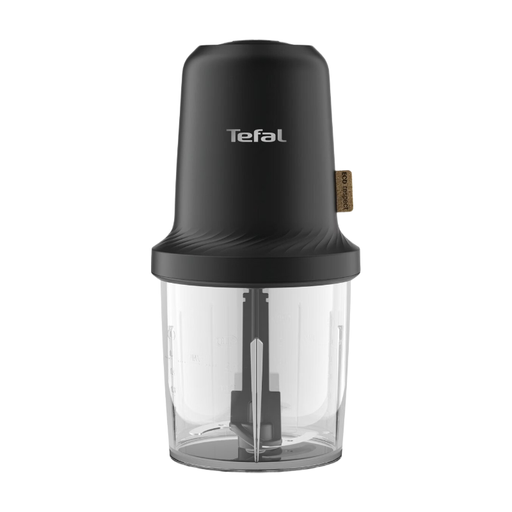
For the Tefal K1330404, Tefal states that the bowl and blades are dishwasher-safe, but the lid is not.
Follow the cleaning instructions for each part of the exact model.
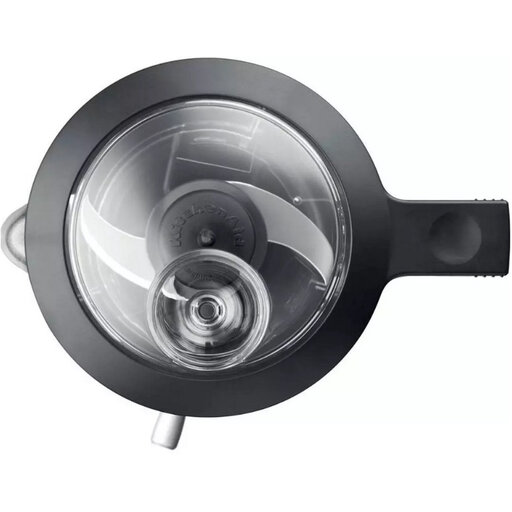
According to KitchenAid, the 5KFC3516EER is designed for chopping and puréeing in a bowl with a stated capacity of 830 ml.
According to Tefal, the manual 5 Second Chopper K1330404 is designed for chopping without a plug.
According to Braun, the Braun MultiQuick 1 MQ10.202MWH comes with a 350 ml chopper bowl and a whisk.
According to Kenwood, the CH180B is a compact electric chopper for small quantities.
The Philips HR1393/91 shows why the difference between stated and usable bowl capacity can matter.
These products are suited to small chopping tasks and, where applicable, offer extra functions as part of a hand blender set.
 No image available
Suitable if you want a hand blender set and whisk as well as a chopper. Check the capacity of this model’s chopper bowl before deciding on your portion size.
 No image available
The product title lists a 0.5 l bowl and 500 W of power. Compare the usable filling capacity with your portion; don’t pour boiling-hot liquid into the bowl.
 No image available
The product title lists two speeds, a 500 ml chopper bowl and an 800 ml measuring beaker. This set is suited to anyone who wants a hand blender and whisk as well as a chopper.
 No image available
The product title lists a 500 ml chopper, a 500 ml measuring beaker and a 1.5 m cable. For small portions, check whether the chopper capacity suits the amount you usually process.
 No image available
A mini chopper for anyone looking for a compact chopping function. Cut larger ingredients into pieces no bigger than 2.5 cm before processing, and check the capacity and controls of this exact model.
For pieces, choose an appliance with pulse control or a way to chop in stages, and check the texture as you go. KitchenAid describes cooked vegetables as suitable for puréeing with the 5KFC3516EER, so don’t automatically expect evenly sized beetroot cubes.
Don’t assume that all the parts are dishwasher-safe. For the Tefal K1330404, Tefal states that the bowl and blades can go in the dishwasher, but the lid cannot. Check the instructions for each part of your exact model.
According to Voedingscentrum, opened cooked beetroot keeps for two days in the fridge. Don’t leave leftovers out of the fridge for more than two hours. For an unopened pack, follow the storage instructions and use-by date on the packaging.
In the Netherlands, you have a statutory guarantee alongside any manufacturer’s guarantee. ACM ConsuWijzer explains that the seller is responsible for providing an appropriate solution at no cost if the product doesn’t perform as you could reasonably expect during normal use. A fixed statutory guarantee period of exactly two years doesn’t apply to all products.
According to the European Commission, CE marking is compulsory for product groups covered by specific harmonised EU rules. European rules also apply to materials in equipment that come into contact with food. CE marking is not, on its own, an independent test certificate; check the information for the exact model.