What should you look for when choosing one?
First, consider where you’ll use it and how: are its dimensions and output suitable for the room and its insulation? Then look at the controls, noise levels at each setting and how much electricity it uses while the element is on.
| What to consider |
What should you check? |
Who is this important for? |
| Quiet operation and space |
Compare the dimensions and the clearance specified in the instruction manual. Also check that the heat output is suitable for the room and its insulation. |
I’m looking for quiet supplementary heating that doesn’t take up too much space. Around 31% of consumers in this situation prefer well-sized, quiet local heating. |
| Electricity use |
Check the output at each setting and whether a thermostat switches off the element once the set temperature is reached. Calculate usage based on the actual time the element is on and your own electricity tariff. |
I want to heat the room when needed and keep an eye on running costs. Around 25% of consumers in this situation prioritise managing energy use. |
| Safe positioning |
Follow the clearance instructions in the manual and check that the cable can reach a suitable wall socket directly. A safety feature does not replace the positioning instructions. |
I have limited space and want to know in advance where the heater can be positioned and connected safely. Around 25% of consumers in this situation start by considering safe positioning. |
| Heat distribution |
Check whether it has a turbo fan and compare noise levels and power at each setting. Faster air circulation doesn’t automatically mean lower electricity use. |
I want to spread heat around the room more quickly and may be happy to put up with fan noise. Around 19% of consumers in this situation are primarily looking for faster heat distribution. |
Product picks on Joybuy
This selection includes electric heaters for indoor use that are suitable for heating a cold room. Check the latest product information and applicable safety and ecodesign requirements for the specific model.
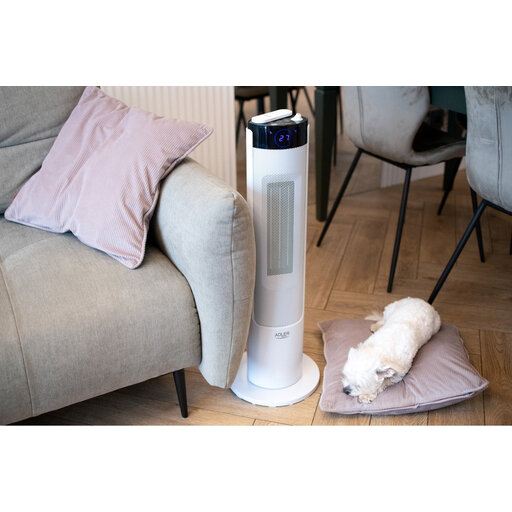 No image available
ADLER AD 7730 ceramic convector heater, white
Two heat settings and a thermostat give you options for controlling the temperature in a small room.
Power: 1400 W and 2200 W. Timer: 1–12 hours. The description also lists a remote control, horizontal oscillation, a carry handle and dimensions of 26 × 26 × 75 cm.
Keep flammable materials at least 1 metre from the air outlet and don’t cover the heater.
View on Joybuy
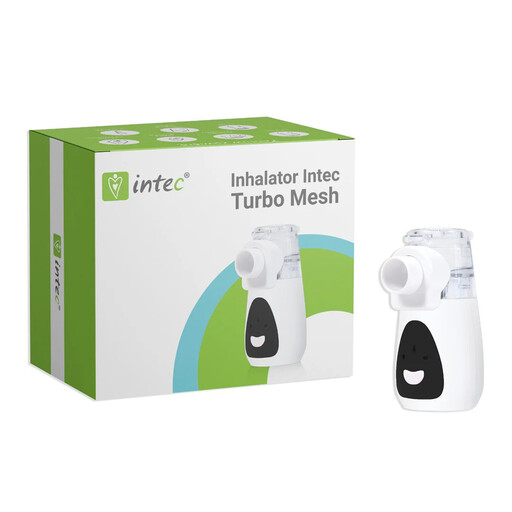 No image available
Intec Turbo Mesh Heater, white
The product description calls this model a domestic heater for indoor use.
Check the product information for details relevant to your room, such as the power rating and positioning instructions.
View on Joybuy
Frequently asked questions
Is a convector heater suitable for heating my whole flat all the time?
Don’t assume so. A convector can be a practical choice for one room and occasional supplementary heating, but Milieu Centraal does not recommend standard electric heaters as a general replacement for gas heating. Consider your insulation and existing heating if you need warmth for long periods.
How can I estimate electricity use for my own needs?
Multiply the selected power in kW by the number of hours the element is actually on to calculate energy use in kWh. If a 1500 W heater stays on for one full hour, it uses 1.5 kWh. A thermostat may reduce the actual running time; use your own rate per kWh to work out the cost.
Can I plug the heater into an extension lead, and can I put it next to curtains?
The fire service advises plugging electric heaters directly into a wall socket rather than an extension lead or cable reel. Also follow the clearance instructions in the manual for the exact model: for the Safe-T-Convect 2400, Eurom requires at least 1 metre between the air outlet and textiles, curtains or other flammable materials.
Does an electric convector heater have to carry an energy label in the Netherlands?
The European Commission says that the specific European energy labelling scheme for local space heaters excludes electric local space heaters. Applicable ecodesign and electrical safety requirements are separate; the absence of an energy label does not prove that those requirements have been met.
What warranty rights do I have when I buy a heater online?
According to ACM ConsuWijzer, a product should last as long as you can reasonably expect it to under normal use; this is separate from any manufacturer’s warranty. Online purchases generally also come with a 14-day cooling-off period after delivery. Check the applicable terms and who the seller is.


