
Quiet desk user
Do you work or enjoy a hobby at your desk for long periods and want to warm your hobby room without fan noise? If you’re considering a model with a turbo setting, check whether you can switch the fan off separately.


A convector heater is a good choice if you want to warm the air in your hobby room while you work. Check the heat settings and thermostat, and make sure you have a safe place for the heater. If you mainly want to feel warm at one fixed spot at your desk, consider an infrared panel too: it provides targeted warmth rather than heating the air throughout the room. A thermostat or high wattage alone doesn’t prove that a heater is economical to run.
Do you work or enjoy a hobby at your desk for long periods and want to warm your hobby room without fan noise? If you’re considering a model with a turbo setting, check whether you can switch the fan off separately.
Do you want more than just warm hands and would like the air in the room to feel warmer too? Compare the room size and insulation with the stated heat settings and the manufacturer’s guidelines.
Do you only use the room occasionally and mainly want warmth in one place where you sit? Compare targeted warmth from a panel with a convector heater that warms the air in the room.
A good choice if: you spend long periods working quietly at your desk and want to warm the air in your hobby room.
The trade-off: warmth spreads through the air; this isn’t the same as warmth directed straight at your seat.
A good choice if: you want extra air circulation and can switch the fan off when you need to work quietly at your desk.
The trade-off: the fan makes a noise. Check whether you can switch off the turbo setting separately on each model.
A good choice if: you mainly want one fixed spot at your desk to feel warm and don’t need to heat the whole hobby room.
The trade-off: the panel heats the area it’s directed at, rather than primarily warming all the air in the room. You won’t feel the same direct warmth outside that area.
| What to consider | What to look for | Who it matters to |
|---|---|---|
| Quiet while working at your desk | Check whether the model has a fan and whether you can switch it off separately. | If I’m concentrating for a long time, I don’t want fan noise. Around 31% of consumers put quiet operation while working at a desk first. |
| Warmth in the hobby room | Compare the room size and insulation with the model’s specifications, and check the thermostat and heat settings. | I want the air in my hobby room to feel warmer, not just the spot where I sit. Around 25% of consumers say warming the room is their top priority. |
| Heating one workspace | Decide whether you need to warm the whole room or whether warmth in one fixed spot is enough. | If I only spend a limited amount of time at my desk, I want to know whether heating the whole room is necessary. Around 25% of consumers put running costs first when choosing warmth for one workspace. |
| Safe positioning | Check the clearance distances in the manual, how the cable will run and whether there’s an accessible socket nearby. | I want to be able to position the heater safely among my desk, cables and hobby materials. Around 19% of consumers name safe positioning as their top priority. |
A convector heater warms circulating air, while an infrared panel directs warmth at a specific area. Milieu Centraal explains the difference, but that alone doesn’t tell you which heater will use less energy in your situation. Consider how long you’ll use it, which setting you choose and how much of the room you actually want to heat.
A thermostat controls when the heater switches on and off, but electric heating doesn’t automatically become an economical way to warm a whole room when you’re only using one spot at your desk. The stated room coverage also isn’t a measurement of performance in your hobby room.
First decide whether you want to warm the air in the room or mainly the spot where you sit. When using the heater, bear in mind the setting you choose and how long the heating element is actually on.
Paper, textiles and other materials can end up close to a desk. The Eurom manual for the Safe-T-Convect 2400 specifies a minimum distance of 1 meter between the air outlet and flammable materials. The Fire Service advises plugging electric heaters directly into a socket rather than using an extension lead or cable reel.
Measure the available space and follow the manual for the exact model. Safety features don’t replace safe positioning.
A turbo setting moves air around, so it feels different to heating without a running fan.
Check whether you can switch the fan off separately if quiet operation is important while you work.
For the Mill SG2000LED, Mill’s information and the Joybuy product page differ on cable length, recommended room size and the length of the commercial warranty.
Ask the seller which version and commercial terms apply to the offer. Your statutory guarantee is a separate consumer right.
The KA-5911 is a freestanding convector heater with two heat settings and a rotary thermostat, designed for occasional use.
The Safe-T-Convect 2400 is a convector heater for supplementary heating, with a thermostat, timer and optional turbo setting.
The CH513AC is a freestanding convector heater without a fan, with three heat settings.
The freestanding DX522T combines a mechanical thermostat with an optional turbo fan.
The freestanding SG2000LED combines an electronically set temperature with an LED display and fan.
These are fan heaters for indoor use at a workspace; they aren’t convector heaters. Compare them only if you’d also like to consider a fan heater alongside the convector options.
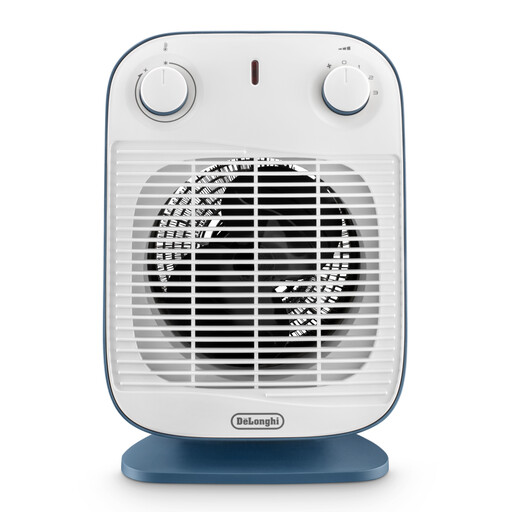 No image available
One option to compare if you’re looking for an indoor fan heater for use at a desk; this product isn’t a convector heater.
The product name lists an adjustable thermostat and overheat protection.
Use the heater in line with the product warnings, on a stable, dry surface and away from flammable materials.
 No image available
An option to compare if you want a fan heater with several settings for use at a desk or in a study; this isn’t a convector heater.
The product name lists four heat settings, a thermostat, oscillation, a timer, remote control and ECO mode.
Don’t cover the heater. Position it securely and keep it away from flammable materials, as stated in the product warning.
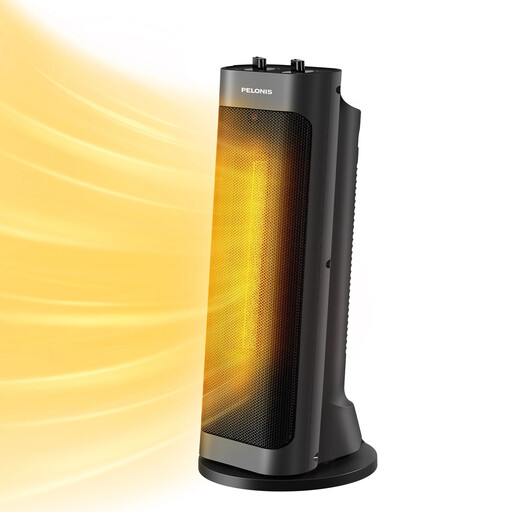 No image available
Worth comparing as a portable fan heater for a smaller workspace or study; this product isn’t a convector heater.
The product name lists 70° oscillation, tip-over and overheat protection, and suitability for rooms of 15 m².
Don’t cover the heater. Keep flammable materials at least 1 meter from the air outlet and use it on a stable, level surface.
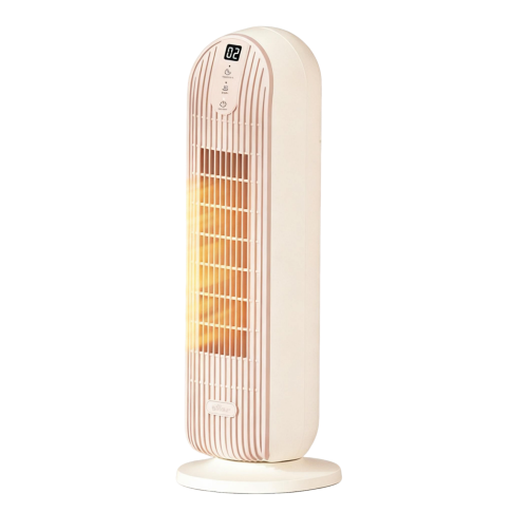 No image available
An option to compare if you’re looking for a portable fan heater with adjustable air direction for your workspace; this isn’t a convector heater.
The product name lists 90° oscillation and a 12-hour timer.
Don’t cover the heater, and keep furniture and flammable materials away from the air outlet, as stated in the product warning.
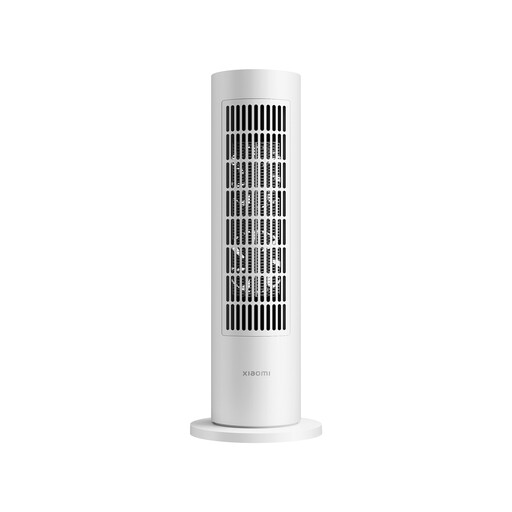 No image available
Worth comparing if you’re looking for a tower model for a room and want to consider app control; it’s a fan heater, not a convector heater.
The product name lists four settings, 70° oscillation, a smart thermostat, a timer, and app and voice control. According to the product information, the app is required for full functionality.
Don’t cover the heater or use it in wet areas. Keep flammable materials away and place the heater on a stable surface.
Choose based on what you want to heat: a convector heater warms circulating air in the room, while an infrared panel directs warmth at a particular spot. Milieu Centraal explains the difference; you won’t feel the panel’s warmth when you’re sitting outside the area it’s directed at.
The Fire Service advises plugging electric heaters directly into a socket rather than using an extension lead or cable reel. You should also follow the manual for the model you choose.
Multiply the power in kilowatts by the time the heating element is actually on. A thermostat can affect how long the heater runs, so the setting you choose alone won’t tell you how long it will heat for.
No. ACM ConsuWijzer explains that your statutory guarantee is separate from any manufacturer’s or seller’s warranty. The seller is responsible for ensuring that a product performs as you could reasonably expect under normal use, so a stated commercial warranty period isn’t a general limit on your statutory rights.
For a standard online consumer purchase, you generally have a statutory 14-day cooling-off period after delivery. ACM ConsuWijzer lists some exceptions, so check the terms that apply to your purchase.