A convector heater is a good choice if you want to warm the air in the living area near your desk as well as your immediate workspace. Match the stated room suitability to the part of the living room you actually want to heat. If you mainly sit in one fixed spot, compare it with targeted infrared heat, which does not warm the air in the room in the same way. For prolonged use, key considerations include your electricity tariff, the actual time the heater is switched on and a safe connection to a suitable socket.
Who is this buying guide for?
Someone who works in one fixed spot
Do you mainly want to feel warm while sitting at your desk, without having to heat the whole living room first? Milieu Centraal describes infrared heat as warmth for a specific spot, such as a desk or seating area.
Someone using a shared living area
If you also want warmer air around a seating area next to your desk, consider where to place the heater and compare the manufacturer's stated room suitability with the area you want to heat. Eurom and Rowenta provide room size guidance for specific models; this is no guarantee that they will heat a large, open-plan living room.
Someone who uses a heater for long periods or has limited space
If you use supplementary heating regularly or have little free space around your desk, consider how long the heater will be switched on, where the cable will run and how heat can disperse. Milieu Centraal does not recommend electric heaters as a general replacement for your main heating system. The Fire Service advises plugging an electric heater directly into a wall socket rather than using an extension lead or cable reel.
What should you look for when heating the area by your desk?
First decide whether you want heat in one specific spot or warmer air across a larger area. Then consider how long you’ll use the heater, how it connects and where you can put it.
Freestanding fanless convector
A good choice if: you want to warm the air in the living area near your desk as well as your workspace, and you’d like to be able to move the heater.
Bear in mind: the heat is less directly focused on you. A stated room coverage range does not guarantee comfort in a large, open-plan living room.
Convector with fan or turbo function
A good choice if: you want to circulate warm air around your desk more actively and don’t mind fan noise.
Bear in mind: the fan adds noise. Claims about rapid air circulation are not independent measurements of heating time or room suitability.
Infrared panel for targeted supplementary heating
A good choice if: you usually sit in one fixed spot and can point the panel towards it.
Bear in mind: you won’t feel direct warmth outside the area reached by the heat. This is not the same as warming the air in a large living room.
Existing or more efficient main heating
A good choice if: you want to keep the whole large living room comfortable for long periods, rather than heating just the area around your desk.
Bear in mind: running a standalone electric heater as your main heating system can be expensive. The most cost-effective option for your home also depends on your energy tariff.
| Consideration |
What should you check? |
Who should pay closer attention to this? |
| Targeted warmth at your desk |
Think about whether you mainly sit in one spot and whether a panel can be aimed at it, in line with the installation instructions. |
If I mainly sit at my usual desk, I want to feel warm without heating the whole living room first. Around 33% of consumers prioritise targeted warmth at their desk. |
| Warmer air in the living area |
Compare the stated area in m² or volume in m³ with the space you actually want to heat, taking insulation and open-plan layouts into account. |
If I also want warmer air near a seating area, I look at the shared living space rather than just the chair. Around 27% of consumers prioritise warm air in the room. |
| Electricity use with regular heating |
Calculate the power in kW × the number of hours the heating element is actually on × your own price per kWh. 2,0 kW running for one full hour uses 2,0 kWh. |
If I use a heater regularly, I want to estimate the electricity cost in advance. Around 20% of consumers prioritise keeping running costs manageable. |
| Safe, quiet placement |
Follow the instructions for installation and clearance, keep air vents unobstructed and check that a wall socket is within reach. Also consider whether fan noise would suit your workspace. |
If I work close to furniture and desk cables, I want a suitable position and connection without distracting noise. Around 20% of consumers prioritise safe, quiet placement. |
Common mistakes when choosing a convector heater
-
Assuming a stated m² or m³ range guarantees warmth throughout the living room
Manufacturers’ room size guidance applies to specific models. It does not prove that a heater will keep a large or open-plan living room comfortable.
Decide in advance whether you want to heat just the area around your desk or a larger part of the room. Compare the stated coverage with your needs and consider the layout of your space.
-
Treating infrared and convection heat as interchangeable
Milieu Centraal describes infrared as radiant heat for a particular spot, while a convector heats the air. One type of heating will not automatically provide the same comfort as the other.
Choose based on where you sit and whether other people or areas in the living space also need warmer air.
-
Looking only at the purchase price if you’ll use it often
Milieu Centraal does not recommend a standard electric heater as a general replacement for a more efficient main heating system. If it is switched on for many hours, running costs can add up.
Calculate the electricity use for your own circumstances and compare targeted supplementary heating with your existing heating system.
-
Placing a heater among furniture and desk cables
Heat needs room to disperse around a heater. The Fire Service advises plugging electric heaters directly into a wall socket, not an extension lead or cable reel.
Before buying, check the required clearance, cable route and placement instructions in the manual for the exact model.
Brands to compare for this type of use
Eurom
The Alutherm models are worth considering if you’re looking for a convector with a thermostat that can be freestanding or wall-mounted, depending on the exact model.
- Eurom lists the Alutherm 2000 Wifi White as having a power output of 2000 W, app control and stated coverage of up to 80 m³.
- This is a manufacturer’s specification, not a guarantee that it will heat an open-plan or poorly insulated living room.
Rowenta
The portable Vectissimo II CO3030F1 is designed for anyone considering a convector with simple mechanical controls.
- Rowenta lists power settings of 1200 and 2400 W, along with a mechanical thermostat.
- The manufacturer states that it is suitable for 20–25 m². Don’t assume this makes it suitable for a large living room.
Mill
The Instant SG2000LED is worth considering if an electronic thermostat and fan-assisted heat distribution are important to you.
- Mill lists settings of 750, 1250 and 2000 W, an electronic display and an integrated fan.
- Check whether the fan noise is right for your desk. Claims about fast or quiet operation come from the manufacturer.
De'Longhi
The SlimStyle HCX9120E is worth considering if you’re looking for a slimline convector with a timer and fan system.
- The Dutch product page lists a power output of 800–2000 W, 230 V, a 24-hour timer and a fan system.
- The manufacturer describes this model as suitable for local heating in small and medium-sized rooms, not specifically for a very large living room.
Tristar
The KA-5912 is a portable convector for occasional supplementary heating, with an adjustable thermostat.
- Tristar lists a power output of 2000 W, handles, a turbo function and overheat protection.
- Tristar says the turbo function is designed to circulate air more quickly; this does not prove that it can heat a large living room.
Joybuy products for warmth by your desk
This Joybuy selection includes portable fan heaters for warming the air around your workspace, as well as an infrared model for targeted heat. These are not all convector heaters; the infrared model does not warm the air in a large living room in the same way.
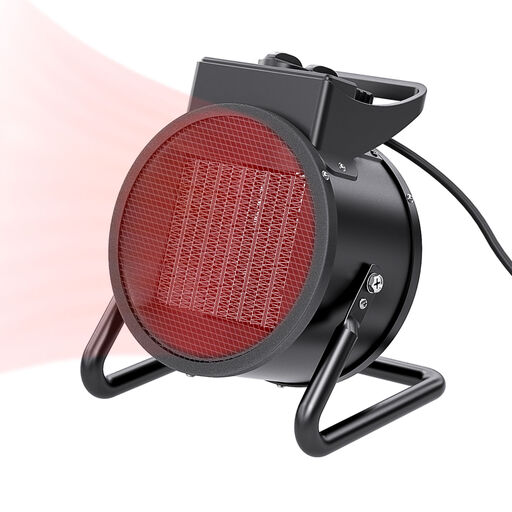 Image unavailable
LZQ ceramic fan heater, 2 kW
An option for warming the area around your desk; this is a ceramic fan heater, not a convector.
The product name lists a power output of 2 kW, a thermostat, three heat settings and a PTC heating element.
View at Joybuy
 Image unavailable
OmniHeat 1800 W ceramic fan heater
A fan heater for warming the air around your desk or in a living area. Check whether the extra air movement and noise suit your needs.
The product name lists four heat settings, a thermostat, a 24-hour timer, remote control, oscillation, and protection against overheating and tipping over.
View at Joybuy
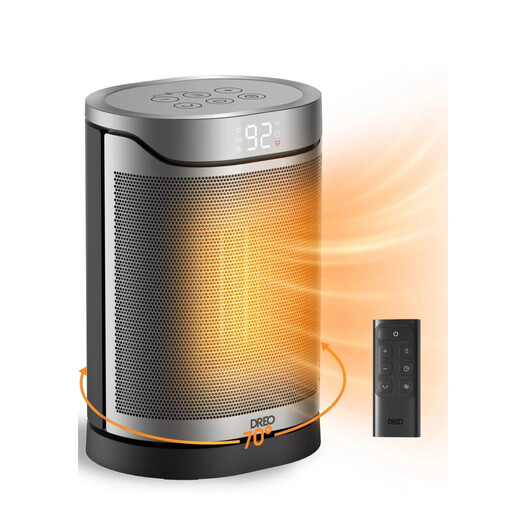 Image unavailable
DREO Atom 318 fan heater, 1500 W
This fan heater is an option for warming the area around a desk; the stated coverage does not mean it will heat a large living room.
The product information lists coverage of 10–20 m², 70° oscillation, a 12-hour timer and remote control.
View at Joybuy
 Image unavailable
DREO Atom 416 fan heater, 1500 W
A fan heater for a desk or office; compare the stated room coverage with the area you actually want to heat.
The product information lists coverage of 10–20 m², a 12-hour timer and remote control.
View at Joybuy
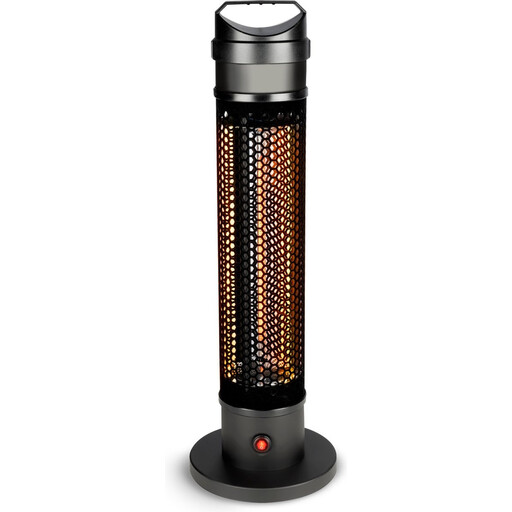 Image unavailable
Alpina infrared heater, 800 W, carbon
An alternative if you want warmth in one fixed spot rather than warmer air throughout a large living room.
The product information lists 800 W, infrared heating, 360° heat distribution and tip-over protection. Milieu Centraal describes infrared as targeted radiant heat; this is not the same as heating the air.
View at Joybuy
Frequently asked questions
Will a convector heater by my desk warm the whole large living room?
You can’t tell from the power output alone. Compare the room suitability stated by the manufacturer for the exact model with the area you want to heat. The stated coverage is not a measurement taken in your living room.
How do I work out the electricity cost of running a convector heater?
Multiply the power used in kW by the time the heating element is actually on, then by your own price per kWh. A thermostat may switch the element off from time to time, so the time you leave the heater on is not necessarily the time it runs at full power.
Can I plug the heater into an extension lead next to my desk?
The Fire Service advises plugging high-power appliances such as electric heaters directly into a wall socket rather than using an extension lead or cable reel. You should also follow the connection and placement instructions for your chosen model.
What warranty and regulations apply when buying in the Netherlands?
According to the Dutch government, consumers are entitled to a product that is fit for purpose, but the Netherlands has no fixed statutory warranty period. Electric local space heaters covered by Regulation (EU) 2024/1103 have been subject to the applicable ecodesign requirements since 1 July 2025 when placed on the EU market. This general rule does not confirm that an individual model complies with them.


