A convector heater is a good choice if you want to heat an enclosed conservatory temporarily and the room can retain heat reasonably well. CE Delft says electric heating is most suitable as supplementary heating, for example in rooms that are used infrequently. If you mainly have one cold spot where you sit, an infrared panel may be a better option for short-term, targeted warmth, as Milieu Centraal explains. If your conservatory loses a lot of heat or you plan to use the heating for long periods, it’s worth looking at insulation and other heating options too. In the right conditions, Milieu Centraal says heat pumps can provide 3–5 kWh of heat per kWh of electricity, compared with around 1 kWh for direct electric heating.
Who is this relevant for?
If you want to heat the whole conservatory
You want to warm not just one seating area, but also the air in an enclosed conservatory for a few hours. Start by looking at insulation and heat loss; CE Delft and Milieu Centraal explain why these factors matter when heating a space.
If you mainly have one cold spot
You feel the cold most when sitting next to a cold wall or glazing, and may not need to heat the whole conservatory. Milieu Centraal describes infrared panels as an option for short-term, targeted supplementary heating.
If you heat your conservatory often
You want to consider recurring electricity use and safe positioning, not just the stated power rating. CE Delft discusses electric heating mainly as supplementary heating; the Dutch Fire Service advises plugging an electric heater directly into a wall socket.
What should you look for when buying?
Convector heater
Suitable if: you want to heat the air in an enclosed conservatory temporarily and the room can retain heat reasonably well.
Bear in mind: cold walls and glazing will continue to lose heat. A manufacturer's room-size estimate doesn’t prove that a heater will warm your conservatory.
Infrared panel for targeted warmth
Suitable if: you sit in one fixed spot for short periods and don’t need to bring the whole conservatory up to temperature. Milieu Centraal recommends infrared panels as supplementary heating for a specific area.
Bear in mind: the warmth is directed at the area reached by the panel and won’t automatically heat the whole room.
Look at insulation or another primary heating option first
Suitable if: your conservatory loses a lot of heat or you want to heat it often and for long periods.
Bear in mind: these measures require more preparation. Whether another heating solution is suitable depends on your conservatory and its installation.
Choose your heating based on what you want to warm: the air throughout the conservatory or mainly your seating area. The percentages below show the consumer need associated with each consideration.
| What to consider |
What should you look for? |
Who should consider this? |
| Heating the air in the conservatory |
Check the thermostat and settings. Assess the capacity you need based on your own conservatory, rather than relying only on a manufacturer's estimate. |
If I want to heat the whole enclosed conservatory for a few hours, I’ll consider heat loss and temperature control. Around 28% of consumers make heating the air their main priority. |
| Comfort in a cold seating area |
Decide whether you want to heat the whole room or just the area where you sit, and whether targeted warmth will reach that spot. |
If you mainly feel cold in one fixed spot, you may not need to heat the whole conservatory. Around 28% of consumers prioritise localised comfort. |
| Electricity use if you heat the space often |
Calculate kWh by multiplying the power input in kW by the number of hours used, and allow for the time the thermostat actually switches the heater on. |
If I heat the conservatory often, I want to weigh up energy use against how long I use it and how well it’s insulated. Around 22% of consumers mainly consider electricity use for regular heating. |
| Safe positioning |
Check the manual for the exact model for the permitted environment, clearance from flammable materials and connection requirements. |
If you’re assessing a spot where there may be moisture or nearby materials, it’s important to check the positioning requirements first. Around 22% of consumers make safe placement their priority. |
Common pitfalls
-
Assuming a stated room size guarantees warmth in a glass conservatory
Heat loss through windows, the roof and walls varies from room to room. A manufacturer's estimate isn’t a calculation for your conservatory.
Start by assessing the insulation and how long you want to heat the space. Don’t choose the power rating based only on a stated m² or m³ estimate.
-
Assuming a convector is a more efficient way to produce heat
According to Milieu Centraal, direct electric heating provides around 1 kWh of heat per kWh of electricity in the conditions described. For a heat pump, Milieu Centraal gives a figure of 3–5 kWh of heat per kWh of electricity.
If you plan to use it for long periods, compare electricity use, insulation and other heating options. Don’t rely solely on energy-saving claims for a standalone heater.
-
Assuming every conservatory has a suitable place for a heater
Moisture, nearby flammable materials or an unsuitable connection can restrict where you can position a heater. The Dutch Fire Service advises plugging an electric heater directly into a wall socket, not using a cable reel or extension block.
Check the manual for the exact model and the spot where you plan to use it. Keep ventilation openings clear and follow the specified clearances.
Brands worth comparing
The features listed apply to the product ranges and models described. They aren’t a general assessment of a brand or a guarantee that a product is suitable for your conservatory.
Eurom
The Safe-T-Convect range is designed for temporary air heating. According to Eurom, the Safe-T-Convect 2400 has a separate Turbo fan setting.
- Eurom lists the Safe-T-Convect 2400 as having a rated power of 2400 W.
- The manual limits its intended use to well-insulated rooms or occasional use. For this model, Eurom specifies a minimum distance of 1 metre between the air outlet and textiles or other flammable materials.
Qlima
The ECH 4020 is a portable convector with an adjustable temperature setting for temporary air heating.
- Qlima lists overheat and tip-over protection, and an approximate room-size estimate of 80 m³.
- This manufacturer's estimate isn’t a heat-loss calculation for a conservatory with a lot of glazing. Also check that the intended environment is suitable according to the manual.
Mill
The SG2000LED is a portable convector with an electronic thermostat, LED display and fan.
- Mill lists three power settings for this model: 750, 1250 and 2000 W.
- The room-size estimate given by Mill is a manufacturer's guide, not an independent assessment of its suitability for a cold conservatory.
De'Longhi
The HSX2320F is designed for localised air heating and, according to De'Longhi, has a room thermostat and fan system.
- De'Longhi's Dutch specifications list an input power of 2000 W and a voltage of 230 V.
- The product description refers to small and medium-sized rooms, but doesn’t confirm its capacity for a specific conservatory.
Midea
The NDK20-21A is a convector with an adjustable thermostat and three heating levels.
- Midea's model information lists overheat protection.
- Room-size estimates differ between Midea's product information and Joybuy Netherlands. Check the exact model and don’t treat an estimate as a calculated heating range for your conservatory.
Products for heating the air
These Joybuy product picks are electric appliances for heating indoor air. They are fan heaters and room heaters, rather than models described as convector heaters in their product names. Check that the permitted operating environment is suitable for your conservatory.
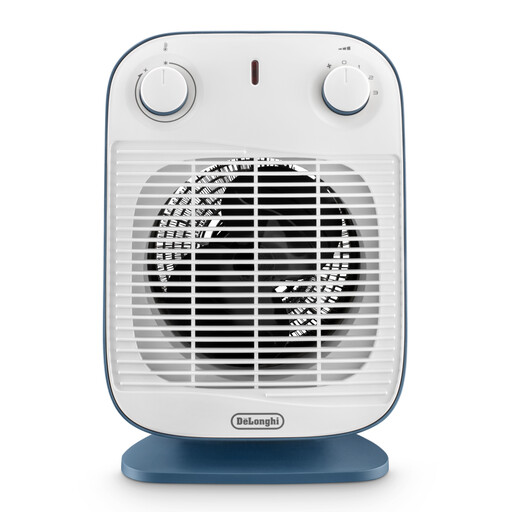 Image unavailable
De'Longhi HFS 50B20 fan heater, blue/white
A potential choice if you want to heat the air in a room temporarily indoors and adjust the warmth.
The product name lists an adjustable thermostat and overheat protection. The description specifies a dry location; don’t use this appliance in a damp environment.
Joybuy
 Image unavailable
OmniHeat 1800W ceramic fan heater, 4 settings
An option if you’re looking for an electric fan heater with different settings for temporary indoor room heating.
The product name lists a remote control, 24-hour timer, ECO mode and four heat settings. Keep the appliance at least 1 metre away from flammable materials and don’t cover it.
Joybuy
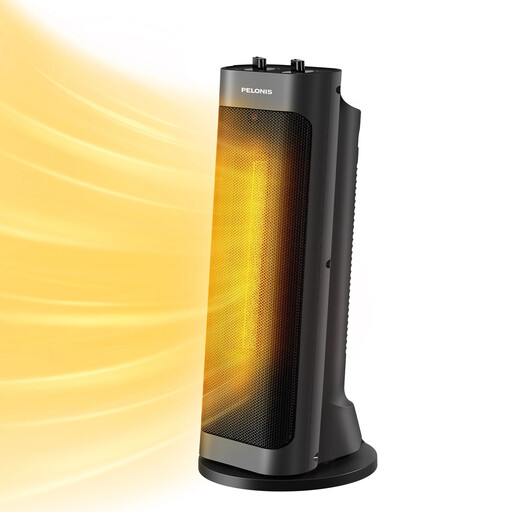 Image unavailable
PELONIS 2000 W PTC ceramic fan heater, 70° oscillation
Could suit you if you’re looking for a portable fan heater for indoor room heating.
The product name lists 70° oscillation, tip-over protection and overheat protection. Keep textiles and other flammable materials at least 1 metre from the air outlet, and don’t cover the appliance.
Joybuy
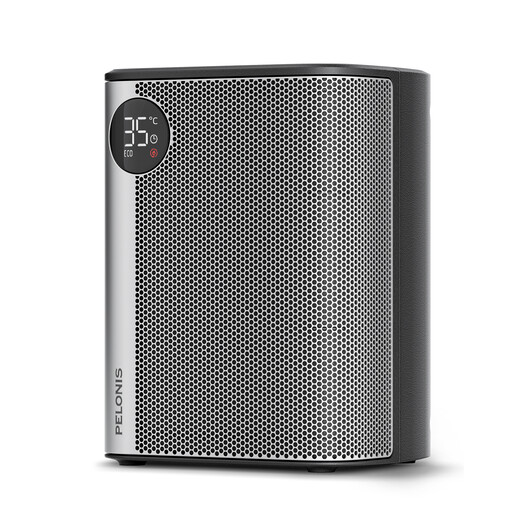 Image unavailable
PELONIS 2000W ceramic fan heater, 5 settings
An option if you want to heat an indoor space temporarily with an appliance that has a thermostat and timer.
The product name lists an ECO mode, 24-hour timer, thermostat, five heat settings, and tip-over and overheat protection. The description specifies indoor use, warns against using it near water and says to keep the ventilation openings clear.
Joybuy
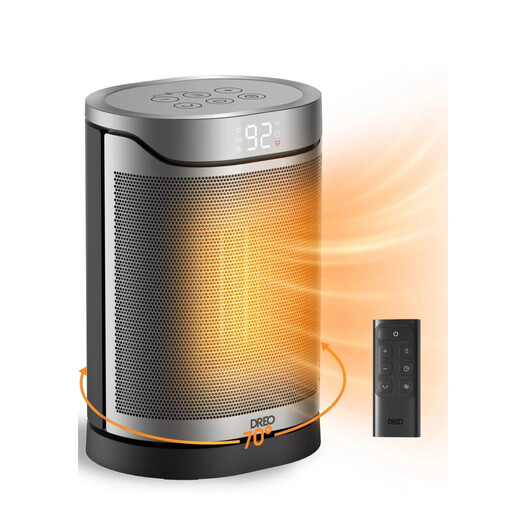 Image unavailable
DREO Atom 318 1500W ceramic fan heater
Could suit you if you’re looking for a fan heater for temporary heating in a living or work space.
The product name lists 70° oscillation, a 12-hour timer and a remote control. Before using it in a conservatory, check that the environment meets the instructions for the exact model.
Joybuy
Frequently asked questions
How can I tell whether a convector heater will warm my conservatory?
Start by looking at the size, glazing, insulation and intended use of your conservatory. Without this information, a wattage or manufacturer's estimate in m² or m³ can’t guarantee comfort when the walls are cold.
Will a convector heater help with condensation on cold surfaces?
Heating isn’t a substitute for ventilation or insulation. If damp is a problem, keep ventilating and look into heat loss. Also check whether the manual permits the appliance you’ve chosen to be used in the intended environment.
How do I connect an electric heater safely?
The Dutch Fire Service advises plugging an electric heater directly into a wall socket, not using a cable reel or extension block. Follow the manual for the exact model for positioning clearances and use. For the Eurom Safe-T-Convect 2400, the manufacturer specifies a minimum distance of 1 metre from textiles and other flammable materials.
How do I calculate electricity use for an hour of heating?
Multiply the power input in kW by the number of hours used to calculate kWh. If the heater has a thermostat, actual use also depends on how long it switches on for. Multiply the kWh used by your own electricity tariff to work out the cost.


