
Desk worker with limited free space
Do you work in a bedroom where the desk, bed and curtains leave little room for a heater? First check whether the model can be safely placed or wall-mounted according to its instructions.


A convector heater is a good choice if you want to warm the air in a well-insulated bedroom while you work, or only need occasional extra heat. Look for a thermostat and a position that’s permitted in the instructions. If you only need brief warmth in one fixed spot, an infrared panel is also worth comparing: as Milieu Centraal explains, it directs radiant heat towards that spot rather than warming the air in the room. Before you buy, check that the appliance on offer bears the required CE marking. The Netherlands Food and Consumer Product Safety Authority explains that this requirement applies to electrical equipment with a rated AC voltage of 50 to 1000 V.
Do you work in a bedroom where the desk, bed and curtains leave little room for a heater? First check whether the model can be safely placed or wall-mounted according to its instructions.
Would you rather avoid fan noise while you concentrate, and warm the air in the room? Compare fan-free models and check how the thermostat is operated.
Do you only use your desk occasionally and want to factor in electricity use? Compare warming the air in the room with heating directed towards your seat.
| What to consider | What should you look for? | Who is this important for? |
|---|---|---|
| Safe positioning | Check the installation method and clearances in the instructions for the exact model. For the Eurom Alutherm Wi-Fi, Eurom specifies a minimum distance of 1 metre between the air outlet and textiles, curtains or other flammable materials. The Netherlands Fire Service recommends plugging electric heaters directly into a socket. | If my desk, bed or curtains limit the available space, I want to know where the appliance can be placed safely first; around 33% of consumers put safe positioning first. |
| Quiet operation | Check whether the model has a fan and whether it can be switched off separately. Tristar says the KA-5911 has no fan; Mill lists a fan for the SG2000LED. | I don’t want fan noise while I’m working or sleeping; around 27% of consumers give quiet operation top priority. |
| Electricity use | Compare the power rating, settings and how long you use the heater. Tristar lists settings of 750 W and 1500 W for the KA-5911. Calculate kWh as power in kW × the number of hours the heating element is actually on. | If I use the heater regularly, I want to estimate its consumption based on my hours of use and tariff; around 27% of consumers put running costs first. |
| Heat in one spot | Decide whether you also want warmth elsewhere in the bedroom. Milieu Centraal describes infrared panels as a way to direct radiant heat towards a particular spot. | If I only use the heater briefly at a fixed desk, I mainly want to feel warm there, rather than necessarily heating the whole room; around 13% of consumers make targeted heat their top priority. |
A convector warms the air in the room, while an infrared panel can direct radiant heat towards a particular spot. If you heat the room when you’re only sitting at your desk, you could use more electricity than necessary.
Before buying, decide whether you want to heat the bedroom as a whole or just the area by your desk.
A heater needs clear space around its air outlet; furniture and curtains can reduce the usable area.
Measure the intended position and follow the clearances in the instructions for the exact model.
Controls and warranty terms don’t tell you how much electricity the appliance will use during your own use. That depends on factors including the power rating, how long the heating element is on and your tariff.
Compare the settings and thermostat with the hours you expect to use it, and consider the warranty terms separately from energy consumption.
The models below show a range of control and positioning options. Mentioning a brand doesn’t mean that every model listed is available on Joybuy.
According to Tristar, the KA-5911 is a freestanding convector for occasional supplementary heating, with a dial and thermostat.
According to Eurom, the Alutherm 1000 Wifi White can be freestanding or wall-mounted and is controlled via an app.
According to Mill, the freestanding CO1200WIFI3 offers app control, scheduling and a child lock.
According to VONROC, the freestanding CH513AC has three power settings and a thermostat.
These Joybuy products may be suitable if you need extra warmth by a desk or in a bedroom. Check each model’s positioning instructions and whether it suits the way you plan to use it.
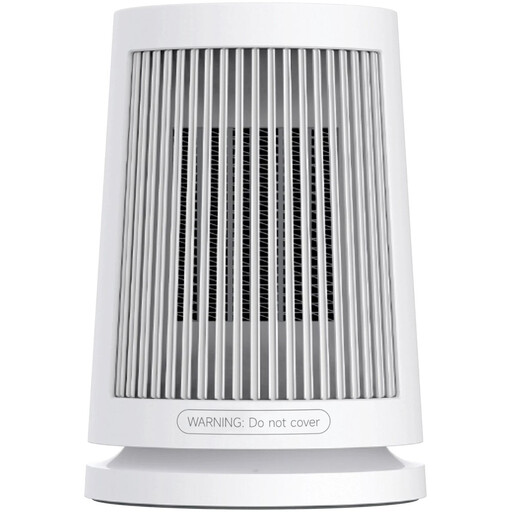 No image available
The product name describes this model as a 600 W desk heater for anyone looking for warmth at their workstation.
The name lists PTC ceramic heating, 45° oscillation, an adjustable thermostat, a compact portable design, and tip-over and overheat protection.
Place the appliance on a stable, flat surface. Don’t cover it, and keep it away from flammable materials and water.
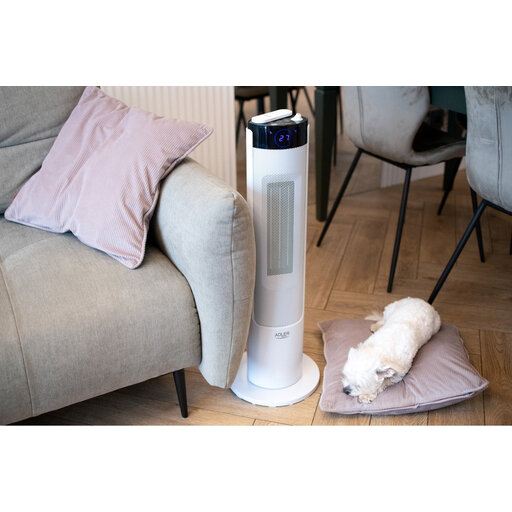 No image available
This column-style electric ceramic convector heater is an option to compare for supplementary heating indoors.
The product information specifies a minimum distance of 1 metre between the air outlet and flammable materials. Before buying, check that the appliance on offer bears the required CE marking.
Only if the instructions for the exact model allow it and you can maintain the required clearances. For the Eurom Alutherm Wi-Fi, Eurom specifies a minimum distance of 1 metre between the air outlet and textiles, curtains or other flammable materials. Don’t automatically apply this model-specific clearance to other heaters.
The Netherlands Fire Service recommends plugging high-power appliances, including electric heaters, directly into a socket rather than using an extension block or cable reel.
Multiply the power rating in kW by the number of hours the heating element is actually on; the result is the consumption in kWh. Multiply that figure by your own tariff per kWh. A thermostat affects how long the heater is actually on, so this depends on factors such as the setting and heat demand.
According to the Netherlands Food and Consumer Product Safety Authority, electrical equipment covered by the Commodities Act Decree on Electrical Equipment must bear a CE marking; the regulations cover equipment with a rated AC voltage of 50 to 1000 V. A CE marking is the manufacturer’s declaration, not proof that a specific appliance has been independently tested. Check the marking and product identity of the appliance on offer.
According to the Dutch Government, the seller must offer a solution if a product is faulty. The Netherlands has no fixed statutory warranty period of two years; a manufacturer’s warranty is in addition to your legal right to a product that works as it should.