
Rice pudding baker
You want to make rice pudding in an oven-safe dish, so you’re mainly looking at whether the dish will fit, which oven setting to use and whether the timer suits your recipe.


Start by measuring your oven dish and the space available, then compare the usable interior, oven setting and timer on the exact model with your recipe. A freestanding convection oven could work if your dish fits; a combination microwave is an option if your housemates also want to heat food, while a built-in oven is only suitable if you have a compatible housing unit and installation. Also check the CE marking on the appliance you buy: model information or a manual does not automatically confirm that every appliance on sale bears the marking.
You want to make rice pudding in an oven-safe dish, so you’re mainly looking at whether the dish will fit, which oven setting to use and whether the timer suits your recipe.
You share the worktop and want to check whether the oven can be positioned safely, whether the door can open and whether there’ll still be enough space for your housemates.
As well as an oven function, you want the option to heat food, so you’re comparing a combination microwave with a separate oven.
A good fit if: you have a suitable spot on the worktop and your dish fits in the usable interior.
Consider: a compact exterior doesn’t necessarily mean there’s enough room for your dish or that the timer will run for long enough.
A good fit if: your housemates want to use one appliance for baking as well as other cooking tasks.
Consider: check that the model has a separate oven setting and that your dish fits inside.
A good fit if: the shared kitchen already has a suitable housing unit and installation.
Consider: a built-in model isn’t a freestanding solution for a shared worktop; check the installation requirements.
When making rice pudding in a shared kitchen, the main things to consider depend on your dish, recipe, available space and the tasks your housemates want to use the appliance for.
| What to consider | What to look for when buying | Who should pay particular attention? |
|---|---|---|
| Dish and cooking time | Measure your dish, including the handles, and compare it with the usable interior; check the timer against your recipe. Good Food recipes list cooking times of 90 minutes and 2 hours. | If I want to use my own oven dish, I need to know whether it’ll fit at the rack height I’ve chosen and whether I can keep track of the cooking time. Around 36% of consumers in this situation prioritise dish fit and cooking time. |
| Space and positioning | Compare the external dimensions and follow the positioning and heat-clearance instructions in the manual. | If I share the worktop with housemates, I want to be able to open the oven door without blocking the workspace and position the appliance according to the manual. Around 29% of consumers place most importance on having a safe, practical spot. |
| Multiple functions | Check whether there’s a separate oven setting and whether your dish is suitable for use with it. | If my housemates also want to heat food, one appliance with separate oven and microwave functions can handle different tasks. Around 21% of consumers prioritise shared, multi-purpose use. |
| Energy consumption | Compare consumption per cooking session only on a like-for-like basis; wattage doesn’t measure the energy used per bake. | If I often make a long recipe, I want to compare the actual energy used per cooking session rather than looking only at the stated power. Around 14% of consumers prioritise energy consumption. |
External and internal dimensions vary from oven to oven. The capacity in litres won’t tell you whether your dish will fit at the rack height you want.
Measure your dish, including the handles, and compare it with the usable interior. Also check the door clearance and positioning instructions.
The recipes we looked at call for 90 minutes or 2 hours; a model’s timer may not run for that long. For example, Princess says the timer on the 112754 runs for up to 60 minutes.
Choose your recipe first, then compare the cooking time with the timer on the exact model. If you need to reset it, keep checking on the dish.
Watts indicate power, not the measured energy used for one cooking session. That means you can’t necessarily compare the energy consumption of different ovens on this basis alone.
Milieu Centraal recommends comparing ovens by their electricity consumption per use or per year. Use figures based on a like-for-like comparison and consider how large an oven you need for your use.
Freestanding ovens and combination microwaves offer examples of a separate oven versus multiple functions in one appliance.
The TO 2068 is an example of a compact model with a convection function.
The 112754 is a larger freestanding model with a convection function.
The OV-3640 is a freestanding convection oven with a stated capacity of 60 litres.
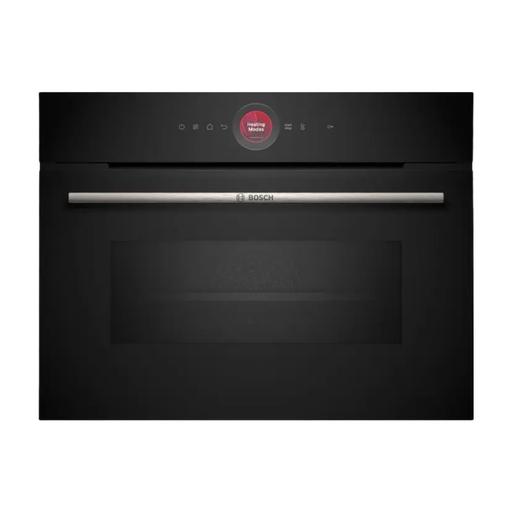
The HBA534BS3 is a built-in oven, shown here as an example for a kitchen with a suitable space for installation.
This selection includes freestanding combination microwaves and a freestanding convection model, as well as a built-in combination oven for a kitchen with a suitable housing unit.
 No image available
An option if your housemates want to use microwave and grill functions as well as bake.
The description lists convection, microwave and grill functions, a temperature range of 110–210 °C, and an included baking tray and grill rack. The stated oven cavity dimensions are 340 × 220 × 344 mm; check that your dish will fit.
 No image available
A freestanding combination microwave to consider if you want microwave and grill functions as well as convection.
The description lists a capacity of 20 litres and external dimensions of 34.5 × 44.2 × 26 cm. It can only be placed in a cupboard with a suitable bracket and sufficient ventilation.
 No image available
A built-in option if the shared kitchen has a suitable housing unit and you can make use of the oven space.
The description lists convection, a 900 W microwave function and a temperature range of 40–230 °C. The stated niche dimensions are 45,50 × 56 × 55 cm; check that your kitchen is suitable.
 No image available
A freestanding convection model with hotplates on top, for anyone who wants to cook on the appliance as well as bake.
The description lists convection, top and bottom heat, and a capacity of 45 litres. The external dimensions are 46,5 × 59 × 36 cm; when checking the available space, remember to allow for the hotplates on top.
Not without checking the recipe. The Voedingscentrum generally recommends using a lower temperature in a convection oven; for example, a Good Food recipe gives 160 °C for conventional baking and 140 °C for convection. Check towards the end that the rice is cooked through.
Follow the positioning and heat-clearance instructions in the manual for the exact model, and leave enough room to open the door. Brandweer Nederland recommends plugging high-power appliances directly into a suitable socket wherever possible, rather than using a multi-socket adaptor or cable reel.
Let the appliance cool down and follow the cleaning instructions for the model; the Princess 112754 has a removable crumb tray. Cool leftover rice dishes quickly and store them in the fridge: the Voedingscentrum warns about Bacillus cereus in rice that is kept for too long or not kept cold enough.
No. According to ACM ConsuWijzer, your statutory guarantee applies alongside any manufacturer’s warranty. If a product is faulty under normal use, the seller is responsible for providing an appropriate solution.
Check that the appliance bears the CE marking if the applicable EU rules require it for that product. According to Your Europe, the manufacturer uses the CE marking to declare that the product complies with the applicable rules; it isn’t a centrally issued quality mark or proof that every individual appliance has been independently tested.