
Everyday lunch planner
You bake onion wedges for a lunch you’ll take with you later. Remember to allow time for them to cool and be stored in the fridge.


For one lunch portion, a compact freestanding convection oven with a baking tray is a sensible starting point. For several portions, the usable baking tray space of a larger model is especially important. Check the convection setting, the baking tray and the exact model’s external dimensions: more litres don’t automatically mean more tray space or better baking results. Don’t leave cooked portions out of the fridge for more than two hours, and refrigerate them if you’re saving them for later.
You bake onion wedges for a lunch you’ll take with you later. Remember to allow time for them to cool and be stored in the fridge.
You usually make a small portion and want to know whether a compact oven, including the space needed around it, will fit on your worktop.
You bake more than one lunch portion at a time, so you want to compare usable baking tray space rather than just oven capacity.
First, check that the exact model has a convection setting and comes with a baking tray. Then compare the tray space with the size of your portion, and the oven’s external dimensions with the space where you plan to put it.
| What to consider | What should you check? | Who should prioritise this? |
|---|---|---|
| Suitable for baking on a tray | Check the exact model’s convection setting, the baking tray supplied and its dimensions. | If I want to bake onion wedges on a tray, I need to know whether the oven has the right setting and a suitable tray. Around 40% of consumers make baking suitability their top priority. |
| Worktop space | Measure the space available and compare it with the model’s external dimensions and positioning instructions. | If worktop space is limited, I want to know in advance whether the oven will fit in the chosen spot. Around 30% of consumers give the space available in their kitchen the highest priority. |
| Multiple portions | Compare the usable baking tray dimensions and accessories; the litre capacity doesn’t directly indicate the baking area. | If I want to make several lunch portions at once, I mainly need to know whether they’ll fit on the tray. Around 20% of consumers prioritise tray space for multiple portions. |
| Cleaning | Check which baking tray, crumb tray or crumb drawer is included, and follow the cleaning instructions. | If I bake regularly, I want to know how to clear away crumbs and food residue. Around 10% of consumers name easy maintenance as their main consideration. |
Severin’s model specifications don’t list a convection function for the TO 2052, even if a product title mentions one.
Check the full model number and function in the manufacturer’s official specifications before choosing.
The capacity in litres doesn’t tell you how many onion wedges you can spread across the baking tray. If the tray is too small, you may need to bake in several batches.
Compare the dimensions of the baking tray supplied with the amount you want to cook.
According to the Voedingscentrum, cooked food shouldn’t be left out of the fridge for more than two hours.
Allow the portions to cool in good time, store them in a sealed container in the fridge, and keep lunch that needs to stay cool chilled during transport—for example, in a cool bag.
Freestanding convection ovens in compact and larger sizes.
According to Princess, the freestanding convection oven 112754 has a capacity of 45 litres.
According to Severin, the TO 2068 is a 20-litre oven with convection.
According to Tristar, the OV-3635 is a freestanding convection oven with several oven settings.
These models range from compact ovens to larger freestanding and built-in ovens with a stated convection function. Check the baking tray, the space available and whether each appliance is freestanding or built in.
 No image available
A freestanding model to consider if you’re looking for a larger oven with convection; the product description mentions baking with a tray.
The product name lists a capacity of 45 l and a power rating of 2000 W. Check whether a baking tray is included and suitable for your cooking needs.
 No image available
The description mentions top and bottom heat with convection, and an enamelled baking and roasting tray.
The stated capacity is 22 litres. The description lists five heating settings, a 60-minute timer, three shelf positions and a removable crumb tray. The temperature can be set up to 230 °C.
 No image available
A compact option for small baking jobs; the description mentions use with a baking tray.
The stated capacity is 10 litres, and the description mentions baking trays up to 20 cm. The temperature can be set from 80 to 230 °C, with a 30-minute timer and a hinged crumb tray.
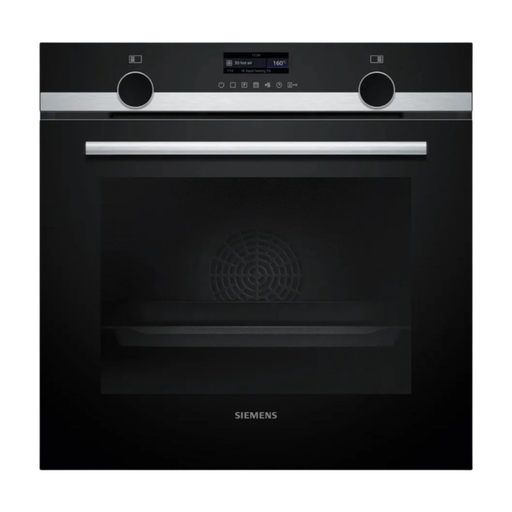 No image available
A built-in oven to consider if your kitchen has a suitable space for it; the product description mentions convection and a baking tray.
The stated capacity is 71 litres. Allow for the required installation space and check the product specifications for a suitable baking tray.
 No image available
A freestanding model with a hob on top; the product description mentions convection and baking.
The product name lists a capacity of 45 litres and a power rating of 3534 W. Check which baking tray is included before assuming it’s suitable for your cooking needs.
Check that the exact oven model has a convection setting and a suitable baking tray. Compare the usable tray space with the size of your portion; the capacity in litres alone doesn’t tell you how many onion wedges will fit.
According to the Voedingscentrum, you should let cooked food cool, but not leave it out of the fridge for more than two hours. Store it in a well-sealed container in the fridge for up to two days. Keep lunch that needs to stay cool chilled during transport, for example in a cool bag.
Check which baking tray or crumb-collecting feature is included, and whether the model has a crumb tray or removable crumb drawer. Follow the cleaning instructions in the manual for the exact model.
According to the Dutch government, if there’s a problem with a product, you should contact the seller for a solution. The Netherlands has no fixed statutory guarantee period; the manufacturer’s guarantee and any additional guarantee you buy are separate from your statutory rights.
No. According to the European Commission, CE marking is required when the applicable EU rules specify it for that product group. The mark isn’t an independent test of baking performance or product quality.