
Baker with a favourite loaf tin
You want to know whether your existing cake or loaf tin will fit in the oven and work with the setting in your recipe. Measure the tin, including any protruding edges, then check the oven’s internal space.


Start by checking the dimensions of your loaf tin and the oven setting your recipe calls for. Then decide whether you need a compact or larger oven. Capacity in litres alone won’t tell you whether your tin will fit through the opening, and a larger model takes up more space and generally uses more energy, according to Milieu Centraal. Also check the installation instructions and features of the specific model.
You want to know whether your existing cake or loaf tin will fit in the oven and work with the setting in your recipe. Measure the tin, including any protruding edges, then check the oven’s internal space.
You’re looking for a freestanding oven that fits on your worktop and, in line with the model’s installation instructions, has enough clearance for ventilation.
You want to cook more than just nut loaf, so you’re considering the heating settings, oven capacity, cleaning and energy use.
A good fit if: you use a smaller tin and have enough room on your worktop for both the oven and the required ventilation clearance.
Trade-off: a smaller capacity may limit your choice of tins and dishes. The litre capacity alone won’t confirm that your tin will fit.
A good fit if: you’d like more space around your tin or want to cook a side dish as well.
Trade-off: check the internal dimensions, accessories and space required for each model. The Tomado TEO3000B manual requires 10 cm of clearance on all sides; this doesn’t automatically apply to other ovens.
A good fit if: a larger tin or second dish won’t fit in a smaller model and you have room in your kitchen for a bigger appliance.
Trade-off: that extra space may be unnecessary for one small loaf. Milieu Centraal recommends choosing an oven that’s no bigger than you need.
A good fit if: your current appliance can accommodate the tin and handle the oven setting and temperature in your recipe.
Trade-off: check that it has a proper oven function; a microwave function alone isn’t a substitute for baking in an oven.
| Concern | What should you check? | Who is this important for? |
|---|---|---|
| Will my loaf tin fit? | Measure the tin, including any protruding parts, and check the door opening, internal space and shelf position. | I want to make sure my tin will fit through the opening and sit on the rack before anything else; around 36% of consumers put fit first. |
| Can I follow my recipe? | Compare the available oven settings, temperature control and maximum timer duration with your recipe. | If my recipe calls for a particular oven setting or cooking time, I want to be able to select those settings; around 29% of consumers give baking controls top priority. |
| Will the oven fit on my worktop? | Measure the available space, allow for the door to open and follow the ventilation requirements in the manual for the exact model. | I want to know before buying whether the oven can be safely placed in the space I have available; around 21% of consumers put placement first. |
| How should I weigh up size and aftercare? | Don’t choose extra capacity without a reason; compare energy-use figures only on the same basis and check which parts can be cleaned. | If I mainly bake one loaf, I want to weigh up the size and energy use and know how to maintain the appliance; around 14% of consumers put running costs and aftercare first. Milieu Centraal recommends choosing an oven that’s no bigger than you need. |
The stated capacity doesn’t confirm that your loaf tin will fit through the opening or sit properly on the rack.
Measure the tin, including any protruding parts, and check the opening, internal space and shelf position.
The external dimensions alone won’t tell you whether a freestanding oven is suitable for your chosen spot. The Tomado TEO3000B manual requires 10 cm of clearance on all sides and says not to cover the ventilation openings.
Check the installation instructions for the exact model you’re considering.
For the Severin TO 2052, the manufacturer explicitly states that the model doesn’t have a convection function.
Check the full model number and the feature you need against the manufacturer’s information and the manual.
ACM ConsuWijzer explains that your statutory guarantee exists alongside any manufacturer’s or seller’s warranty.
Keep your proof of purchase and contact the seller if a product doesn’t do what you could reasonably expect it to.
The OV207B and OV307B are freestanding convection ovens with different capacities.
The TEO3000B is a freestanding convection oven with a capacity of 30 litres.
The 112751 Hetelucht Oven DeLuxe is a 32-litre freestanding model with convection and top and bottom heat.
The OV-3640 is a freestanding convection oven with a capacity of 60 litres.
The TO 2052 is an example of a mini baking and toasting oven; the product name alone doesn’t tell you whether it has convection.
This selection includes freestanding worktop ovens and built-in ovens with baking functions. Check which type suits your available space, measure your loaf tin, and read the instructions and safety information for the specific product.
 No image available
A freestanding worktop oven to consider if you want to use several shelf positions.
The product information lists a capacity of 35 litres and an oven rack with four levels. Check the internal dimensions and ventilation clearance for your setup.
Check the product identity and safety information for the specific offer; a listing in an online shop alone doesn’t prove that an individual item meets all applicable requirements.
 No image available
This option is suited to anyone looking for a built-in oven rather than a freestanding worktop model.
The product information lists a capacity of 66 litres, 3D hot air, top and bottom heat, and temperature control from 50 °C to 275 °C. Check the installation dimensions and whether the oven settings suit your recipe.
Check the product identity and safety information for the specific offer; a listing in an online shop alone doesn’t prove that an individual item meets all applicable requirements.
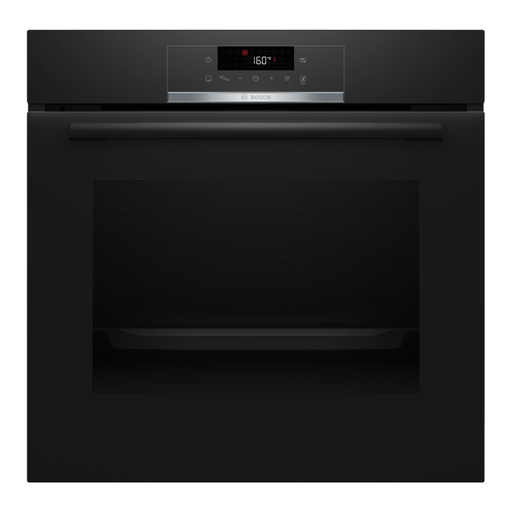 No image available
A built-in option if you’re looking for functions beyond convection too.
The product information lists a capacity of 71 litres, 3D hot air, top and bottom heat, and temperature control from 30 °C to 275 °C. This is a built-in oven, not a freestanding worktop model; check the installation dimensions and which features you actually need.
Check the product identity and safety information for the specific offer; a listing in an online shop alone doesn’t prove that an individual item meets all applicable requirements.
 No image available
A freestanding oven to consider if you’re looking for a larger capacity and several heating functions.
The product information lists a capacity of 45 litres, 2000 W, convection, and top and bottom heat. Check the space required, your tin’s dimensions and the installation instructions.
Check the product identity and safety information for the specific offer; a listing in an online shop alone doesn’t prove that an individual item meets all applicable requirements.
 No image available
This compact freestanding oven is worth considering if you have a smaller kitchen and use a suitable round tin.
The product information lists a capacity of 22 litres and baking tins up to 25 cm in diameter. It also lists hot-air settings, top and bottom heat, a timer of up to 60 minutes and temperature control up to 230 °C. Check that your tin is within the stated size limit.
Check the product identity and safety information for the specific offer; a listing in an online shop alone doesn’t prove that an individual item meets all applicable requirements.
No, follow the oven setting in your recipe. Freestanding models may offer top and bottom heat as well as convection, but those listed features don’t determine a universal temperature or baking time for every nut loaf.
Follow the manual for the exact model. The Tomado TEO3000B manual requires 10 cm of clearance on all sides, says not to cover the ventilation openings, and instructs you to let the oven cool before cleaning it. Don’t automatically apply this clearance to another model.
No. Milieu Centraal recommends choosing an oven that’s no bigger than you need and comparing energy-use figures only when they’re based on the same measurements. Wattage alone isn’t a measure of energy used per baking session.
Your statutory guarantee applies alongside any manufacturer’s warranty: if a product doesn’t do what you could reasonably expect when used normally, the seller is responsible for providing an appropriate solution. According to the Dutch Government, many distance sales come with a 14-day cooling-off period; check whether the terms apply to your specific purchase.
According to the NVWA, CE marking is compulsory for electrical products covered by the applicable regulations. A listing in an online shop alone isn’t proof that a specific item meets all applicable requirements; check the product identity and safety information for the specific offer.