
The late-night home baker
You want to bake a savoury nut bread after an evening class and are looking for controls that are easy to use later in the evening. The Netherlands Nutrition Centre’s recipe calls for 45–60 minutes of baking time.


Start by measuring the outside of your filled baking dish and the space available for the oven. Then decide whether a freestanding or built-in model is right for you. A timer and clearly labelled oven settings come in handy when baking late, but preheating won’t automatically reduce the baking time: the Netherlands Nutrition Centre’s nut bread recipe recommends baking for 45–60 minutes.
You want to bake a savoury nut bread after an evening class and are looking for controls that are easy to use later in the evening. The Netherlands Nutrition Centre’s recipe calls for 45–60 minutes of baking time.
You may not have a suitable space for a built-in oven, so you’ll need to make sure the oven and baking dish are the right size for each other.
You want to use your oven for other dishes too, or you’re considering a combination oven so you can also reheat food.
First, measure your baking dish and the space available. Then choose an oven type and features that suit how you want to use the oven for other things as well as this recipe.
| What to consider | What should you look for? | Who is this important for? |
|---|---|---|
| A baking dish that fits | Measure the outside of the filled, ovenproof dish and compare it with the usable internal dimensions and the clearance specified by the manufacturer. | If I want to use my own dish, I need to know in advance whether it will fit in the oven. Around 33% of consumers prioritise finding a dish that fits. |
| Evening-time controls | Check that the oven has a clear convection setting and a timer. Plan preparation, preheating and baking separately. | After an evening class, I want to be able to set the oven easily, without relying on a shorter baking time. Around 33% of consumers prioritise practical evening-time baking. |
| Space and installation | Compare the oven’s external dimensions with the available worktop space or built-in cavity, and check the connection requirements and specified ventilation clearance. | With limited worktop space, I need to know whether a freestanding or built-in model will suit my kitchen. Around 20% of consumers give the available space the greatest weight. |
| Extra features | Compare the baking, reheating and cleaning functions of the exact model. A microwave function won’t replace the oven setting for baking from scratch. | If I want to use the oven for other meals too, I look for features that suit those uses. Around 14% of consumers prioritise this broader range of uses. |
The oven’s capacity in litres doesn’t tell you whether your baking dish will fit. The usable internal dimensions are more important.
Measure your dish and compare its dimensions with the oven cavity and the clearance specified by the manufacturer.
The Netherlands Nutrition Centre’s nut bread recipe calls for 45–60 minutes of baking time. A manufacturer’s stated preheating time for a specific model doesn’t, by itself, mean the bread will be ready sooner.
Allow for preparation, preheating and your recipe’s baking time separately.
Reheating with the microwave function and baking with an oven setting are two different things. You’ll need an oven function to bake nut bread from scratch.
Check that the exact model has a convection or oven setting, and that your dish will fit inside.
The Netherlands Food and Consumer Product Safety Authority states that CE marking is mandatory for electrical products, but testing is not mandatory for this product group. The CE mark is therefore not an independent assessment of baking results or quality.
Check the mark and the documentation for the specific model, but don’t treat the mark as a baking test.
Inventum offers freestanding convection ovens, including the 30-litre OV307B and the 60-litre OV607B.
The OM316MZ built-in oven is an option if you have a suitable cavity and want plenty of space or a choice of baking settings for other dishes too.
The freestanding Optimo OF495810 is an alternative if you want conventional baking and grilling as well as convection cooking.
This selection includes freestanding convection ovens and built-in ovens with a convection function, so you can compare options for baking in a dish.
 Image unavailable
The convection function and thermometer are useful when you want to keep an eye on the temperature while baking.
The product information lists a thermometer, a four-level rack and an LED display. Check that your baking dish will fit inside.
 Image unavailable
This built-in model is suited to kitchens with a suitable cavity and is a good option if you want a convection function for baking.
The product specifications list 3D hot air, top and bottom heat, and a timer. The specified niche dimensions are 59.5 × 56.8 × 55 cm; follow the model’s installation instructions.
 Image unavailable
This freestanding oven has a convection function for baking. Check there’s enough room for your dish before you buy.
The product name lists 2000 W, while the product information mentions six functions, including convection, and a timer. Place the oven on a stable, heat-resistant surface, keep the ventilation openings clear and don’t leave it unattended while it’s on.
 Image unavailable
The product information lists a convection setting for baking, making this model worth comparing if you have a smaller baking dish.
The specifications list five heating settings, a 60-minute timer and baking tins up to 25 cm in diameter. Place the oven on a flat, heat-resistant surface with plenty of ventilation.
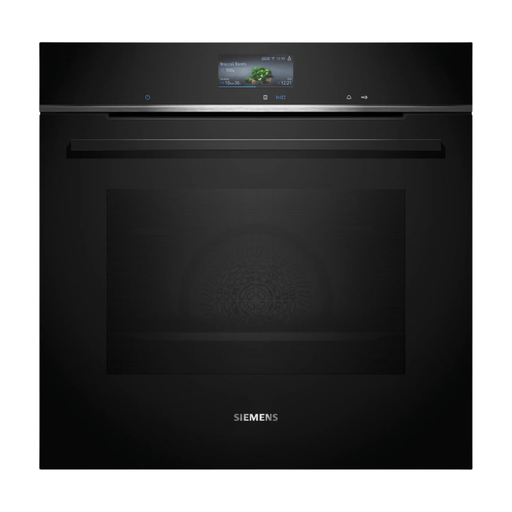 Image unavailable
This built-in oven has a convection function, but it’s only a suitable choice if your kitchen is set up for installation.
The product specifications list a capacity of 71 litres and five shelf levels. The specified niche dimensions are 59.5 × 56.8 × 55 cm; the installation instructions state that the oven must be installed by a qualified electrician.
No, you’ll need an oven function to bake from scratch. The Dutch Consumers’ Association distinguishes between baking with the convection or oven function and reheating with the microwave function. Always follow your recipe’s instructions too.
Measure the space available and your baking dish, and check the installation and ventilation requirements for the exact model. A built-in oven needs a suitable cavity; for a freestanding model, check the connection requirements too.
The Netherlands Nutrition Centre advises eating leftovers from the fridge within two days. When reheating, heat them all the way through until steaming hot. This advice is about storing and reheating food, not which oven setting to use for baking from scratch.
The Netherlands Food and Consumer Product Safety Authority states that CE marking is mandatory for electrical products; the mark is not proof of independent testing. The Netherlands Authority for Consumers and Markets says that online purchases generally come with a 14-day cooling-off period, subject to legal exceptions. The legal guarantee entitles you to a product that works as it should; the Dutch Government advises contacting the seller if you have a problem.